Mouse anti-Human/Mouse/Rat sapiens (Human) DTNA Monoclonal Antibody

Mouse anti-Human/Mouse/Rat sapiens (Human) DTNA Monoclonal Antibody — recombinant protein.

SKU: BCREC-000230MA Category:

Product Specifications

Uniprot No.Q9Y4J8
Target NamesDTNA
Species ReactivityMouse
ImmunogenRecombinant Human DTNA protein
Immunogen SpeciesHomo sapiens (Human)
ConjugateNon-conjugated
IsotypeMouse IgG2b
ClonalityMonoclonal
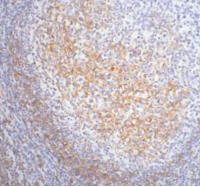
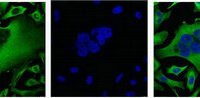
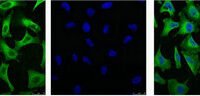
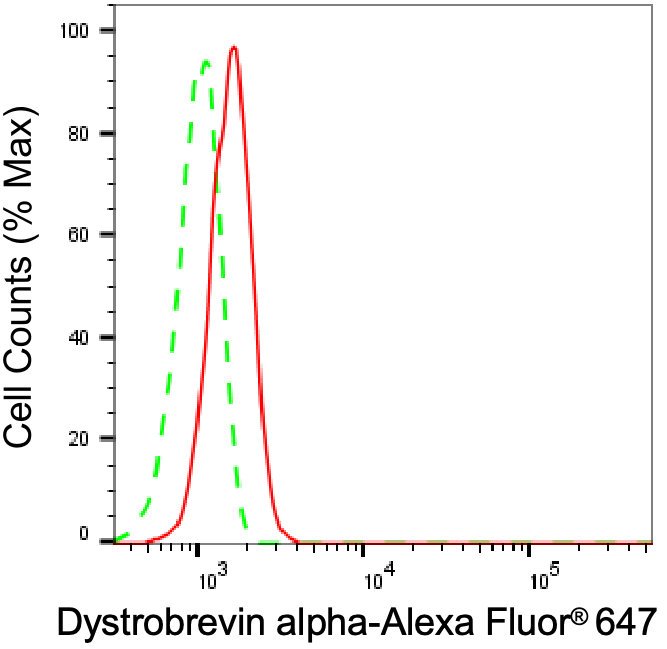
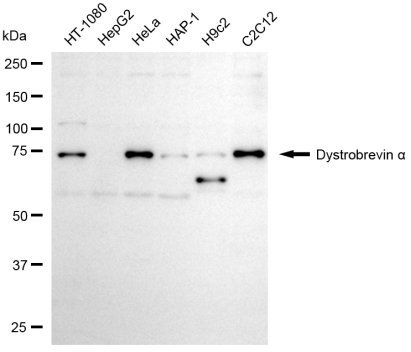
ApplicationsELISA, WB, FC
BufferPBS, 50% glycerol, 0.05% Proclin 300, 0.05%BSA
StorageUpon receipt, store at -20°C or -80°C. Avoid repeated freeze.

Function

May be involved in the formation and stability of synapses as well as being involved in the clustering of nicotinic acetylcholine receptors.

Biological Context

Subcellular Location: Cytoplasm; Synapse; Cell membrane
Tissue Specificity: Highly expressed in brain, skeletal and cardiac muscles, and expressed at lower levels in lung, liver and pancreas. Isoform 2 is not expressed in cardiac muscle. Isoform 7 and isoform 8 are only expressed in muscle
Disease Association: Left ventricular non-compaction 1 (LVNC1) : A form of left ventricular non-compaction, a cardiomyopathy due to myocardial morphogenesis arrest and characterized by a hypertrophic left ventricle, a severely thickened 2-layered myocardium, numerous prominent trabeculations, deep intertrabecular recesses, and poor systolic function. Clinical manifestations are variable. Some affected individuals experience no symptoms at all, others develop heart failure. In some cases, left ventricular non-compaction is associated with other congenital heart anomalies. LVNC1 is an autosomal dominant condition. [The disease is caused by variants affecting the gene represented in this entry] | Myopathy with myalgia, increased serum creatine kinase, and with or without episodic rhabdomyolysis 2 (MMCKR2) : An autosomal dominant muscular disorder characterized by myalgia, muscle cramps and exercise intolerance with variable ages of onset, and persistent elevations of serum creatine kinase levels. Muscle biopsy shows mixed myopathic and dystrophic findings, characterized by fiber size variability, internalized nuclei, and slightly increased extracellular connective tissue and inflammation. [The disease may be caused by variants affecting the gene represented in this entry]

Product Specifications

Mouse anti-Human/Mouse/Rat sapiens (Human) DTNA Monoclonal Antibody is a recombinant protein. Suitable for ELISA and Western Blot applications.

SDS-PAGE: Single band at expected molecular weight confirming purity.

ELISA: Suitable as coating antigen or detection standard.

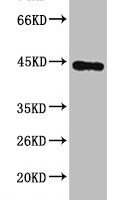
Western Blot: Compatible with standard Western Blot protocols.

Protein Interaction: Validated for SPR (Surface Plasmon Resonance) and BLI (Bio-Layer Interferometry) studies.

Shipping: Shipped at ambient temperature. Lyophilized protein is stable during transit.

Storage: Store lyophilized protein at -20°C to -80°C. Reconstituted protein should be aliquoted and stored at -80°C. Avoid repeated freeze-thaw cycles.

Shelf Life: 12 months from date of receipt when stored as recommended.

Shipping Time: Orders placed before 2 PM EST ship same day. International orders typically deliver within 5-10 business days.

Protein Biology

Function

May be involved in the formation and stability of synapses as well as being involved in the clustering of nicotinic acetylcholine receptors

Subcellular Location

Cytoplasm; Synapse; Cell membrane

Disease Association

Left ventricular non-compaction 1 (LVNC1) : A form of left ventricular non-compaction, a cardiomyopathy due to myocardial morphogenesis arrest and characterized by a hypertrophic left ventricle, a severely thickened 2-layered myocardium, numerous prominent trabeculations, deep intertrabecular recesses, and poor systolic function. Clinical manifestations are variable. Some affected individuals experience no symptoms at all, others develop heart failure. In some cases, left ventricular non-compaction is associated with other congenital heart anomalies. LVNC1 is an autosomal dominant condition. [The disease is caused by variants affecting the gene represented in this entry] | Myopathy with myalgia, increased serum creatine kinase, and with or without episodic rhabdomyolysis 2 (MMCKR2) : An autosomal dominant muscular disorder characterized by myalgia, muscle cramps and exercise intolerance with variable ages of onset, and persistent elevations of serum creatine kinase levels. Muscle biopsy shows mixed myopathic and dystrophic findings, characterized by fiber size variability, internalized nuclei, and slightly increased extracellular connective tissue and inflammation. [The disease may be caused by variants affecting the gene represented in this entry]

Tissue Specificity

Highly expressed in brain, skeletal and cardiac muscles, and expressed at lower levels in lung, liver and pancreas. Isoform 2 is not expressed in cardiac muscle. Isoform 7 and isoform 8 are only expressed in muscle

Subunit

Does not interact with dystrophin

Gene: DTNA  |  Organism: Homo sapiens  |  Synonyms: Alpha-dystrobrevin; Dystrophin-related protein 3
Key Publications

Frequently Asked Questions

How do I order or inquire about this product?

Fill out the Online Inquiry form with your required quantity and specifications. You can also email sales@biocrestsci.com. Our team typically responds within 4 business hours with a quote and availability confirmation.

What is the shipping and delivery time?

Orders placed before 2 PM EST ship the same day. Domestic (US) delivery typically takes 2-3 business days. International orders deliver within 5-10 business days. All products are shipped at ambient temperature with appropriate packaging to ensure stability.

How should I store this recombinant protein?

Lyophilized proteins should be stored at -20°C to -80°C upon receipt. After reconstitution, aliquot and store at -80°C. Avoid repeated freeze-thaw cycles. Shelf life is 12 months from date of receipt when stored as recommended.

What quality controls are performed on your products?

Each product undergoes SDS-PAGE purity analysis (typically >85-95%), endotoxin testing, and bioactivity validation. Products are validated for ELISA, Western Blot, and SPR/BLI applications as specified on this product page. A Certificate of Analysis (CoA) is available upon request.

Shopping Cart
Scroll to Top