E. coli Protein Expression Service
BioCrestSci provides a configurable bacterial protein expression workflow for research targets, from gene and vector planning through expression verification, small-scale production, purification and defined quality-control reporting.
Why choose BioCrestSci for E. coli protein expression?
A useful expression service should connect construct strategy, experimental evidence and downstream requirements. BioCrestSci organizes the work around defined technical decisions rather than a one-size-fits-all production claim.
Target-aware technical planning
Sequence features, expected localization, disulfide requirements, tag position, solubility risk and intended use are considered before the expression route is finalized.
Milestone-based project visibility
Transformation, expression verification, small-scale production, purification and QC are separated into reviewable stages so that later work can reflect the evidence generated earlier.
Fit-for-purpose purification and QC
Core deliverables are defined for the standard package, while polishing, endotoxin control and functional testing can be scoped to the protein and planned downstream experiment.
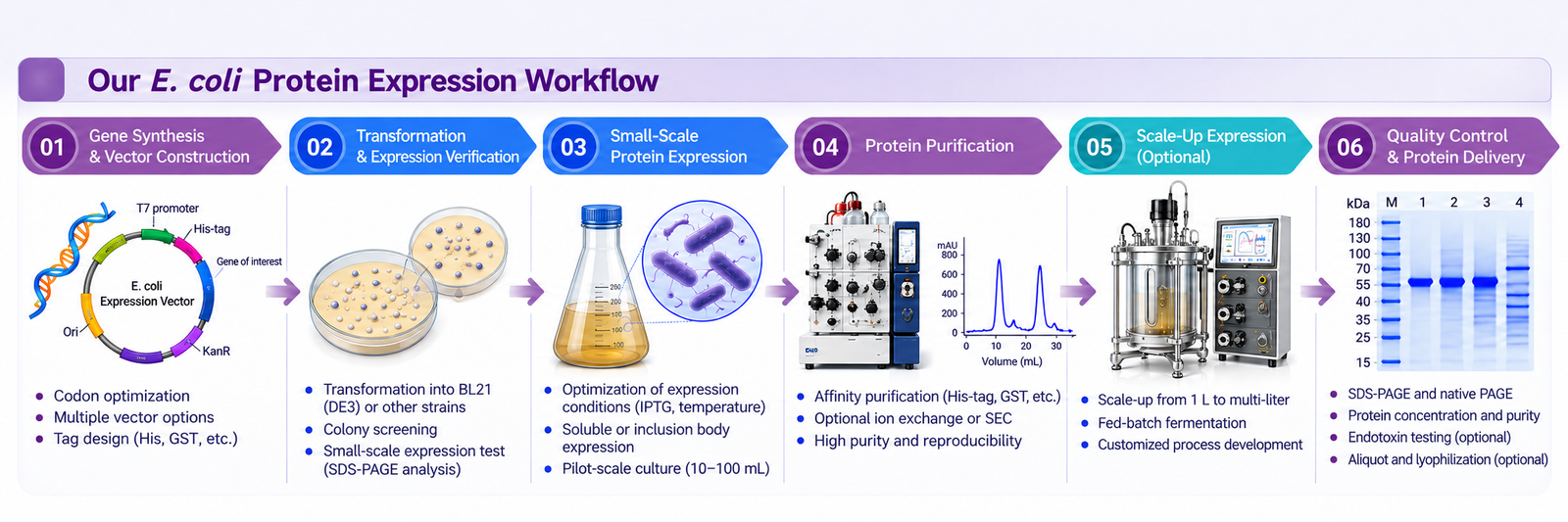
Six-stage E. coli protein expression workflow
Projects are organized around clear decision points. The exact strain, vector, tag, induction conditions, purification route and analytical scope are selected after technical assessment of the sequence and intended use. Optional scale-up is considered only after the target has been evaluated at smaller scale.
From construct design to expression verification
Sequence review can inform codon usage, promoter choice, tag placement and cloning strategy. An expression-ready construct is transformed into a suitable host, followed by colony screening and an initial expression check. A customer-supplied plasmid can also be evaluated when the required construct information is available.
From small-scale expression to purified protein
Small-scale work evaluates expression and solubility under defined conditions. Affinity purification is the standard starting route for suitable tagged constructs. Ion exchange, size-exclusion chromatography, tag cleavage, buffer exchange, refolding and scale-up are separate technical options when appropriate.
Stage 01–06: E. coli protein expression service details
Each stage has a defined purpose, decision point and output. Stages 02–05 form the Standard Expression Package shown above. Stage 01 and Stage 06 options are outside the package and are added only when required. Final scope remains subject to technical assessment.
Gene Synthesis & Vector Construction
Sequence-to-construct preparation
Codon-aware sequence preparation and cloning into an agreed bacterial expression vector.
- Reading frame, signal peptide and tag position
- Promoter, resistance marker and host compatibility
- Potential sequence features affecting expression
- Sequence-verified expression construct
- Vector and insert documentation
- Agreed construct configuration
BL21 Transformation & Expression Verification
Host entry and initial expression evidence
Transformation into BL21-derived cells, colony selection and a defined initial expression check.
- Antibiotic selection and construct stability
- Basal expression and possible target toxicity
- Expected molecular weight and tag detection
- Selected expression clone
- Initial expression evidence
- Recommendation for small-scale work
Small-Scale Expression
Expression and solubility assessment
Pilot-scale expression under an agreed induction plan, with soluble and insoluble fractions evaluated where relevant.
- Induction temperature and inducer level
- Harvest timing and cell density
- Solubility, degradation and inclusion bodies
- Small-scale expression result
- Solubility assessment
- Selected production condition or next-step review
Protein Purification
Affinity capture and standard buffer handling
Affinity purification of a suitable tagged target followed by standard buffer handling for analytical review.
- Tag accessibility and resin compatibility
- Protein stability, aggregation and proteolysis
- Elution chemistry and target buffer
- Purified protein fraction
- Recorded purification conditions
- Sample prepared for basic QC
Basic Quality Control & Reporting
Defined evidence for the standard package
Basic analytical review combining native and reducing electrophoresis with a standard project report.
- Native-state migration can be protein dependent
- Apparent SDS-PAGE mass may differ from sequence mass
- Acceptance criteria should match intended use
- Native PAGE — $35
- Reducing SDS-PAGE — $35
- Standard COA / Study Report — $75
Optional Characterization & Process Add-ons
Target-specific work beyond the standard package
Additional purification, endotoxin-control or functional work selected according to the molecule and downstream experiment.
- Protein recovery and stability after added processing
- Assay suitability, controls and acceptance criteria
- Numerical targets require project-specific confirmation
- Optional Endotoxin Removal — Quotation upon request; target <0.1 EU/µg
- Bioactivity Measurement — Quoted by assay scope
- SEC polishing, buffer exchange or tag cleavage — quoted after review
Gene synthesis and vector construction are separate from the Standard Expression Package. Stage 06 work is optional. The endotoxin value is a project target, not a universal guarantee, and must be confirmed with the analytical method and protein-specific recovery plan.
Expression optimization for difficult proteins
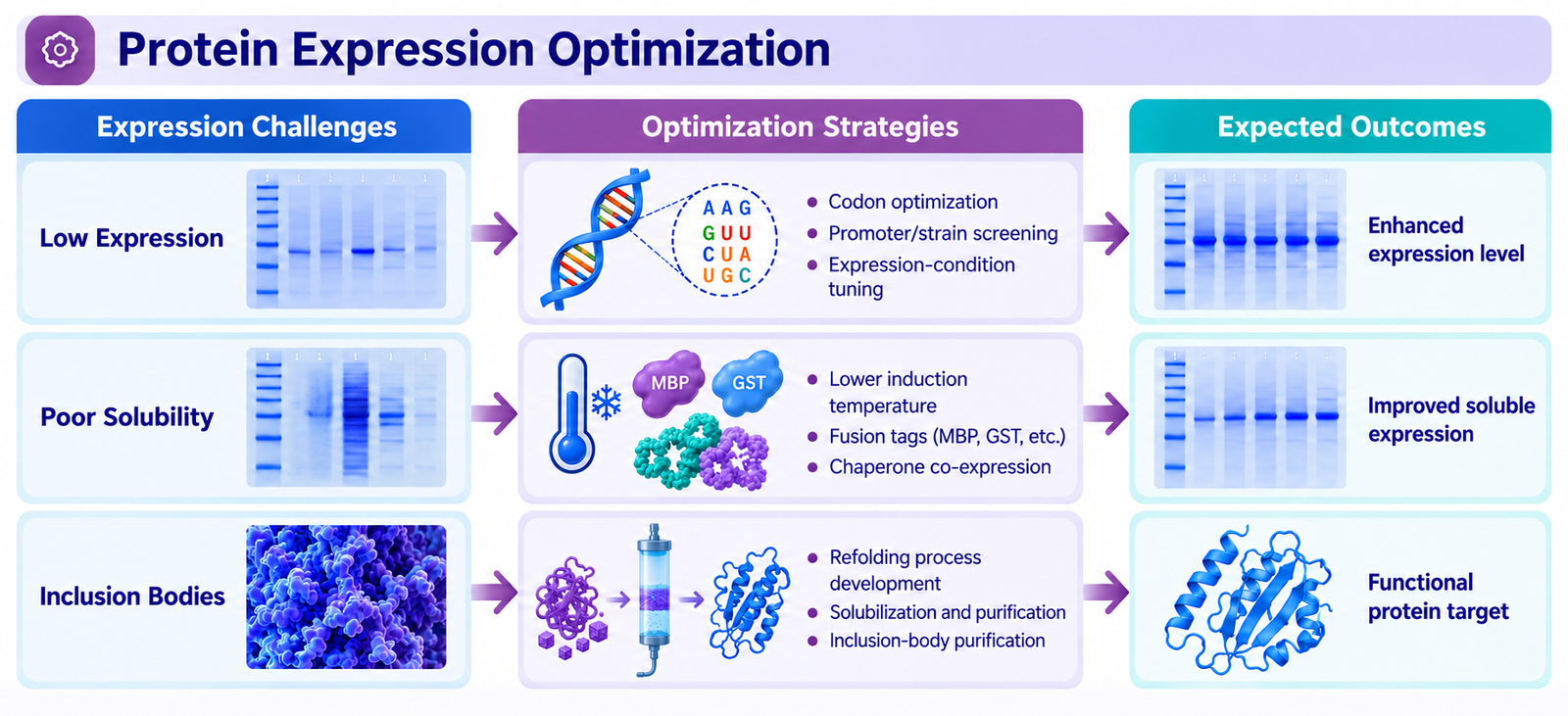
Low expression, limited solubility and inclusion-body formation are common development outcomes rather than automatic project failures. A review may consider codon usage, promoter strength, host strain, induction temperature, inducer concentration, harvest timing, fusion tags, chaperone co-expression and buffer composition. Recovery from inclusion bodies requires a separately defined solubilization and refolding plan.
Host strain, expression platform and analytical workflow
E. coli is often appropriate for bacterial proteins, enzymes, antigens, non-glycosylated fragments and soluble domains. Suitability depends on folding, disulfide-bond requirements, toxicity, solubility and the need for post-translational modifications that bacteria do not typically provide.
| BL21(DE3) | Common starting host for T7-based recombinant expression |
|---|---|
| Rosetta-derived strains | May help with targets containing codons that are less frequent in E. coli |
| pLysS-type backgrounds | Can provide tighter control of basal T7 expression for selected targets |
| Oxidizing-cytoplasm strains | May be assessed for selected proteins with cytoplasmic disulfide-bond requirements |
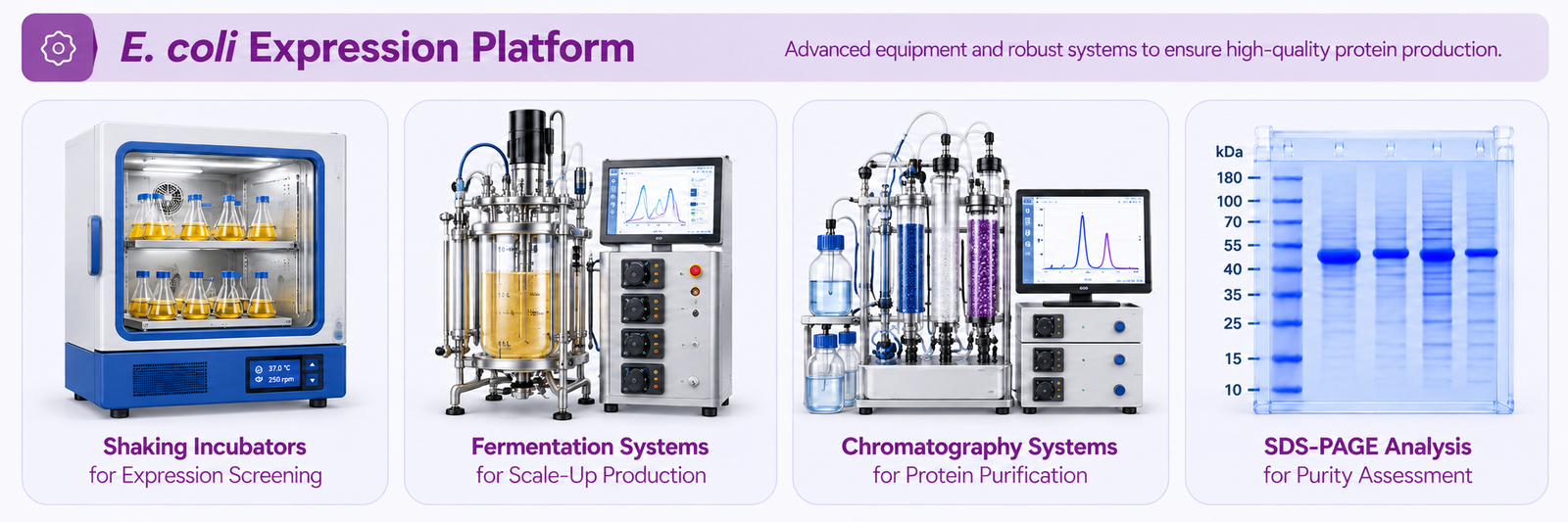
Instrument images are scientific illustrations of workflow categories and do not identify or claim ownership of specific equipment models.
Expression vectors and affinity tags
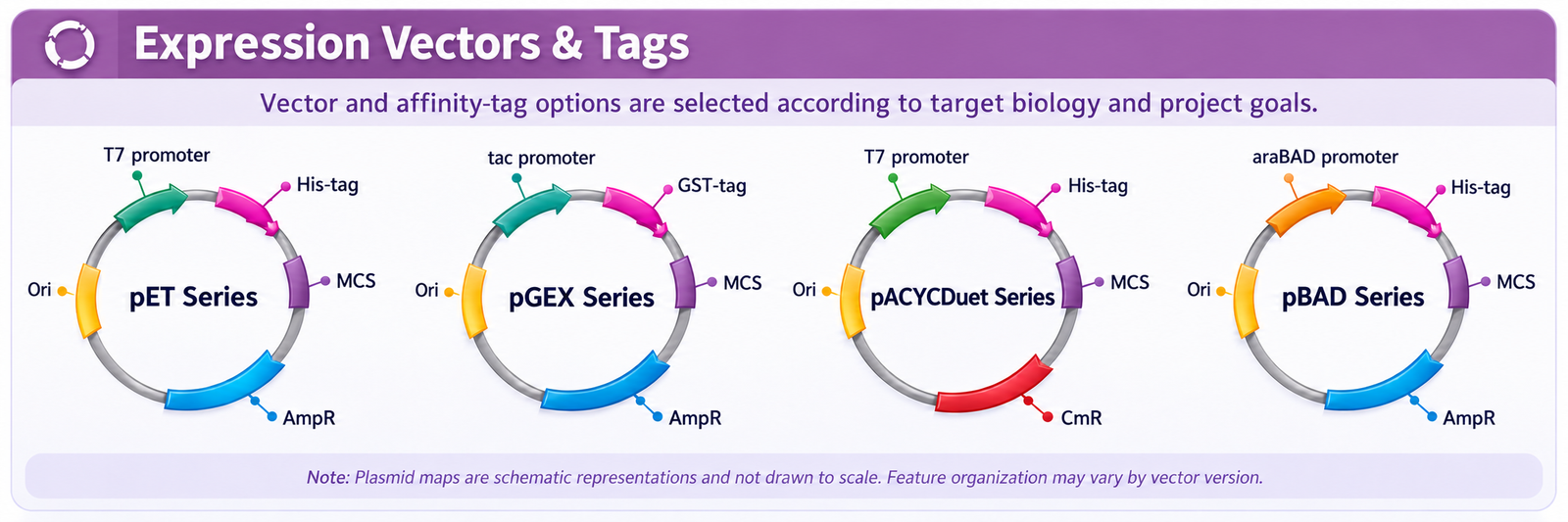
Vector selection should match the expression host, promoter system, copy-number requirements, resistance marker and downstream purification plan. His, GST, MBP and other tags can support purification or solubility, but tag position and cleavage requirements should be considered before cloning. The diagrams below are conceptual maps, not sequence-accurate vector maps.
Research applications
Purified recombinant proteins may support antibody discovery, enzyme studies, structural work, binding and interaction assays, vaccine research and diagnostic-reagent development. The required purity, oligomeric state, endotoxin level, buffer and functional testing should be defined according to the intended experiment.

Quality control and optional characterization
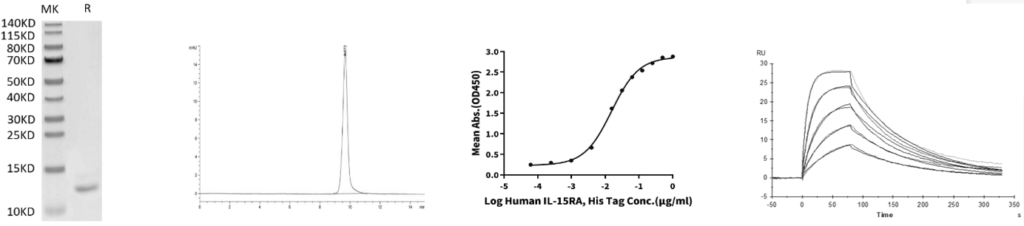
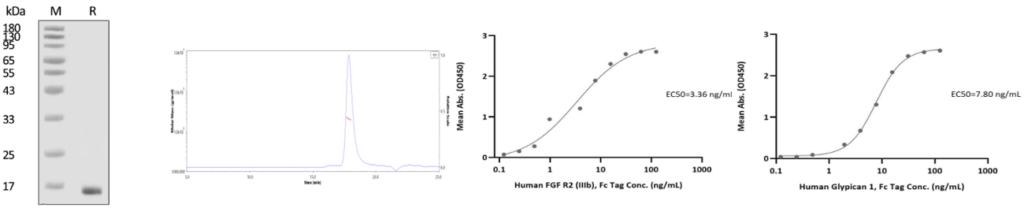
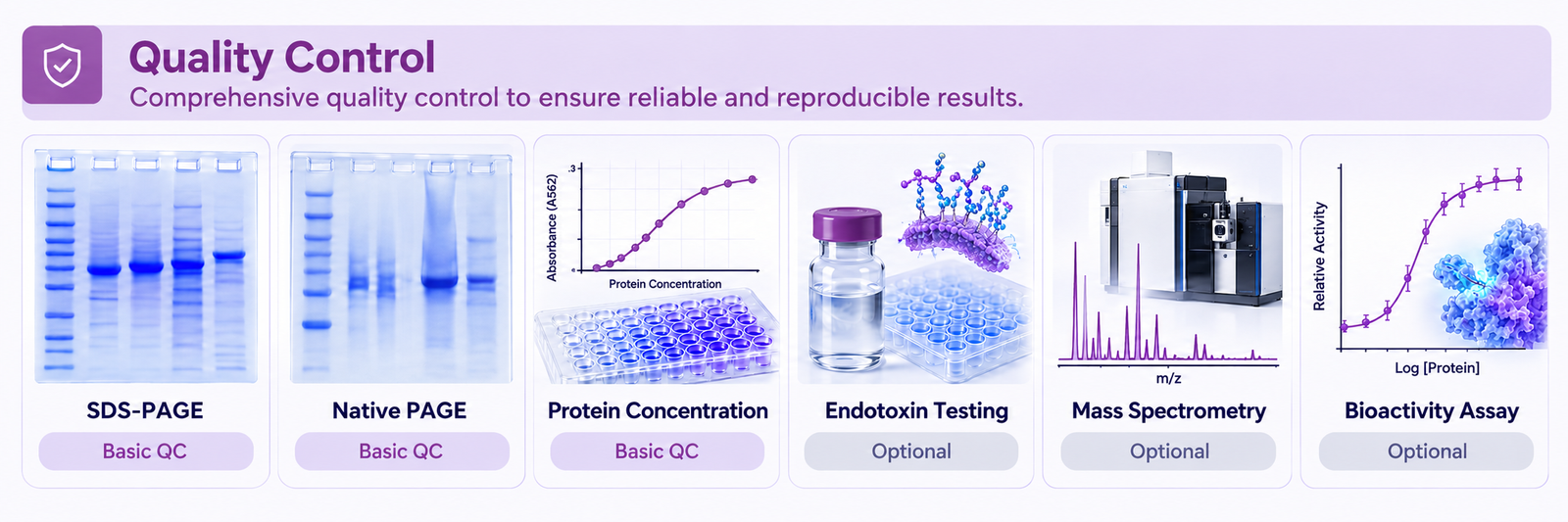
Basic QC for the Standard Expression Package consists of native PAGE, reducing SDS-PAGE and a standard COA/study report. Protein concentration is measured and reported as appropriate to the agreed workflow. Endotoxin testing, mass spectrometry, bioactivity assessment, SEC and other characterization are optional and require a separately confirmed analytical plan.
Basic QC
Native PAGE, reducing SDS-PAGE and the standard COA/study report are the defined basic QC scope for the Standard Expression Package.
Optional testing
Endotoxin, mass spectrometry, SEC-based analysis and bioactivity testing are selected and quoted according to the target and assay design.
Target-specific specifications
Yield, recovery, purity, activity and endotoxin outcomes are target- and method-dependent; numerical acceptance criteria must be agreed for the individual project.
Technical options around the core workflow
Purification development
Affinity capture can be supplemented by ion exchange, size-exclusion chromatography, buffer exchange or tag cleavage when the construct and protein stability support the approach. See our recombinant protein purification services.
Alternative expression systems
Targets that require eukaryotic processing or do not behave well in bacteria may be considered for mammalian, yeast, insect or cell-free expression.
Information needed for review
Provide the sequence or accession number, desired amount, preferred tag, target buffer, intended use and any required analytical acceptance criteria.
E. coli protein expression FAQ
Which proteins are suitable for expression in E. coli?
Many bacterial proteins, enzymes, non-glycosylated fragments, research antigens and soluble domains are reasonable candidates. Suitability still depends on folding, solubility, toxicity and whether the experiment requires modifications not typically provided by bacteria.
Can I provide my own plasmid?
A customer-supplied construct can be considered, provided the relevant vector map, insert sequence, antibiotic marker and expression conditions are available for technical assessment. Any verification, re-cloning or adaptation work is agreed before production.
What happens if my protein forms inclusion bodies?
An insoluble expression outcome can trigger a review of induction conditions, tag strategy or recovery options. Solubilization and refolding may be assessed as a separately defined scope. Recovered activity and yield are target-dependent and cannot be promised in advance.
Can you deliver a low-endotoxin E. coli protein?
A target-specific endotoxin control and test plan can be discussed. Achievable results depend on the protein, process and analytical method. Removal, testing and any numerical acceptance limit are separately confirmed; a generic “endotoxin-free” claim is not appropriate.
Do you offer polishing chromatography or tag removal?
Additional SEC purification, buffer exchange and tag-cleavage workflows can be assessed where technically appropriate. Their inclusion, feasibility and price depend on construct features, protein stability and the requested final specification.
Discuss an E. coli expression project
Send the target sequence or accession number together with your intended application, desired amount, tag preference and analytical needs. The proposed construct, expression route, purification plan and final quotation can then be reviewed for technical fit.
Request a QuoteFor research use only. Non-GMP service. Public prices describe the listed baseline scope and remain subject to technical assessment and final quotation.