Mouse anti-Human/Rat BIRC5 Monoclonal Antibody

Mouse anti-Human/Rat BIRC5 Monoclonal Antibody — Multitasking protein that has dual roles in promoting cell proliferation and preventing apoptosis.

SKU: BCREC-000298MA Category:

Product Specifications

Uniprot No.O15392
Target NamesBIRC5
Species ReactivityMouse
ImmunogenRecombinant Protein
Immunogen SpeciesHuman, Rat
ConjugateNon-conjugated
IsotypeIgG
ClonalityMonoclonal
ApplicationsELISA,WB,IHC
BufferPBS, 50% glycerol, 0.05% Proclin 300, 0.05%BSA
StorageUpon receipt, store at -20°C or -80°C. Avoid repeated freeze.

Function

Multitasking protein that has dual roles in promoting cell proliferation and preventing apoptosis. Component of a chromosome passage protein complex (CPC) which is essential for chromosome alignment and segregation during mitosis and cytokinesis. Acts as an important regulator of the localization of this complex; directs CPC movement to different locations from the inner centromere during prometaphase to midbody during cytokinesis and participates in the organization of the center spindle by associating with polymerized microtubules.

Biological Context

Subcellular Location: Cytoplasm; Nucleus; Chromosome; Chromosome, centromere; Cytoplasm, cytoskeleton, spindle; Chromosome, centromere, kinetochore; Midbody
Tissue Specificity: Expressed only in fetal kidney and liver, and to lesser extent, lung and brain. Abundantly expressed in adenocarcinoma (lung, pancreas, colon, breast, and prostate) and in high-grade lymphomas. Also expressed in various renal cell carcinoma cell lines. Expressed in cochlea including the organ of Corti, the lateral wall, the interdental cells of the Limbus as well as in Schwann cells and cells of the cochlear nerve and the spiral ganglions (at protein level). Not expressed in cells of the inner and outer sulcus or the Reissner's membrane (at protein level)

Product Specifications

Mouse anti-Human/Rat BIRC5 Monoclonal Antibody is a recombinant protein. Suitable for ELISA and Western Blot applications.

SDS-PAGE: Single band at expected molecular weight confirming purity.

ELISA: Suitable as coating antigen or detection standard.

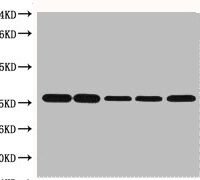
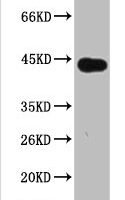
Western Blot: Compatible with standard Western Blot protocols.

Protein Interaction: Validated for SPR (Surface Plasmon Resonance) and BLI (Bio-Layer Interferometry) studies.

Shipping: Shipped at ambient temperature. Lyophilized protein is stable during transit.

Storage: Store lyophilized protein at -20°C to -80°C. Reconstituted protein should be aliquoted and stored at -80°C. Avoid repeated freeze-thaw cycles.

Shelf Life: 12 months from date of receipt when stored as recommended.

Shipping Time: Orders placed before 2 PM EST ship same day. International orders typically deliver within 5-10 business days.

Protein Biology

Function

Multitasking protein that has dual roles in promoting cell proliferation and preventing apoptosis (PubMed:20627126, PubMed:21364656, PubMed:25778398, PubMed:28218735, PubMed:9859993). Component of a chromosome passage protein complex (CPC) which is essential for chromosome alignment and segregation during mitosis and cytokinesis (PubMed:16322459). Acts as an important regulator of the localization of this complex; directs CPC movement to different locations from the inner centromere during prometaphase to midbody during cytokinesis and participates in the organization of the center spindle by associating with polymerized microtubules (PubMed:20826784). Involved in the recruitment of CPC to centromeres during early mitosis via association with histone H3 phosphorylated at 'Thr-3' (H3pT3) during mitosis (PubMed:20929775). The complex with RAN plays a role in mitotic spindle formation by serving as a physical scaffold to help deliver the RAN effector molecule TPX2 to microtubules (PubMed:18591255). May counteract a default induction of apoptosis in G2/M phase (PubMed:9859993). The acetylated form represses STAT3 transactivation of target gene promoters (PubMed:20826784). May play a role in neoplasia (PubMed:10626797). Inhibitor of CASP3 and CASP7 (PubMed:21536684). Essential for the maintenance of mitochondrial integrity and function (PubMed:25778398). Isoform 2 and isoform 3 do not appear to play vital roles in mitosis (PubMed:12773388, PubMed:16291752). Isoform 3 shows a marked reduction in its anti-apoptotic effects when compared with the displayed wild-type isoform (PubMed:10626797)

Subcellular Location

Cytoplasm; Nucleus; Chromosome; Chromosome, centromere; Cytoplasm, cytoskeleton, spindle; Chromosome, centromere, kinetochore; Midbody

Tissue Specificity

Expressed only in fetal kidney and liver, and to lesser extent, lung and brain (PubMed:10626797). Abundantly expressed in adenocarcinoma (lung, pancreas, colon, breast, and prostate) and in high-grade lymphomas (PubMed:14741722, PubMed:16329164). Also expressed in various renal cell carcinoma cell lines (PubMed:10626797). Expressed in cochlea including the organ of Corti, the lateral wall, the interdental cells of the Limbus as well as in Schwann cells and cells of the cochlear nerve and the spiral ganglions (at protein level). Not expressed in cells of the inner and outer sulcus or the Reissner's membrane (at protein level) (PubMed:20627126, PubMed:21364656)

Subunit

(Microbial infection) Interacts with Epstein-Barr virus (EBV) EBNA1; this interaction is probably important for EBV episome maintenance in Burkitt's lymphoma cells

Gene: BIRC5  |  Organism: Homo sapiens  |  Synonyms: Apoptosis inhibitor 4; Apoptosis inhibitor survivin
Key Publications

Frequently Asked Questions

How do I order or inquire about this product?

Fill out the Online Inquiry form with your required quantity and specifications. You can also email sales@biocrestsci.com. Our team typically responds within 4 business hours with a quote and availability confirmation.

What is the shipping and delivery time?

Orders placed before 2 PM EST ship the same day. Domestic (US) delivery typically takes 2-3 business days. International orders deliver within 5-10 business days. All products are shipped at ambient temperature with appropriate packaging to ensure stability.

How should I store this recombinant protein?

Lyophilized proteins should be stored at -20°C to -80°C upon receipt. After reconstitution, aliquot and store at -80°C. Avoid repeated freeze-thaw cycles. Shelf life is 12 months from date of receipt when stored as recommended.

What quality controls are performed on your products?

Each product undergoes SDS-PAGE purity analysis (typically >85-95%), endotoxin testing, and bioactivity validation. Products are validated for ELISA, Western Blot, and SPR/BLI applications as specified on this product page. A Certificate of Analysis (CoA) is available upon request.

Shopping Cart
Scroll to Top