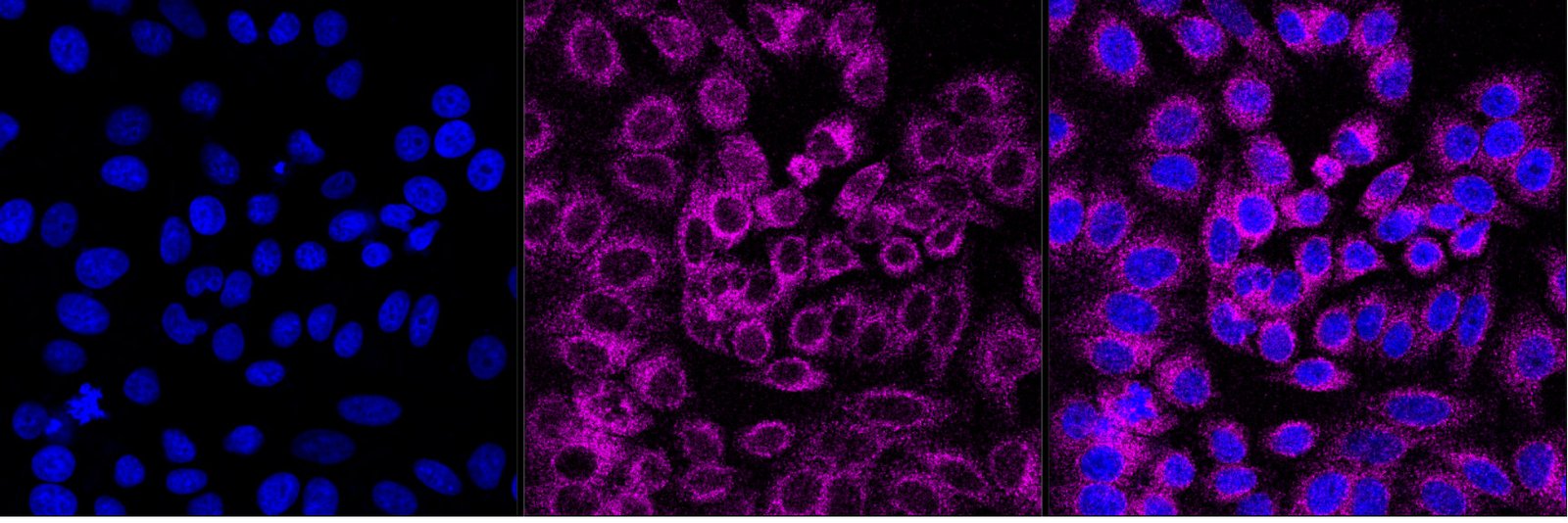
Mouse anti-Human sapiens (Human) ALG2 Monoclonal Antibody

Mouse anti-Human sapiens (Human) ALG2 Monoclonal Antibody — Mannosyltransferase that operates in the biosynthetic pathway of dolichol-linked oligosaccharides, the glycan precursors employed in protein asparagine (N)-glycosylation.

SKU: BCREC-000382MA Category:

Product Specifications

Uniprot No.Q9H553
Target NamesALG2
Species ReactivityMouse
ImmunogenRecombinant Human ALG2 protein
Immunogen SpeciesHomo sapiens (Human)
ConjugateNon-conjugated
IsotypeMouse IgG1
ClonalityMonoclonal
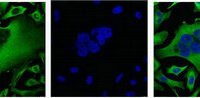
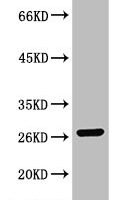
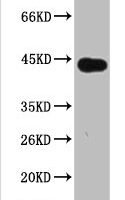
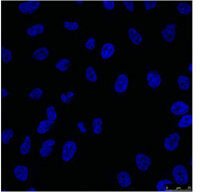
ApplicationsELISA, WB, ICC
BufferPBS, 50% glycerol, 0.05% Proclin 300, 0.05%BSA
StorageUpon receipt, store at -20°C or -80°C. Avoid repeated freeze.

Function

Mannosyltransferase that operates in the biosynthetic pathway of dolichol-linked oligosaccharides, the glycan precursors employed in protein asparagine (N)-glycosylation. The assembly of dolichol-linked oligosaccharides begins on the cytosolic side of the endoplasmic reticulum membrane and finishes in its lumen. The sequential addition of sugars to dolichol pyrophosphate produces dolichol-linked oligosaccharides containing fourteen sugars, including two GlcNAcs, nine mannoses and three glucoses.

Biological Context

Subcellular Location: Endoplasmic reticulum membrane (Single-pass membrane protein)
Disease Association: Congenital disorder of glycosylation 1I (CDG1I) : A form of congenital disorder of glycosylation, a multisystem disorder caused by a defect in glycoprotein biosynthesis and characterized by under-glycosylated serum glycoproteins. Congenital disorders of glycosylation result in a wide variety of clinical features, such as defects in the nervous system development, psychomotor retardation, dysmorphic features, hypotonia, coagulation disorders, and immunodeficiency. The broad spectrum of features reflects the critical role of N-glycoproteins during embryonic development, differentiation, and maintenance of cell functions. [The disease is caused by variants affecting the gene represented in this entry] | Myasthenic syndrome, congenital, 14 (CMS14) : A form of congenital myasthenic syndrome, a group of disorders characterized by failure of neuromuscular transmission, including pre-synaptic, synaptic, and post-synaptic disorders that are not of autoimmune origin. Clinical features are easy fatigability and muscle weakness. CMS14 is an autosomal recessive form characterized by onset of limb-girdle muscle weakness in early childhood. The disorder is slowly progressive, and some patients may become wheelchair-bound. [The disease is caused by variants affecting the gene represented in this entry]
Pathway: Protein modification; protein glycosylation

Product Specifications

Mouse anti-Human sapiens (Human) ALG2 Monoclonal Antibody is a recombinant protein. Suitable for ELISA and Western Blot applications.

SDS-PAGE: Single band at expected molecular weight confirming purity.

ELISA: Suitable as coating antigen or detection standard.

Western Blot: Compatible with standard Western Blot protocols.

Protein Interaction: Validated for SPR (Surface Plasmon Resonance) and BLI (Bio-Layer Interferometry) studies.

Shipping: Shipped at ambient temperature. Lyophilized protein is stable during transit.

Storage: Store lyophilized protein at -20°C to -80°C. Reconstituted protein should be aliquoted and stored at -80°C. Avoid repeated freeze-thaw cycles.

Shelf Life: 12 months from date of receipt when stored as recommended.

Shipping Time: Orders placed before 2 PM EST ship same day. International orders typically deliver within 5-10 business days.

Protein Biology

Function

Mannosyltransferase that operates in the biosynthetic pathway of dolichol-linked oligosaccharides, the glycan precursors employed in protein asparagine (N)-glycosylation. The assembly of dolichol-linked oligosaccharides begins on the cytosolic side of the endoplasmic reticulum membrane and finishes in its lumen. The sequential addition of sugars to dolichol pyrophosphate produces dolichol-linked oligosaccharides containing fourteen sugars, including two GlcNAcs, nine mannoses and three glucoses. Once assembled, the oligosaccharide is transferred from the lipid to nascent proteins by oligosaccharyltransferases. Catalyzes, on the cytoplasmic face of the endoplasmic reticulum, the addition of the second and third mannose residues to the dolichol-linked oligosaccharide chain, to produce Man3GlcNAc(2)-PP-dolichol core oligosaccharide. Man3GlcNAc(2)-PP-dolichol is a substrate for ALG11, the following enzyme in the biosynthetic pathway (PubMed:12684507, PubMed:35136180). While both alpha 1,3 and alpha 1,6 linkages are possible, the sequential addition of alpha 1,3 followed by alpha 1,6 is probably the preferred route (PubMed:35136180)

Subcellular Location

Endoplasmic reticulum membrane (Single-pass membrane protein)

Disease Association

Congenital disorder of glycosylation 1I (CDG1I) : A form of congenital disorder of glycosylation, a multisystem disorder caused by a defect in glycoprotein biosynthesis and characterized by under-glycosylated serum glycoproteins. Congenital disorders of glycosylation result in a wide variety of clinical features, such as defects in the nervous system development, psychomotor retardation, dysmorphic features, hypotonia, coagulation disorders, and immunodeficiency. The broad spectrum of features reflects the critical role of N-glycoproteins during embryonic development, differentiation, and maintenance of cell functions. [The disease is caused by variants affecting the gene represented in this entry] | Myasthenic syndrome, congenital, 14 (CMS14) : A form of congenital myasthenic syndrome, a group of disorders characterized by failure of neuromuscular transmission, including pre-synaptic, synaptic, and post-synaptic disorders that are not of autoimmune origin. Clinical features are easy fatigability and muscle weakness. CMS14 is an autosomal recessive form characterized by onset of limb-girdle muscle weakness in early childhood. The disorder is slowly progressive, and some patients may become wheelchair-bound. [The disease is caused by variants affecting the gene represented in this entry]

Pathway

Protein modification; protein glycosylation

Gene: ALG2  |  Organism: Homo sapiens  |  Synonyms: Asparagine-linked glycosylation protein 2 homolog; GDP-Man:Man(1)GlcNAc(2)-PP-Dol alpha-1,3-mannosyltransferase; GDP-Man:Man(1)GlcNAc(2)-PP-dolichol mannosyltransferase; GDP-Man:Man(2)GlcNAc(2)-PP-Dol alpha-1,6-mannosyltransferase
Key Publications

Frequently Asked Questions

How do I order or inquire about this product?

Fill out the Online Inquiry form with your required quantity and specifications. You can also email sales@biocrestsci.com. Our team typically responds within 4 business hours with a quote and availability confirmation.

What is the shipping and delivery time?

Orders placed before 2 PM EST ship the same day. Domestic (US) delivery typically takes 2-3 business days. International orders deliver within 5-10 business days. All products are shipped at ambient temperature with appropriate packaging to ensure stability.

How should I store this recombinant protein?

Lyophilized proteins should be stored at -20°C to -80°C upon receipt. After reconstitution, aliquot and store at -80°C. Avoid repeated freeze-thaw cycles. Shelf life is 12 months from date of receipt when stored as recommended.

What quality controls are performed on your products?

Each product undergoes SDS-PAGE purity analysis (typically >85-95%), endotoxin testing, and bioactivity validation. Products are validated for ELISA, Western Blot, and SPR/BLI applications as specified on this product page. A Certificate of Analysis (CoA) is available upon request.

Shopping Cart
Scroll to Top