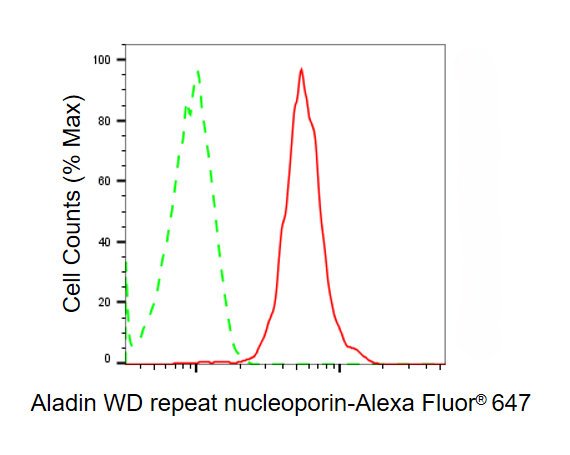
Mouse anti-Human sapiens (Human) AAAS Monoclonal Antibody

Mouse anti-Human sapiens (Human) AAAS Monoclonal Antibody — Plays a role in the normal development of the peripheral and central nervous system.

SKU: BCREC-000387MA Category:

Product Specifications

Uniprot No.Q9NRG9
Target NamesAAAS
Species ReactivityMouse
ImmunogenRecombinant Human AAAS protein
Immunogen SpeciesHomo sapiens (Human)
ConjugateNon-conjugated
IsotypeMouse IgG2a
ClonalityMonoclonal
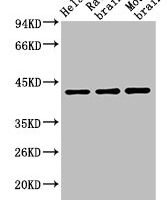
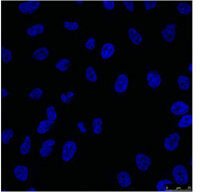
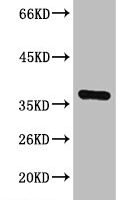
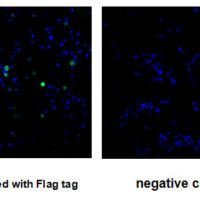
ApplicationsELISA, WB, FC, ICC
BufferPBS, 50% glycerol, 0.05% Proclin 300, 0.05%BSA
StorageUpon receipt, store at -20°C or -80°C. Avoid repeated freeze.

Function

Plays a role in the normal development of the peripheral and central nervous system. Required for the correct localization of aurora kinase AURKA and the microtubule minus end-binding protein NUMA1 as well as a subset of AURKA targets which ensures proper spindle formation and timely chromosome alignment.

Biological Context

Subcellular Location: Nucleus, nuclear pore complex; Cytoplasm, cytoskeleton, spindle pole; Nucleus envelope
Tissue Specificity: Widely expressed. Particularly abundant in cerebellum, corpus callosum, adrenal gland, pituitary gland, gastrointestinal structures and fetal lung
Disease Association: Achalasia-addisonianism-alacrima syndrome (AAAS) : An autosomal recessive disorder characterized by adreno-corticotropic hormone (ACTH)-resistant adrenal failure, achalasia of the esophageal cardia and alacrima. The syndrome is associated with variable and progressive neurological impairment involving the central, peripheral, and autonomic nervous system. Other features such as palmoplantar hyperkeratosis, short stature, facial dysmorphy and osteoporosis may also be present. [The disease is caused by variants affecting the gene represented in this entry]

Product Specifications

Mouse anti-Human sapiens (Human) AAAS Monoclonal Antibody is a recombinant protein. Suitable for ELISA and Western Blot applications.

SDS-PAGE: Single band at expected molecular weight confirming purity.

ELISA: Suitable as coating antigen or detection standard.

Western Blot: Compatible with standard Western Blot protocols.

Protein Interaction: Validated for SPR (Surface Plasmon Resonance) and BLI (Bio-Layer Interferometry) studies.

Shipping: Shipped at ambient temperature. Lyophilized protein is stable during transit.

Storage: Store lyophilized protein at -20°C to -80°C. Reconstituted protein should be aliquoted and stored at -80°C. Avoid repeated freeze-thaw cycles.

Shelf Life: 12 months from date of receipt when stored as recommended.

Shipping Time: Orders placed before 2 PM EST ship same day. International orders typically deliver within 5-10 business days.

Protein Biology

Function

Plays a role in the normal development of the peripheral and central nervous system (PubMed:11062474, PubMed:11159947, PubMed:16022285). Required for the correct localization of aurora kinase AURKA and the microtubule minus end-binding protein NUMA1 as well as a subset of AURKA targets which ensures proper spindle formation and timely chromosome alignment (PubMed:26246606)

Subcellular Location

Nucleus, nuclear pore complex; Cytoplasm, cytoskeleton, spindle pole; Nucleus envelope

Disease Association

Achalasia-addisonianism-alacrima syndrome (AAAS) : An autosomal recessive disorder characterized by adreno-corticotropic hormone (ACTH)-resistant adrenal failure, achalasia of the esophageal cardia and alacrima. The syndrome is associated with variable and progressive neurological impairment involving the central, peripheral, and autonomic nervous system. Other features such as palmoplantar hyperkeratosis, short stature, facial dysmorphy and osteoporosis may also be present. [The disease is caused by variants affecting the gene represented in this entry]

Tissue Specificity

Widely expressed (PubMed:11159947, PubMed:16022285). Particularly abundant in cerebellum, corpus callosum, adrenal gland, pituitary gland, gastrointestinal structures and fetal lung (PubMed:11159947)

Subunit

Interacts with NDC1, the interaction is required for nuclear pore localization (PubMed:19782045). Interacts with the inactive form aurora kinase AURKA (PubMed:26246606). Interacts with PGRMC2 (PubMed:27754849)

Gene: AAAS  |  Organism: Homo sapiens  |  Synonyms: Adracalin
Key Publications

Frequently Asked Questions

How do I order or inquire about this product?

Fill out the Online Inquiry form with your required quantity and specifications. You can also email sales@biocrestsci.com. Our team typically responds within 4 business hours with a quote and availability confirmation.

What is the shipping and delivery time?

Orders placed before 2 PM EST ship the same day. Domestic (US) delivery typically takes 2-3 business days. International orders deliver within 5-10 business days. All products are shipped at ambient temperature with appropriate packaging to ensure stability.

How should I store this recombinant protein?

Lyophilized proteins should be stored at -20°C to -80°C upon receipt. After reconstitution, aliquot and store at -80°C. Avoid repeated freeze-thaw cycles. Shelf life is 12 months from date of receipt when stored as recommended.

What quality controls are performed on your products?

Each product undergoes SDS-PAGE purity analysis (typically >85-95%), endotoxin testing, and bioactivity validation. Products are validated for ELISA, Western Blot, and SPR/BLI applications as specified on this product page. A Certificate of Analysis (CoA) is available upon request.

Shopping Cart
Scroll to Top