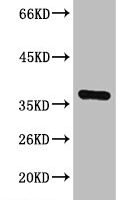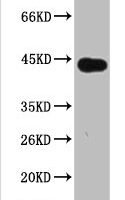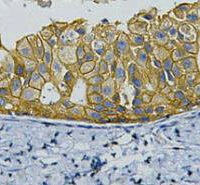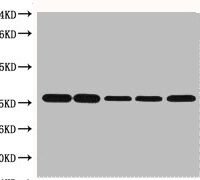
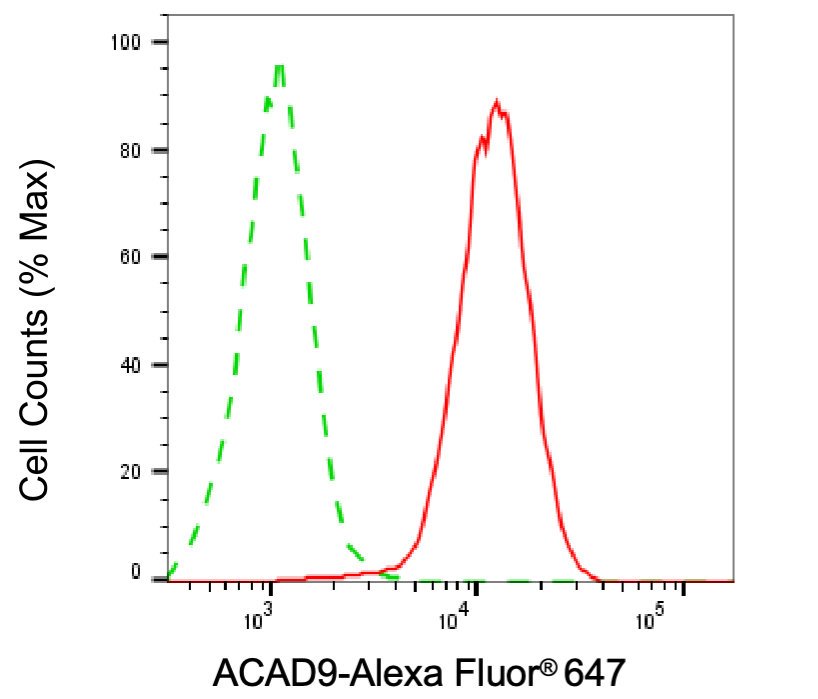
Mouse anti-Human/Mouse/Rat sapiens (Human) ACAD9 Monoclonal Antibody

Mouse anti-Human/Mouse/Rat sapiens (Human) ACAD9 Monoclonal Antibody — Together with NDUFAF1 and ECSIT, forms part of the mitochondrial complex I (MCIA),which is required for the biogenesis of respiratory Complex I (CI) and is therefore crucial for the activation of t…

SKU: BCREC-000792MA Category:

Product Specifications

Uniprot No.Q9H845
Target NamesACAD9
Species ReactivityMouse
ImmunogenRecombinant Human ACAD9 protein
Immunogen SpeciesHomo sapiens (Human)
ConjugateNon-conjugated
IsotypeMouse IgG1
ClonalityMonoclonal
ApplicationsELISA, WB, FC, ICC
BufferPBS, 50% glycerol, 0.05% Proclin 300, 0.05%BSA
StorageUpon receipt, store at -20°C or -80°C. Avoid repeated freeze.

Function

Together with NDUFAF1 and ECSIT, forms part of the mitochondrial complex I (MCIA),which is required for the biogenesis of respiratory Complex I (CI) and is therefore crucial for the activation of the oxidative phosphorylation system. ECSIT binding triggers a large conformational change, switching ACAD9 from a fatty acid oxidation (FAO) enzyme to a CI assembly factor. The function in CI assembly is independent of the fatty acid oxidation (FAO) activity of the protein.

Biological Context

Subcellular Location: Mitochondrion inner membrane (Peripheral membrane protein)
Tissue Specificity: Ubiquitously expressed in most normal human tissues and cancer cell lines with higher levels in heart, skeletal muscles, and the central nervous system (where it is the highest expressed ACAD). Highly expressed (at protein level) in the cerebellum (Purkinje neurons, dentate nucleus, and in the granular layer), where ACADV is not found
Disease Association: Mitochondrial complex I deficiency, nuclear type 20 (MC1DN20) : An autosomal recessive metabolic disorder associated with mitochondrial complex I deficiency, resulting in multisystemic and variable manifestations. Clinical features include infantile onset of acute metabolic acidosis, Reye-like episodes (brain edema and vomiting that may rapidly progress to seizures, coma and death), exercise intolerance, hypertrophic cardiomyopathy, liver failure, muscle weakness, and neurologic dysfunction. [The disease is caused by variants affecting the gene represented in this entry]

Product Specifications

Mouse anti-Human/Mouse/Rat sapiens (Human) ACAD9 Monoclonal Antibody is a recombinant protein. Suitable for ELISA and Western Blot applications.

SDS-PAGE: Single band at expected molecular weight confirming purity.

ELISA: Suitable as coating antigen or detection standard.

Western Blot: Compatible with standard Western Blot protocols.

Protein Interaction: Validated for SPR (Surface Plasmon Resonance) and BLI (Bio-Layer Interferometry) studies.

Shipping: Shipped at ambient temperature. Lyophilized protein is stable during transit.

Storage: Store lyophilized protein at -20°C to -80°C. Reconstituted protein should be aliquoted and stored at -80°C. Avoid repeated freeze-thaw cycles.

Shelf Life: 12 months from date of receipt when stored as recommended.

Shipping Time: Orders placed before 2 PM EST ship same day. International orders typically deliver within 5-10 business days.

Protein Biology

Function

Together with NDUFAF1 and ECSIT, forms part of the mitochondrial complex I (MCIA),which is required for the biogenesis of respiratory Complex I (CI) and is therefore crucial for the activation of the oxidative phosphorylation system (PubMed:20816094, PubMed:24158852, PubMed:32320651, PubMed:38086790). ECSIT binding triggers a large conformational change, switching ACAD9 from a fatty acid oxidation (FAO) enzyme to a CI assembly factor (PubMed:38086790). The function in CI assembly is independent of the fatty acid oxidation (FAO) activity of the protein (PubMed:24158852). As FAO enzyme, it catalyzes the first step in mitochondrial FAO, which consists in the proR-proR stereospecific alpha, beta-dehydrogenation of fatty acyl-CoA thioesters using the electron transfer flavoprotein (ETF) as their physiologic electron acceptor, resulting in the formation of trans-2-enoyl-CoA ((2E)-enoyl-CoA) (PubMed:12359260, PubMed:16020546, PubMed:17564966, PubMed:21237683, PubMed:24158852). Its preferred substrates are both saturated and unsaturated long-chain acyl-CoA substrates, with optimum activity toward the latter (PubMed:12359260, PubMed:16020546, PubMed:17564966, PubMed:21237683, PubMed:24158852). In addition, based on its established catalytic mechanism, and combined genetic interaction or mutant phenotype evidence, it is predicted to act also on substrates that have not been tested experimentally but are metabolized by mitochondrial FAO, including long-chain unsaturated fatty acids such as linoleate (9Z,12Z-octadecadienoate), linolenate (9Z,12Z,15Z-octadecatrienoate), and others (PubMed:26474213). Among the different mitochondrial acyl-CoA dehydrogenases, its FAO activity overlaps with that of ACADV and ACADL, but plays a primary role in tissues where it is the main long-chain ACAD expressed, such as the central nervous system (PubMed:16020546, PubMed:17564966, PubMed:24158852, PubMed:25721401, PubMed:26474213). It differs significantly from ACADVL in the use of polyunsaturated substrates in vitro, especially docosahexaenoic acid (which is not primarily used for energy but mainly beta-oxidized in the peroxisomes) (PubMed:16020546, PubMed:17564966)

Subcellular Location

Mitochondrion inner membrane (Peripheral membrane protein)

Disease Association

Mitochondrial complex I deficiency, nuclear type 20 (MC1DN20) : An autosomal recessive metabolic disorder associated with mitochondrial complex I deficiency, resulting in multisystemic and variable manifestations. Clinical features include infantile onset of acute metabolic acidosis, Reye-like episodes (brain edema and vomiting that may rapidly progress to seizures, coma and death), exercise intolerance, hypertrophic cardiomyopathy, liver failure, muscle weakness, and neurologic dysfunction. [The disease is caused by variants affecting the gene represented in this entry]

Tissue Specificity

Ubiquitously expressed in most normal human tissues and cancer cell lines with higher levels in heart, skeletal muscles, and the central nervous system (where it is the highest expressed ACAD) (PubMed:12359260, PubMed:17564966). Highly expressed (at protein level) in the cerebellum (Purkinje neurons, dentate nucleus, and in the granular layer), where ACADV is not found (PubMed:17564966, PubMed:21237683)

Subunit

Homodimer (PubMed:16020546). Interacts with NDUFAF1 and ECSIT (PubMed:20816094). Part of the mitochondrial complex I assembly/MCIA complex that comprises at least the core subunits TMEM126B, NDUFAF1, ECSIT and ACAD9 and complement subunits such as COA1 and TMEM186 (PubMed:32320651). Interacts with TMEM70 and TMEM242 (PubMed:33753518)

Gene: ACAD9  |  Organism: Homo sapiens  |  Synonyms: Acyl-CoA dehydrogenase family member 9
Key Publications

Frequently Asked Questions

How do I order or inquire about this product?

Fill out the Online Inquiry form with your required quantity and specifications. You can also email sales@biocrestsci.com. Our team typically responds within 4 business hours with a quote and availability confirmation.

What is the shipping and delivery time?

Orders placed before 2 PM EST ship the same day. Domestic (US) delivery typically takes 2-3 business days. International orders deliver within 5-10 business days. All products are shipped at ambient temperature with appropriate packaging to ensure stability.

How should I store this recombinant protein?

Lyophilized proteins should be stored at -20°C to -80°C upon receipt. After reconstitution, aliquot and store at -80°C. Avoid repeated freeze-thaw cycles. Shelf life is 12 months from date of receipt when stored as recommended.

What quality controls are performed on your products?

Each product undergoes SDS-PAGE purity analysis (typically >85-95%), endotoxin testing, and bioactivity validation. Products are validated for ELISA, Western Blot, and SPR/BLI applications as specified on this product page. A Certificate of Analysis (CoA) is available upon request.

Shopping Cart
Scroll to Top