Mouse anti-Human sapiens (Human) CEP55 Monoclonal Antibody

Mouse anti-Human sapiens (Human) CEP55 Monoclonal Antibody — Plays a role in mitotic exit and cytokinesis.

SKU: BCREC-000940MA Category:

Product Specifications

Uniprot No.Q53EZ4
Target NamesCEP55
Species ReactivityMouse
ImmunogenRecombinant Human CEP55 protein
Immunogen SpeciesHomo sapiens (Human)
ConjugateNon-conjugated
IsotypeMouse IgG1
ClonalityMonoclonal
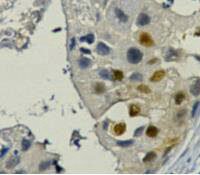
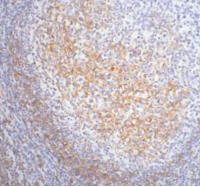
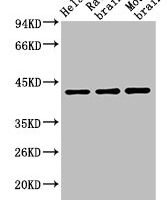
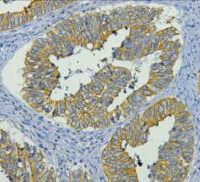
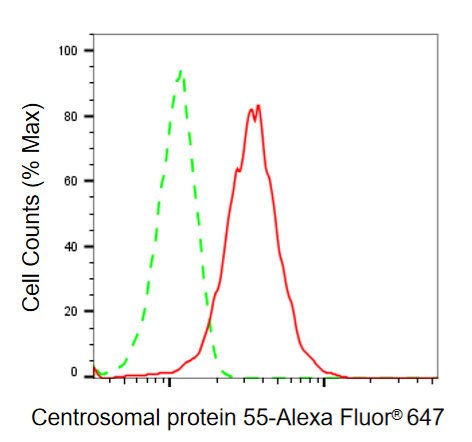
ApplicationsELISA, WB, FC
BufferPBS, 50% glycerol, 0.05% Proclin 300, 0.05%BSA
StorageUpon receipt, store at -20°C or -80°C. Avoid repeated freeze.

Function

Plays a role in mitotic exit and cytokinesis. Recruits PDCD6IP and TSG101 to midbody during cytokinesis. Required for successful completion of cytokinesis.

Biological Context

Subcellular Location: Cytoplasm; Cytoplasm, cytoskeleton, microtubule organizing center, centrosome, centriole; Cytoplasm, cytoskeleton, microtubule organizing center, centrosome; Cleavage furrow; Midbody, Midbody ring; Midbody
Tissue Specificity: Expressed in embryonic brain. Expressed in fetal brain ganglionic eminence, kidney tubules and multinucleate neurons in the temporal cortex. Expressed in adult brain, cerebellum, kidney tubules, intestine and muscles (at protein level). Widely expressed, mostly in proliferative tissues. Highly expressed in testis. Intermediate levels in adult and fetal thymus, as well as in various cancer cell lines. Low levels in different parts of the digestive tract, bone marrow, lymph nodes, placenta, fetal heart and fetal spleen. Hardly detected in brain
Disease Association: Multinucleated neurons, anhydramnios, renal dysplasia, cerebellar hypoplasia and hydranencephaly (MARCH) : An autosomal recessive, congenital disease characterized by severe hydranencephaly with multinucleated neurons, renal aplasia or dysplasia, and hypoplastic kidneys. Hydranencephaly is an anomaly leading to replacement of the cerebral hemispheres with a fluid-filled cyst. MARCH results in death in utero or in the perinatal period. [The disease is caused by variants affecting the gene represented in this entry]

Product Specifications

Mouse anti-Human sapiens (Human) CEP55 Monoclonal Antibody is a recombinant protein. Suitable for ELISA and Western Blot applications.

SDS-PAGE: Single band at expected molecular weight confirming purity.

ELISA: Suitable as coating antigen or detection standard.

Western Blot: Compatible with standard Western Blot protocols.

Protein Interaction: Validated for SPR (Surface Plasmon Resonance) and BLI (Bio-Layer Interferometry) studies.

Shipping: Shipped at ambient temperature. Lyophilized protein is stable during transit.

Storage: Store lyophilized protein at -20°C to -80°C. Reconstituted protein should be aliquoted and stored at -80°C. Avoid repeated freeze-thaw cycles.

Shelf Life: 12 months from date of receipt when stored as recommended.

Shipping Time: Orders placed before 2 PM EST ship same day. International orders typically deliver within 5-10 business days.

Protein Biology

Function

Plays a role in mitotic exit and cytokinesis (PubMed:16198290, PubMed:17853893). Recruits PDCD6IP and TSG101 to midbody during cytokinesis. Required for successful completion of cytokinesis (PubMed:17853893). Not required for microtubule nucleation (PubMed:16198290). Plays a role in the development of the brain and kidney (PubMed:28264986)

Subcellular Location

Cytoplasm; Cytoplasm, cytoskeleton, microtubule organizing center, centrosome, centriole; Cytoplasm, cytoskeleton, microtubule organizing center, centrosome; Cleavage furrow; Midbody, Midbody ring; Midbody

Disease Association

Multinucleated neurons, anhydramnios, renal dysplasia, cerebellar hypoplasia and hydranencephaly (MARCH) : An autosomal recessive, congenital disease characterized by severe hydranencephaly with multinucleated neurons, renal aplasia or dysplasia, and hypoplastic kidneys. Hydranencephaly is an anomaly leading to replacement of the cerebral hemispheres with a fluid-filled cyst. MARCH results in death in utero or in the perinatal period. [The disease is caused by variants affecting the gene represented in this entry]

Tissue Specificity

Expressed in embryonic brain (PubMed:28264986). Expressed in fetal brain ganglionic eminence, kidney tubules and multinucleate neurons in the temporal cortex (PubMed:28264986). Expressed in adult brain, cerebellum, kidney tubules, intestine and muscles (at protein level) (PubMed:28264986, PubMed:28295209). Widely expressed, mostly in proliferative tissues. Highly expressed in testis. Intermediate levels in adult and fetal thymus, as well as in various cancer cell lines. Low levels in different parts of the digestive tract, bone marrow, lymph nodes, placenta, fetal heart and fetal spleen. Hardly detected in brain

Subunit

Homodimer (PubMed:16406728). Interacts (phosphorylated on Ser-425 and Ser-428) with PLK1; the interaction is indirect via the MTMR3:MTMR4 heterooligomer, occurs during early mitosis, regulates the phosphorylation of CEP55 by PLK1 and its recruitment to the midbody where it can mediate cell abscission (PubMed:16198290, PubMed:25659891). Interacts with AKAP9/CG-NAP; the interaction occurs in interphase and is lost upon mitotic entry (PubMed:16198290). Interacts with PCNT/Kendrin; the interaction occurs in interphase and is lost upon mitotic entry (PubMed:16198290). Directly interacts with PDCD6IP; this interaction is required for PDCD6IP targeting to the midbody; CEP55 binds PDCD6IP in a 2:1 stoichiometry; PDCD6IP competes with TSG101 for the same binding site (PubMed:17556548, PubMed:17853893, PubMed:18641129, PubMed:18948538). Interacts with TSG101; TSG101 competes with PDCD6IP for the same binding site; interaction is required for cytokinesis but not for viral budding (PubMed:17556548, PubMed:17853893, PubMed:18948538). Interacts with MVB12A, VPS37B, VPS37C and VPS28 (PubMed:17853893)

Gene: CEP55  |  Organism: Homo sapiens  |  Synonyms: Up-regulated in colon cancer 6
Key Publications

Frequently Asked Questions

How do I order or inquire about this product?

Fill out the Online Inquiry form with your required quantity and specifications. You can also email sales@biocrestsci.com. Our team typically responds within 4 business hours with a quote and availability confirmation.

What is the shipping and delivery time?

Orders placed before 2 PM EST ship the same day. Domestic (US) delivery typically takes 2-3 business days. International orders deliver within 5-10 business days. All products are shipped at ambient temperature with appropriate packaging to ensure stability.

How should I store this recombinant protein?

Lyophilized proteins should be stored at -20°C to -80°C upon receipt. After reconstitution, aliquot and store at -80°C. Avoid repeated freeze-thaw cycles. Shelf life is 12 months from date of receipt when stored as recommended.

What quality controls are performed on your products?

Each product undergoes SDS-PAGE purity analysis (typically >85-95%), endotoxin testing, and bioactivity validation. Products are validated for ELISA, Western Blot, and SPR/BLI applications as specified on this product page. A Certificate of Analysis (CoA) is available upon request.

Shopping Cart
Scroll to Top