Function
Cell surface receptor for the cytokine IL10 that participates in IL10-mediated anti-inflammatory functions, limiting excessive tissue disruption caused by inflammation. Upon binding to IL10, induces a conformational change in IL10RB, allowing IL10RB to bind IL10 as well. In turn, the heterotetrameric assembly complex, composed of two subunits of IL10RA and IL10RB, activates the kinases JAK1 and TYK2 that are constitutively associated with IL10RA and IL10RB respectively.
Biological Context
Subcellular Location: Cell membrane (Single-pass type I membrane protein); Cytoplasm
Tissue Specificity: Primarily expressed in hematopoetic cells including B-cells, T-cells, NK cells, monocytes and macrophages. Not expressed in non-hematopoetic cells such as fibroblasts or endothelial cells
Disease Association: Inflammatory bowel disease 28, autosomal recessive (IBD28) : A chronic, relapsing inflammation of the gastrointestinal tract with a complex etiology. It is subdivided into Crohn disease and ulcerative colitis phenotypes. Crohn disease may affect any part of the gastrointestinal tract from the mouth to the anus, but most frequently it involves the terminal ileum and colon. Bowel inflammation is transmural and discontinuous; it may contain granulomas or be associated with intestinal or perianal fistulas. In contrast, in ulcerative colitis, the inflammation is continuous and limited to rectal and colonic mucosal layers; fistulas and granulomas are not observed. Both diseases include extraintestinal inflammation of the skin, eyes, or joints. [The disease is caused by variants affecting the gene represented in this entry]
Product Specifications
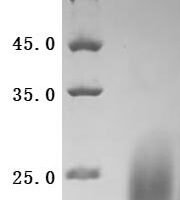
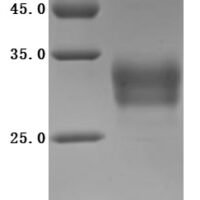
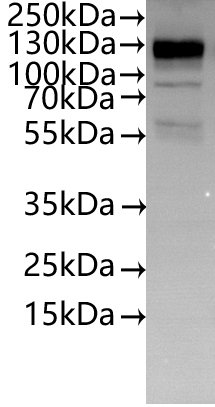
Recombinant Human Interleukin-10 receptor subunit alpha (IL10RA)-VLPs (Active) is a recombinant protein from Homo sapiens (Human), expressed in Mammalian cell, covering amino acids 22-578aa, with C-terminal 10xHis-tagged tag, molecular weight 62.2 kDa, purity /. Suitable for ELISA and Western Blot applications. Explore more Interleukin proteins →