Function
Medium-chain specific acyl-CoA dehydrogenase is one of the acyl-CoA dehydrogenases that catalyze the first step of mitochondrial fatty acid beta-oxidation (FAO), breaking down fatty acids into acetyl-CoA and allowing the production of energy from fats. The first step of FAO consists in the proR-proR stereospecific alpha, beta-dehydrogenation of fatty acyl-CoA thioesters using the electron transfer flavoprotein (ETF) as their physiologic electron acceptor, resulting in the formation of trans-2-enoyl-CoA ((2E)-enoyl-CoA). ETF is the electron acceptor that transfers electrons to the main mitochondrial respiratory chain via ETF-ubiquinone oxidoreductase (ETF dehydrogenase).
Biological Context
Subcellular Location: Mitochondrion matrix
Tissue Specificity: Expressed ubiquitously with highest levels in heart and muscle
Disease Association: Acyl-CoA dehydrogenase medium-chain deficiency (ACADMD) : An inborn error of mitochondrial fatty acid beta-oxidation which causes fasting hypoglycemia, hepatic dysfunction and encephalopathy, often resulting in death in infancy. [The disease is caused by variants affecting the gene represented in this entry]
Pathway: Lipid metabolism; mitochondrial fatty acid beta-oxidation
Product Specifications
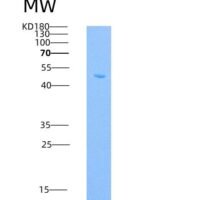
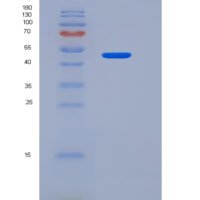
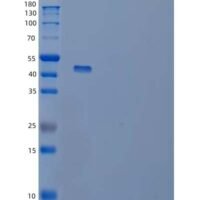
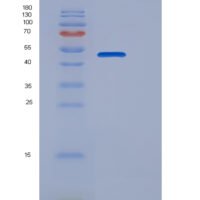
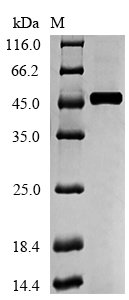
Recombinant Human Medium-chain specific acyl-CoA dehydrogenase, mitochondrial (ACADM) is a recombinant protein from Homo sapiens (Human), expressed in E.coli, covering amino acids 26-421aa, with N-terminal 6xHis-tagged tag, molecular weight 47.6kDa, purity Greater than 90% as determined by SDS-PAGE.. Suitable for ELISA and Western Blot applications. Explore more Enzyme proteins →