Function
Plays a role in DNA damage repair as component of the ASCC complex. Part of the ASC-1 complex that enhances NF-kappa-B, SRF and AP1 transactivation. In cells responding to gastrin-activated paracrine signals, it is involved in the induction of SERPINB2 expression by gastrin.
Biological Context
Subcellular Location: Nucleus; Nucleus speckle
Tissue Specificity: Ubiquitous
Disease Association: Barrett esophagus (BE) : A condition characterized by a metaplastic change in which normal esophageal squamous epithelium is replaced by a columnar and intestinal-type epithelium. Patients with Barrett esophagus have an increased risk of esophageal adenocarcinoma. The main cause of Barrett esophagus is gastroesophageal reflux. The retrograde movement of acid and bile salts from the stomach into the esophagus causes prolonged injury to the esophageal epithelium and induces chronic esophagitis, which in turn is believed to trigger the pathologic changes. [The gene represented in this entry may be involved in disease pathogenesis] | Spinal muscular atrophy with congenital bone fractures 2 (SMABF2) : An autosomal recessive neuromuscular disorder characterized by prenatal-onset spinal muscular atrophy, multiple congenital contractures consistent with arthrogryposis multiplex congenita, respiratory distress, and congenital bone fractures. [The disease is caused by variants affecting the gene represented in this entry]
Product Specifications
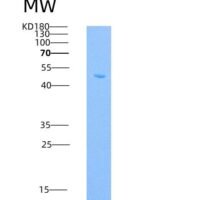
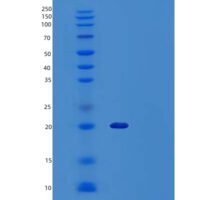
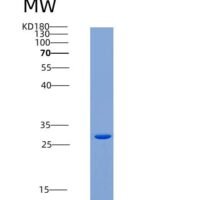
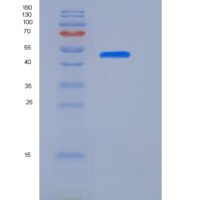
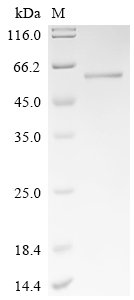
Recombinant Human Activating signal cointegrator 1 complex subunit 1 (ASCC1) is a recombinant protein from Homo sapiens (Human), expressed in E.coli, covering amino acids 1-400aa, with C-terminal 6xHis-tagged tag, molecular weight 52.4kDa, purity Greater than 90% as determined by SDS-PAGE.. Suitable for ELISA and Western Blot applications.