Function
Calcium-regulated, actin-modulating protein that binds to the plus (or barbed) ends of actin monomers or filaments, preventing monomer exchange (end-blocking or capping). It can promote the assembly of monomers into filaments (nucleation) as well as sever filaments already formed. Plays a role in ciliogenesis.
Biological Context
Subcellular Location: Secreted
Tissue Specificity: Phagocytic cells, platelets, fibroblasts, nonmuscle cells, smooth and skeletal muscle cells
Disease Association: Amyloidosis, hereditary systemic 4, Finnish type (AMYLD4) : A form of hereditary systemic amyloidosis, a disorder characterized by amyloid deposition in multiple tissues resulting in a wide clinical spectrum. AMYLD4 is due to gelsolin amyloid deposition and is typically characterized by cranial neuropathy and lattice corneal dystrophy. Most patients have modest involvement of internal organs, but severe systemic disease can develop in some individuals causing peripheral polyneuropathy, amyloid cardiomyopathy, and nephrotic syndrome leading to renal failure. AMYLD4 is usually inherited in an autosomal dominant pattern. However, homozygotes with a more severe phenotype have also been reported. [The disease is caused by variants affecting the gene represented in this entry]
Product Specifications
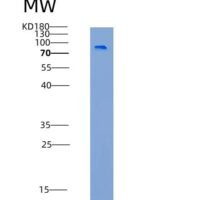
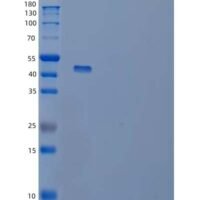
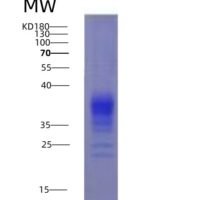
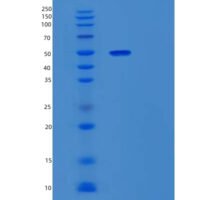
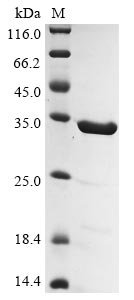
Recombinant Human Gelsolin (GSN), partial is a recombinant protein from Homo sapiens (Human), expressed in E.coli, covering amino acids 514-782aa, with N-terminal 6xHis-tagged tag, molecular weight 33.5kDa, purity Greater than 90% as determined by SDS-PAGE.. Suitable for ELISA and Western Blot applications.