Function
Transcription regulator. Forms a sequence-specific DNA-binding protein complex with MYC or MAD which recognizes the core sequence 5'-CAC[GA]TG-3'. The MYC:MAX complex is a transcriptional activator, whereas the MAD:MAX complex is a repressor.
Biological Context
Subcellular Location: Nucleus; Cell projection, dendrite
Tissue Specificity: High levels found in the brain, heart and lung while lower levels are seen in the liver, kidney and skeletal muscle
Disease Association: Pheochromocytoma (PCC) : A catecholamine-producing tumor of chromaffin tissue of the adrenal medulla or sympathetic paraganglia. The cardinal symptom, reflecting the increased secretion of epinephrine and norepinephrine, is hypertension, which may be persistent or intermittent. [Disease susceptibility is associated with variants affecting the gene represented in this entry] | Polydactyly-macrocephaly syndrome (PDMCS) : An autosomal dominant syndrome characterized by progressive macrocephaly and post-axial polydactyly, a condition defined by the occurrence of supernumerary digits affecting the fifth finger and/or toe. Additional variable features include ocular anomalies, global developmental delay and autistic traits. [The disease is caused by variants affecting the gene represented in this entry]
Product Specifications
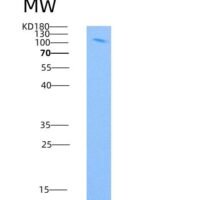
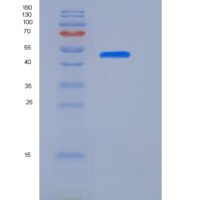
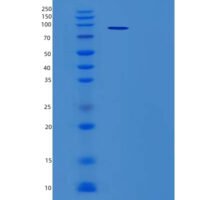
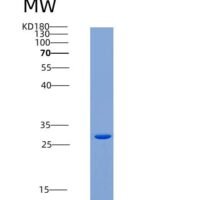
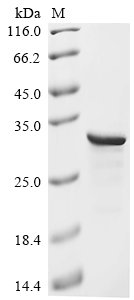
Recombinant Human Protein max (MAX) is a recombinant protein from Homo sapiens (Human), expressed in E.coli, covering amino acids 2-160aa, with N-terminal 10xHis-tagged and C-terminal Myc-tagged tag, molecular weight 25.6kDa, purity Greater than 85% as determined by SDS-PAGE.. Suitable for ELISA and Western Blot applications.