Function
Together with PDHA1 forms the heterotetrameric E1 subunit of the pyruvate dehydrogenase (PDH) complex. The PDH complex catalyzes the overall conversion of pyruvate to acetyl-CoA and CO(2), and thereby links cytoplasmic glycolysis and the mitochondrial tricarboxylic acid (TCA) cycle (Probable). It contains multiple copies of three enzymatic components: pyruvate dehydrogenase (E1), dihydrolipoamide acetyltransferase (E2) and dihydrolipoamide dehydrogenase (E3) (Probable).
Biological Context
Subcellular Location: Mitochondrion matrix
Disease Association: Pyruvate dehydrogenase E1-beta deficiency (PDHBD) : An enzymatic defect causing primary lactic acidosis in children. It is associated with a broad clinical spectrum ranging from fatal lactic acidosis in the newborn to chronic neurologic dysfunction with structural abnormalities in the central nervous system without systemic acidosis. [The disease is caused by variants affecting the gene represented in this entry]
Product Specifications
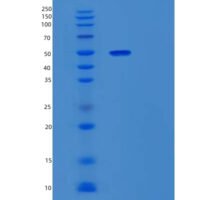
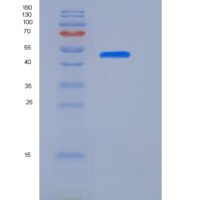
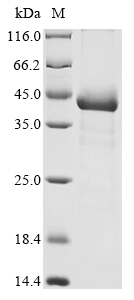
Recombinant Human Pyruvate dehydrogenase E1 component subunit beta, mitochondrial (PDHB) is a recombinant protein from Homo sapiens (Human), expressed in E.coli, covering amino acids 31-359aa, with N-terminal 6xHis-tagged tag, molecular weight 41.9kDa, purity Greater than 90% as determined by SDS-PAGE.. Suitable for ELISA and Western Blot applications. Explore more Enzyme proteins →