Function
Acts downstream of various receptor and cytoplasmic protein tyrosine kinases to participate in the signal transduction from the cell surface to the nucleus. Positively regulates MAPK signal transduction pathway. Dephosphorylates GAB1, ARHGAP35 and EGFR.
Biological Context
Subcellular Location: Cytoplasm; Nucleus
Tissue Specificity: Widely expressed, with highest levels in heart, brain, and skeletal muscle
Disease Association: LEOPARD syndrome 1 (LPRD1) : A disorder characterized by lentigines, electrocardiographic conduction abnormalities, ocular hypertelorism, pulmonic stenosis, abnormalities of genitalia, retardation of growth, and sensorineural deafness. [The disease is caused by variants affecting the gene represented in this entry] | Noonan syndrome 1 (NS1) : A form of Noonan syndrome, a disease characterized by short stature, facial dysmorphic features such as hypertelorism, a downward eyeslant and low-set posteriorly rotated ears, and a high incidence of congenital heart defects and hypertrophic cardiomyopathy. Other features can include a short neck with webbing or redundancy of skin, deafness, motor delay, variable intellectual deficits, multiple skeletal defects, cryptorchidism, and bleeding diathesis. Individuals with Noonan syndrome are at risk of juvenile myelomonocytic leukemia, a myeloproliferative disorder characterized by excessive production of myelomonocytic cells. Some patients with NS1 develop multiple giant cell lesions of the jaw or other bony or soft tissues, which are classified as pigmented villonodular synovitis (PVNS) when occurring in the jaw or joints. [The disease is caused by variants affecting the gene represented in this entry. Mutations in PTPN11 account for more than 50% of the cases] | Leukemia, juvenile myelomonocytic (JMML) : An aggressive pediatric myelodysplastic syndrome/myeloproliferative disorder characterized by malignant transformation in the hematopoietic stem cell compartment with proliferation of differentiated progeny. Patients have splenomegaly, enlarged lymph nodes, rashes, and hemorrhages. [The disease is caused by variants affecting the gene represented in this entry] | Metachondromatosis (MC) : A skeletal disorder with radiologic features of both multiple exostoses and Ollier disease, characterized by the presence of exostoses, commonly of the bones of the hands and feet, and enchondromas of the metaphyses of long bones and iliac crest. [The disease is caused by variants affecting the gene represented in this entry]
Product Specifications
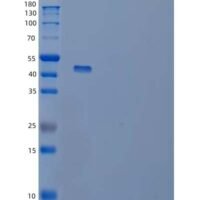
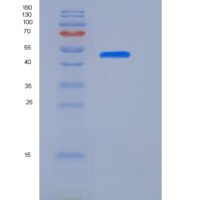
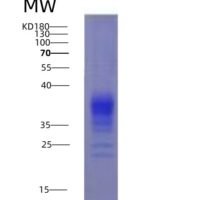
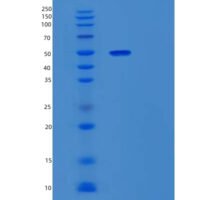
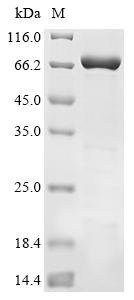
Recombinant Human Tyrosine-protein phosphatase non-receptor type 11 (PTPN11) (T253M,Q257L) is a recombinant protein from Homo sapiens (Human), expressed in E.coli, covering amino acids 2-593aa(T253M,Q257L), with N-terminal 6xHis-tagged tag, molecular weight 73.9kDa, purity Greater than 90% as determined by SDS-PAGE.. Suitable for ELISA and Western Blot applications. Explore more Enzyme proteins →