Function
Receptor-regulated SMAD (R-SMAD) that is an intracellular signal transducer and transcriptional modulator activated by TGF-beta (transforming growth factor) and activin type 1 receptor kinases. Binds the TRE element in the promoter region of many genes that are regulated by TGF-beta and, on formation of the SMAD2/SMAD4 complex, activates transcription. Promotes TGFB1-mediated transcription of odontoblastic differentiation genes in dental papilla cells.
Biological Context
Subcellular Location: Cytoplasm; Nucleus
Tissue Specificity: Expressed at high levels in skeletal muscle, endothelial cells, heart and placenta
Disease Association: Congenital heart defects, multiple types, 8, with or without heterotaxy (CHTD8) : An autosomal dominant disorder characterized by congenital developmental abnormalities involving structures of the heart. Common CHTD8 features include double-outlet right ventricle, unbalanced complete atrioventricular canal, and valvular anomalies. Vascular anomalies include dextroposition of the great arteries, anomalous pulmonary venous return, and superior vena cava to left atrium defect. Patients may also exhibit laterality defects, including dextrocardia, atrial isomerism, dextrogastria, left-sided gallbladder, and intestinal malrotation. [The disease is caused by variants affecting the gene represented in this entry] | Loeys-Dietz syndrome 6 (LDS6) : A form of Loeys-Dietz syndrome, a syndrome with widespread systemic involvement characterized by arterial tortuosity and aneurysms, hypertelorism, and bifid uvula or cleft palate. Most LDS6 patients have thoracic aortic aneurysm involving the ascending aorta and/or aortic root, but cerebral and iliac arteries can be affected, and abdominal aortic aneurysm has been observed. Arterial tortuosity involving cerebral vessels, the aorta, and/or iliac arteries has also been reported. LDS6 inheritance is autosomal dominant. [The disease is caused by variants affecting the gene represented in this entry]
Product Specifications
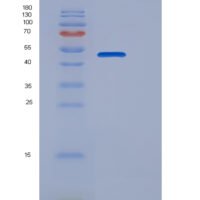
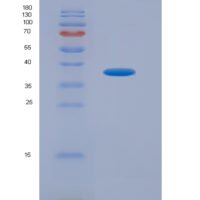
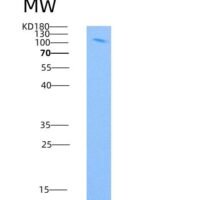
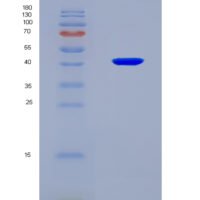
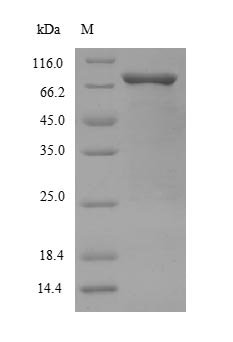
Recombinant Human Mothers against decapentaplegic homolog 2 (SMAD2) is a recombinant protein from Homo sapiens (Human), expressed in E.coli, covering amino acids 2-467aa, with N-terminal 6xHis-SUMO-tagged tag, molecular weight 68.2kDa, purity Greater than 90% as determined by SDS-PAGE.. Suitable for ELISA and Western Blot applications.