
Mammalian Cell–Based Protein Expression Service
Overview
Mammalian cell expression systems are the gold standard for producing recombinant proteins that require accurate folding, human-like glycosylation, phosphorylation, and other critical post-translational modifications.
Unlike prokaryotic or yeast systems, mammalian cells provide the most physiologically relevant environment for structural and functional studies of therapeutic targets, enzymes, and complex proteins.
BioCrest Sci has established a robust, well-characterized platform for transient and stable mammalian expression. With optimized promoters, secretion signal peptides, advanced vectors, and high-efficiency transfection protocols, we deliver superior yields of bioactive proteins — from research-grade to pre-clinical quantities.
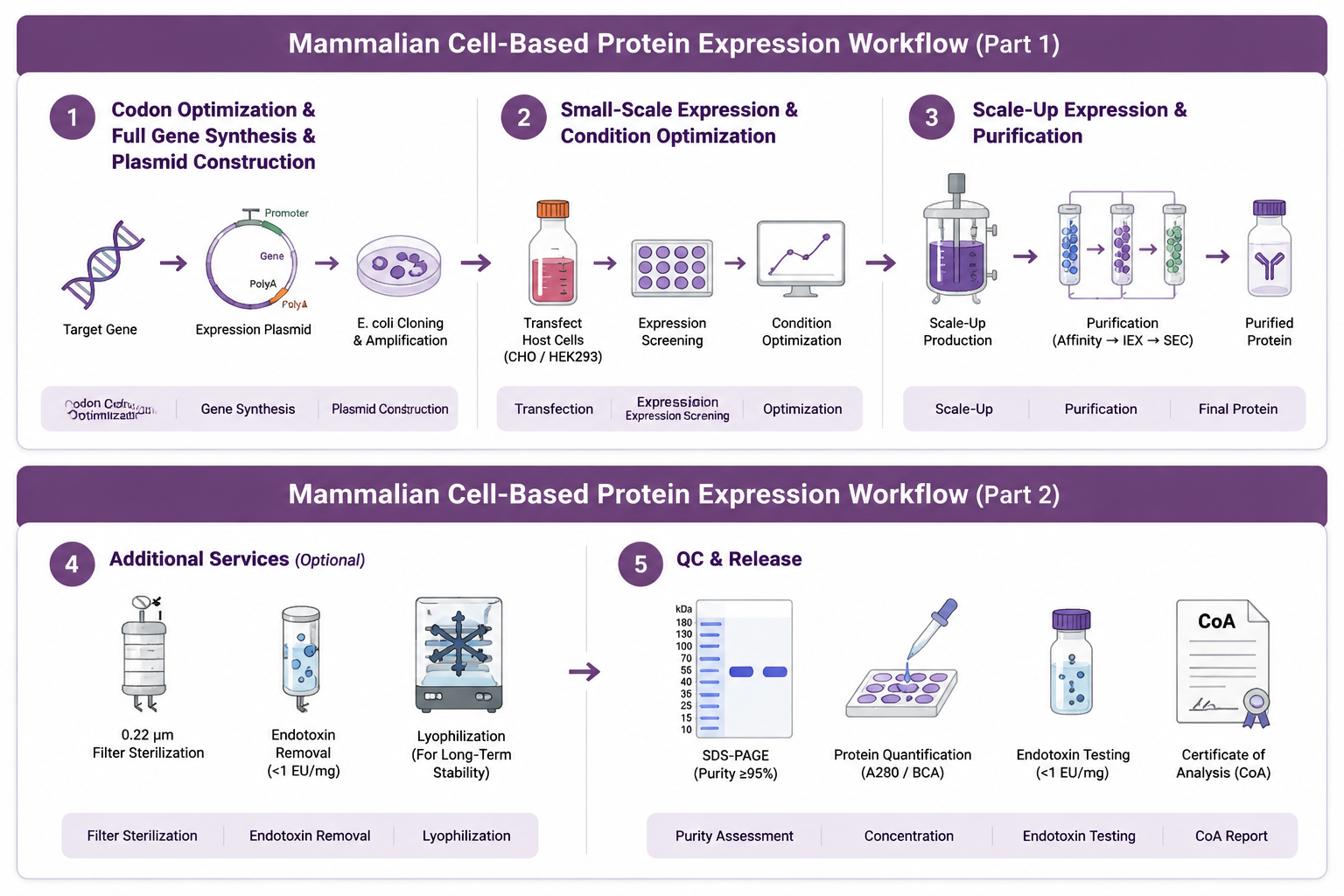
Based on this proven workflow, our platform offers several distinct advantages that set us apart — from flexible vector systems to scalable production strategies.
Key Advantages
Easy scale-up from flasks to bioreactors
pSec, pCMV, pCDNA with customizable affinity tags
Optimized for both soluble secreted proteins and intracellular targets
Consistent performance and traceable cell lines
CHO vs HEK293 – Which One to Choose?
BioCrest Sci offers both CHO and HEK293 platforms. Our technical team helps you select the optimal host based on your protein's complexity, required yield, and timeline.
CHO Cells
Best for: Therapeutic protein production, long-term stable expression, and industrial-scale manufacturing. ~70% of approved biotherapeutics are produced in CHO cells.
- High-density suspension culture
- Human-compatible glycosylation pattern
- Excellent for stable cell line generation
Consideration: Lower transfection efficiency; optimization needed for transient high-yield runs.
HEK293 Cells
Best for: Fast transient expression, virus-like particles (VLPs), and rapid protein screening. High transfection efficiency and robust protein secretion.
- High transfection efficiency
- Rapid protein production (5–10 days)
- Superior for post-translational activity studies
Consideration: Transient expression gives gram-scale yields but for long-term consistency, stable clones available.
Our Standard Service Process
| Step | Service Item | Detailed Description | Timeline (working days) |
|---|---|---|---|
| 1 | Codon Optimization & Full Gene Synthesis & Plasmid Construction | Codon optimization for mammalian hosts (CHO/HEK293), full gene synthesis, subcloning into pSec, pCMV, or pCDNA vectors. Sequence verified by Sanger. | 8–11 |
| 2 | Small-scale Expression Optimization | Transient transfection in HEK293 or CHO (FreeStyle™ 293-F, ExpiCHO, etc.). Screening of media, temperature, DNA:PEI ratios, and enhancers to maximize yield. | 3–5 |
| 3 | Scale-up Expression & Protein Purification | Select optimal host and transfection method, suspension culture scale-up (up to several liters). Multi-dimensional purification: affinity, ion exchange, hydrophobic interaction (HIC), and SEC. | 6–8 |
| 4 | Quality Control & Product Release | Comprehensive analysis: SDS-PAGE, Coomassie/Western blot, endotoxin measurement (≤1 EU/µg as default), concentration (BCA/A280), and sterility filtration. | 3–5 |
| 5 | Additional Custom Services (on request) | Tag removal (protease cleavage), formulation, vacuum lyophilization, endotoxin reduction, and aseptic packaging. | 2–3 |
Total project timeline: 20–30 working days (from gene synthesis to purified protein). Expedited options available for urgent projects.
Transient vs Stable vs Inducible Expression
Depending on your protein requirements, BioCrest Sci offers three flexible expression modes:
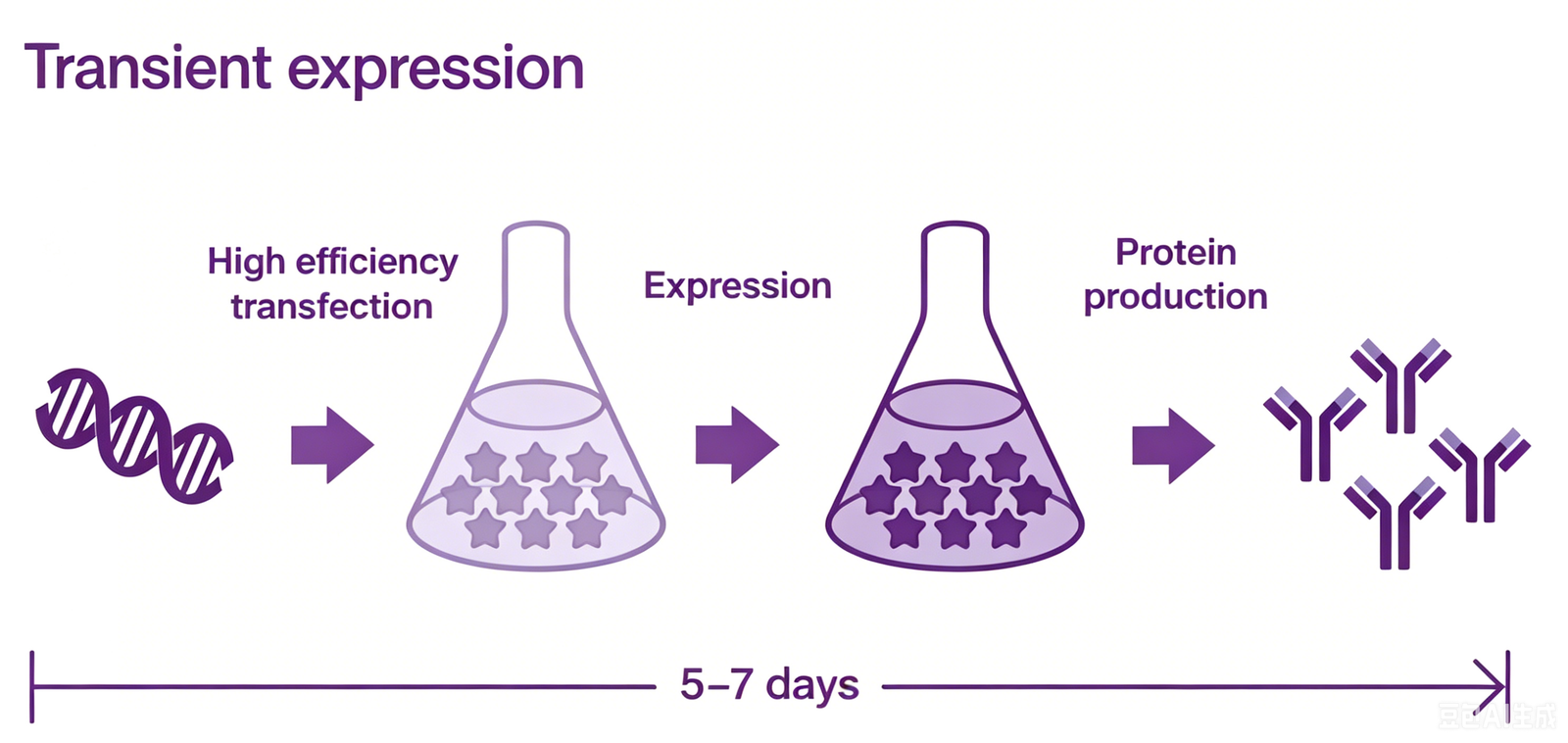
Transient Expression
Delivers protein within 5–12 days. Ideal for rapid screening, early drug discovery, and small-to-medium scale production (milligrams to grams). High transfection efficiency using HEK293.
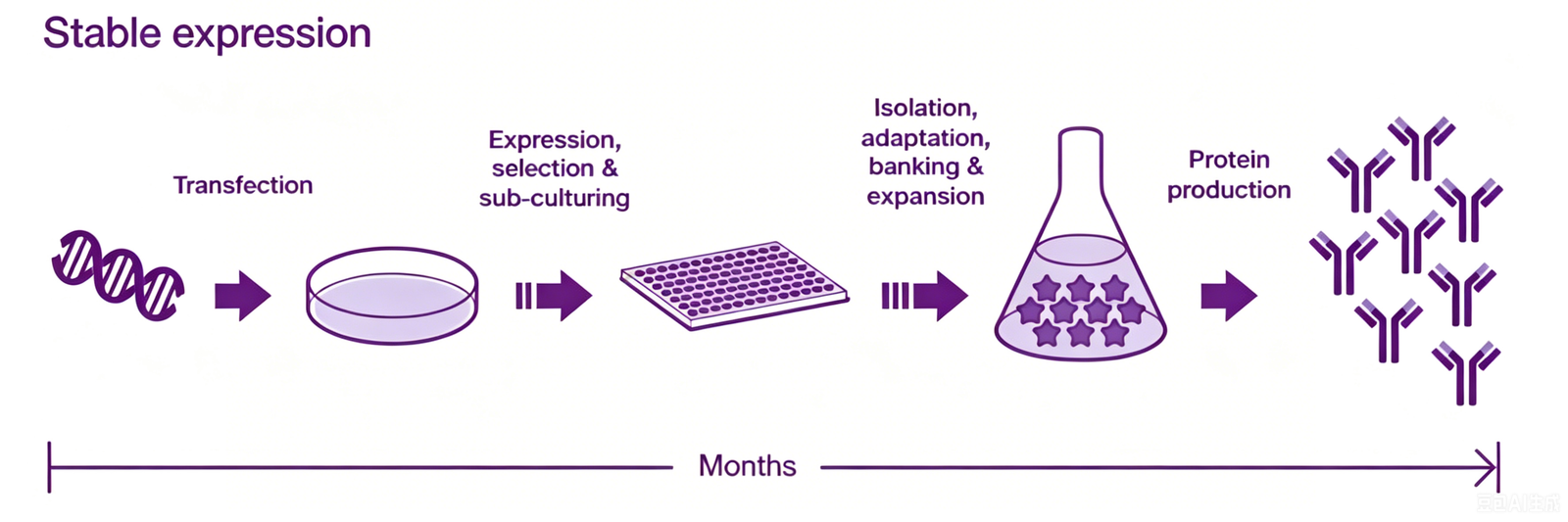
Stable Expression
Creation of stable CHO or HEK293 pools/clones ensures consistent, long-term production. Recommended for therapeutic candidates, large-scale batches, and reproducibility over months.
Inducible Expression
Tet-on / cumate-inducible systems provide tight control over toxic proteins or temporal expression needs, maximizing yield while minimizing cellular stress.
Why Choose BioCrest Sci?
Our platform leverages decades of expertise in mammalian cell engineering, providing researchers with reliable, high-titer recombinant proteins. We maintain a versatile portfolio of expression-ready cell lines and optimized protocols.
- Advanced cell lines: FreeStyle™ 293-F, Expi293-F, Expi-CHO-K1, ExpiCHO-S, and in-house adapted suspension lines.
- Proven vector systems: pCMV, pCDNA, pSec, and customized backbones with secretion signal peptides for efficient extracellular harvest.
- Optimized purification toolbox: Affinity (Ni-NTA, protein A/G, Strep-tag), ion exchange, hydrophobic interaction, and size exclusion chromatography.
- Stringent QC release: Purity >90% (typically >95%), defined endotoxin levels, activity assays upon request.
- Scientific support: Direct collaboration with PhD-level project managers to troubleshoot aggregation, low yield, or complex post-translational demands.
Ready to start your protein expression project?
Discuss your target, timeline, and required specifications with our scientific team.
Request a quote →No obligation consultation. Quote includes project design and expression strategy.