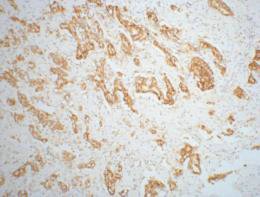
Mouse anti-Human/Mouse/Rat AMACR Monoclonal Antibody

Mouse anti-Human/Mouse/Rat AMACR Monoclonal Antibody — Catalyzes the interconversion of (R)- and (S)-stereoisomers of alpha-methyl-branched-chain fatty acyl-CoA esters.

SKU: BCREC-000021MA Category:

Product Specifications

Uniprot No.Q9UHK6
Target NamesAMACR
Species ReactivityMouse
ImmunogenSynthetic Peptide
ConjugateNon-conjugated
IsotypeIgG
ClonalityMonoclonal
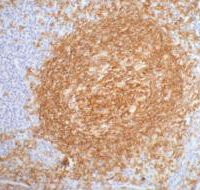
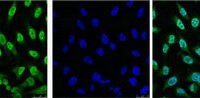
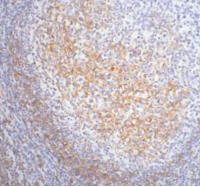
ApplicationsELISA,WB,IHC
BufferPBS, 50% glycerol, 0.05% Proclin 300, 0.05%BSA
StorageUpon receipt, store at -20°C or -80°C. Avoid repeated freeze.

Function

Catalyzes the interconversion of (R)- and (S)-stereoisomers of alpha-methyl-branched-chain fatty acyl-CoA esters. Acts only on coenzyme A thioesters, not on free fatty acids, and accepts as substrates a wide range of alpha-methylacyl-CoAs, including pristanoyl-CoA, trihydroxycoprostanoyl-CoA (an intermediate in bile acid synthesis), and arylpropionic acids like the anti-inflammatory drug ibuprofen (2-(4-isobutylphenyl)propionic acid) but neither 3-methyl-branched nor linear-chain acyl-CoAs.

Biological Context

Subcellular Location: Peroxisome; Mitochondrion
Disease Association: Alpha-methylacyl-CoA racemase deficiency (AMACRD) : A rare autosomal recessive peroxisomal disorder characterized by elevated plasma concentrations of pristanic acid C27-bile-acid intermediates, and adult onset of variable neurodegenerative symptoms affecting the central and peripheral nervous systems. Features may include seizures, visual failure, sensorimotor neuropathy, spasticity, migraine, and white matter hyperintensities on brain imaging. [The disease is caused by variants affecting the gene represented in this entry] | Congenital bile acid synthesis defect 4 (CBAS4) : A disorder characterized by the presence of trihydroxycoprostanic acid in the bile and absence of cholic acid. Patients manifest neonatal jaundice, intrahepatic cholestasis and bile duct deficiency. [The disease is caused by variants affecting the gene represented in this entry]
Pathway: Lipid metabolism; fatty acid metabolism

Product Specifications

Mouse anti-Human/Mouse/Rat AMACR Monoclonal Antibody is a recombinant protein. Suitable for ELISA and Western Blot applications.

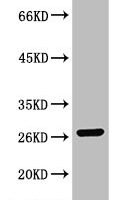
SDS-PAGE: Single band at expected molecular weight confirming purity.

ELISA: Suitable as coating antigen or detection standard.

Western Blot: Compatible with standard Western Blot protocols.

Protein Interaction: Validated for SPR (Surface Plasmon Resonance) and BLI (Bio-Layer Interferometry) studies.

Shipping: Shipped at ambient temperature. Lyophilized protein is stable during transit.

Storage: Store lyophilized protein at -20°C to -80°C. Reconstituted protein should be aliquoted and stored at -80°C. Avoid repeated freeze-thaw cycles.

Shelf Life: 12 months from date of receipt when stored as recommended.

Shipping Time: Orders placed before 2 PM EST ship same day. International orders typically deliver within 5-10 business days.

Protein Biology

Function

Catalyzes the interconversion of (R)- and (S)-stereoisomers of alpha-methyl-branched-chain fatty acyl-CoA esters (PubMed:10655068, PubMed:11060359, PubMed:7649182). Acts only on coenzyme A thioesters, not on free fatty acids, and accepts as substrates a wide range of alpha-methylacyl-CoAs, including pristanoyl-CoA, trihydroxycoprostanoyl-CoA (an intermediate in bile acid synthesis), and arylpropionic acids like the anti-inflammatory drug ibuprofen (2-(4-isobutylphenyl)propionic acid) but neither 3-methyl-branched nor linear-chain acyl-CoAs (PubMed:10655068, PubMed:11060359, PubMed:7649182)

Subcellular Location

Peroxisome; Mitochondrion

Disease Association

Alpha-methylacyl-CoA racemase deficiency (AMACRD) : A rare autosomal recessive peroxisomal disorder characterized by elevated plasma concentrations of pristanic acid C27-bile-acid intermediates, and adult onset of variable neurodegenerative symptoms affecting the central and peripheral nervous systems. Features may include seizures, visual failure, sensorimotor neuropathy, spasticity, migraine, and white matter hyperintensities on brain imaging. [The disease is caused by variants affecting the gene represented in this entry] | Congenital bile acid synthesis defect 4 (CBAS4) : A disorder characterized by the presence of trihydroxycoprostanic acid in the bile and absence of cholic acid. Patients manifest neonatal jaundice, intrahepatic cholestasis and bile duct deficiency. [The disease is caused by variants affecting the gene represented in this entry]

Subunit

Monomer

Pathway

Lipid metabolism; fatty acid metabolism

Gene: AMACR  |  Organism: Homo sapiens  |  Synonyms: 2-methylacyl-CoA racemase
Key Publications

Frequently Asked Questions

How do I order or inquire about this product?

Fill out the Online Inquiry form with your required quantity and specifications. You can also email sales@biocrestsci.com. Our team typically responds within 4 business hours with a quote and availability confirmation.

What is the shipping and delivery time?

Orders placed before 2 PM EST ship the same day. Domestic (US) delivery typically takes 2-3 business days. International orders deliver within 5-10 business days. All products are shipped at ambient temperature with appropriate packaging to ensure stability.

How should I store this recombinant protein?

Lyophilized proteins should be stored at -20°C to -80°C upon receipt. After reconstitution, aliquot and store at -80°C. Avoid repeated freeze-thaw cycles. Shelf life is 12 months from date of receipt when stored as recommended.

What quality controls are performed on your products?

Each product undergoes SDS-PAGE purity analysis (typically >85-95%), endotoxin testing, and bioactivity validation. Products are validated for ELISA, Western Blot, and SPR/BLI applications as specified on this product page. A Certificate of Analysis (CoA) is available upon request.

Shopping Cart
Scroll to Top