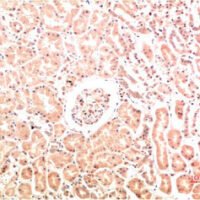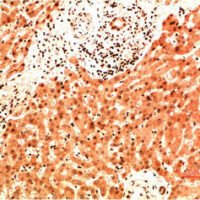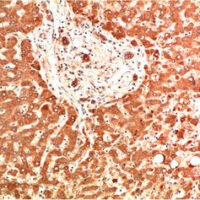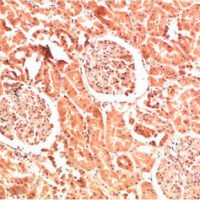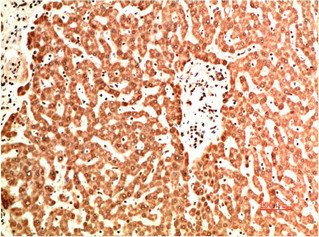
Mouse anti-Human/Mouse/Rat COL4A1 Monoclonal Antibody

Mouse anti-Human/Mouse/Rat COL4A1 Monoclonal Antibody — Arresten, comprising the C-terminal NC1 domain, inhibits angiogenesis and tumor formation.

SKU: BCREC-000671MA Category:

Product Specifications

Uniprot No.p02462
Target NamesCOL4A1
Species ReactivityMouse
ImmunogenSynthetic Peptide
Immunogen SpeciesHomo sapiens (Human)
ConjugateNon-conjugated
ClonalityMonoclonal
ApplicationsELISA,IHC
BufferPBS, 50% glycerol, 0.05% Proclin 300, 0.05%BSA
StorageUpon receipt, store at -20°C or -80°C. Avoid repeated freeze.

Function

Arresten, comprising the C-terminal NC1 domain, inhibits angiogenesis and tumor formation. The C-terminal half is found to possess the anti-angiogenic activity. Specifically inhibits endothelial cell proliferation, migration and tube formation.

Biological Context

Subcellular Location: Secreted, extracellular space, extracellular matrix, basement membrane
Tissue Specificity: Highly expressed in placenta
Disease Association: Hereditary angiopathy with nephropathy aneurysms and muscle cramps (HANAC) : The clinical renal manifestations include hematuria and bilateral large cysts. Histologic analysis revealed complex basement membrane defects in kidney and skin. The systemic angiopathy appears to affect both small vessels and large arteries. [The disease is caused by variants affecting the gene represented in this entry] | Brain small vessel disease 1 with or without ocular anomalies (BSVD1) : An autosomal dominant cerebrovascular disorder with variable manifestations reflecting the location and severity of the vascular defect. BSVD1 features include cerebral hemorrage, unilateral fluid-filled cysts or cavities within the cerebral hemispheres, leukoencephalopathy, hemiplegia, seizures, intellectual disability, and facial paresis. Affected individuals may manifest variable visual defects and ocular anomalies. [The disease is caused by variants affecting the gene represented in this entry] | Intracerebral hemorrhage (ICH) : A pathological condition characterized by bleeding into one or both cerebral hemispheres including the basal ganglia and the cerebral cortex. It is often associated with hypertension and craniocerebral trauma. Intracerebral bleeding is a common cause of stroke. [Disease susceptibility is associated with variants affecting the gene represented in this entry] | Tortuosity of retinal arteries (RATOR) : A disease characterized by marked tortuosity of second- and third-order retinal arteries with normal first-order arteries and venous system. Most patients manifest variable degrees of symptomatic transient vision loss due to retinal hemorrhage following minor stress or trauma. [The disease is caused by variants affecting the gene represented in this entry] | Schizencephaly (SCHZC) : Extremely rare human congenital disorder characterized by a full-thickness cleft within the cerebral hemispheres. These clefts are lined with gray matter and most commonly involve the parasylvian regions. Large portions of the cerebral hemispheres may be absent and replaced by cerebro-spinal fluid. [The disease is caused by variants affecting the gene represented in this entry] | Microangiopathy and leukoencephalopathy, pontine, autosomal dominant (PADMAL) : A form of cerebral small vessel disease characterized by the recurrence of ischemic strokes starting in the thirties or forties, and associated with progressive imbalance and cognitive impairment. MRI examination shows ischemic lacunas in the pons and cerebral hemispheres, and diffuse leukoencephalopathy affecting various brain regions. [The disease is caused by variants affecting the gene represented in this entry. Causative mutations affect a binding site for miR-29 microRNA located within the 3'UTR of COL4A1 and lead to an up-regulation of this gene]

Product Specifications

Mouse anti-Human/Mouse/Rat COL4A1 Monoclonal Antibody is a recombinant protein. Suitable for ELISA and Western Blot applications.

Catalog number: BCREC-000671MA.

SDS-PAGE: Single band at expected molecular weight confirming purity.

ELISA: Suitable as coating antigen or detection standard.

Western Blot: Compatible with standard Western Blot protocols.

Protein Interaction: Validated for SPR (Surface Plasmon Resonance) and BLI (Bio-Layer Interferometry) studies.

Shipping: Shipped at ambient temperature. Lyophilized protein is stable during transit.

Storage: Store lyophilized protein at -20°C to -80°C. Reconstituted protein should be aliquoted and stored at -80°C. Avoid repeated freeze-thaw cycles.

Shelf Life: 12 months from date of receipt when stored as recommended.

Shipping Time: Orders placed before 2 PM EST ship same day. International orders typically deliver within 5-10 business days.

Protein Biology

Function

Arresten, comprising the C-terminal NC1 domain, inhibits angiogenesis and tumor formation. The C-terminal half is found to possess the anti-angiogenic activity. Specifically inhibits endothelial cell proliferation, migration and tube formation

Subcellular Location

Secreted, extracellular space, extracellular matrix, basement membrane

Disease Association

Hereditary angiopathy with nephropathy aneurysms and muscle cramps (HANAC) : The clinical renal manifestations include hematuria and bilateral large cysts. Histologic analysis revealed complex basement membrane defects in kidney and skin. The systemic angiopathy appears to affect both small vessels and large arteries. [The disease is caused by variants affecting the gene represented in this entry] | Brain small vessel disease 1 with or without ocular anomalies (BSVD1) : An autosomal dominant cerebrovascular disorder with variable manifestations reflecting the location and severity of the vascular defect. BSVD1 features include cerebral hemorrage, unilateral fluid-filled cysts or cavities within the cerebral hemispheres, leukoencephalopathy, hemiplegia, seizures, intellectual disability, and facial paresis. Affected individuals may manifest variable visual defects and ocular anomalies. [The disease is caused by variants affecting the gene represented in this entry] | Intracerebral hemorrhage (ICH) : A pathological condition characterized by bleeding into one or both cerebral hemispheres including the basal ganglia and the cerebral cortex. It is often associated with hypertension and craniocerebral trauma. Intracerebral bleeding is a common cause of stroke. [Disease susceptibility is associated with variants affecting the gene represented in this entry] | Tortuosity of retinal arteries (RATOR) : A disease characterized by marked tortuosity of second- and third-order retinal arteries with normal first-order arteries and venous system. Most patients manifest variable degrees of symptomatic transient vision loss due to retinal hemorrhage following minor stress or trauma. [The disease is caused by variants affecting the gene represented in this entry] | Schizencephaly (SCHZC) : Extremely rare human congenital disorder characterized by a full-thickness cleft within the cerebral hemispheres. These clefts are lined with gray matter and most commonly involve the parasylvian regions. Large portions of the cerebral hemispheres may be absent and replaced by cerebro-spinal fluid. [The disease is caused by variants affecting the gene represented in this entry] | Microangiopathy and leukoencephalopathy, pontine, autosomal dominant (PADMAL) : A form of cerebral small vessel disease characterized by the recurrence of ischemic strokes starting in the thirties or forties, and associated with progressive imbalance and cognitive impairment. MRI examination shows ischemic lacunas in the pons and cerebral hemispheres, and diffuse leukoencephalopathy affecting various brain regions. [The disease is caused by variants affecting the gene represented in this entry. Causative mutations affect a binding site for miR-29 microRNA located within the 3'UTR of COL4A1 and lead to an up-regulation of this gene]

Tissue Specificity

Highly expressed in placenta

Subunit

There are six type IV collagen isoforms, alpha 1(IV)-alpha 6(IV), each of which can form a triple helix structure with 2 other chains to generate type IV collagen network. Interacts with EFEMP2 (By similarity)

Gene: COL4A1  |  Organism: Homo sapiens
Key Publications

Frequently Asked Questions

How do I order or inquire about this product?

Fill out the Online Inquiry form with your required quantity and specifications. You can also email sales@biocrestsci.com. Our team typically responds within 4 business hours with a quote and availability confirmation.

What is the shipping and delivery time?

Orders placed before 2 PM EST ship the same day. Domestic (US) delivery typically takes 2-3 business days. International orders deliver within 5-10 business days. All products are shipped at ambient temperature with appropriate packaging to ensure stability.

How should I store this recombinant protein?

Lyophilized proteins should be stored at -20°C to -80°C upon receipt. After reconstitution, aliquot and store at -80°C. Avoid repeated freeze-thaw cycles. Shelf life is 12 months from date of receipt when stored as recommended.

What quality controls are performed on your products?

Each product undergoes SDS-PAGE purity analysis (typically >85-95%), endotoxin testing, and bioactivity validation. Products are validated for ELISA, Western Blot, and SPR/BLI applications as specified on this product page. A Certificate of Analysis (CoA) is available upon request.

Shopping Cart
Scroll to Top