

Function
Catalyzes the dehydration of L-malate to fumarate. Fumarate metabolism in the cytosol plays a role during urea cycle and arginine metabolism; fumarate being a by-product of the urea cycle and amino-acid catabolism. Also plays a role in DNA repair by promoting non-homologous end-joining (NHEJ).
Biological Context
Subcellular Location: Cytoplasm, cytosol; Nucleus; Chromosome
Tissue Specificity: Expressed in red blood cells; underexpressed in red blood cells (cytoplasm) of patients with hereditary non-spherocytic hemolytic anemia of unknown etiology
Disease Association: Fumarase deficiency (FMRD) : A severe autosomal recessive metabolic disorder characterized by early-onset hypotonia, profound psychomotor retardation, and brain abnormalities, such as agenesis of the corpus callosum, gyral defects, and ventriculomegaly. Many patients show neonatal distress, metabolic acidosis, and/or encephalopathy. [The disease is caused by variants affecting the gene represented in this entry] | Hereditary leiomyomatosis and renal cell cancer (HLRCC) : A disorder characterized by predisposition to cutaneous and uterine leiomyomas, and papillary type 2 renal cancer which occurs in about 20% of patients. [The disease is caused by variants affecting the gene represented in this entry. Isoform Cytoplasmic: HLRCC is probably caused by an accumulation of fumarate. Accumulation of fumarate coupled with protonation promotes the formation of non-enzymatic post-translational modification cysteine S-succination (S-(2-succinyl)cysteine) on proteins, such as SMARCC1 ]
Pathway: Carbohydrate metabolism; tricarboxylic acid cycle; (S)-malate from fumarate: step 1/1
Product Specifications
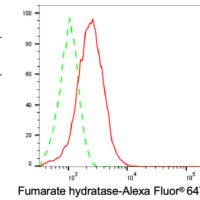
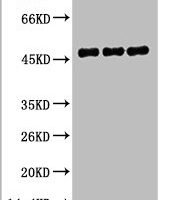
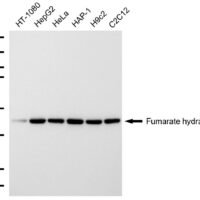
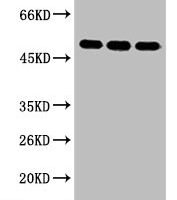
Mouse anti-Human/Mouse/Rat sapiens (Human) FH Monoclonal Antibody is a recombinant protein. Suitable for ELISA and Western Blot applications. Explore more Antibody products →
Catalog number: BCREC-000687MA.