Mouse anti-Human/Mouse/Rat sapiens (Human) HADHA Monoclonal Antibody

Mouse anti-Human/Mouse/Rat sapiens (Human) HADHA Monoclonal Antibody — Mitochondrial trifunctional enzyme catalyzes the last three of the four reactions of the mitochondrial beta-oxidation pathway.

SKU: BCREC-000710MA Category:

Product Specifications

Uniprot No.P40939
Target NamesHADHA
Species ReactivityMouse
ImmunogenRecombinant Human HADHA protein
Immunogen SpeciesHomo sapiens (Human)
ConjugateNon-conjugated
IsotypeMouse IgG1
ClonalityMonoclonal
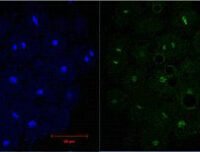
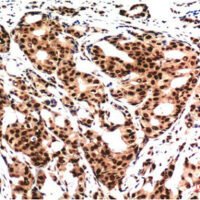
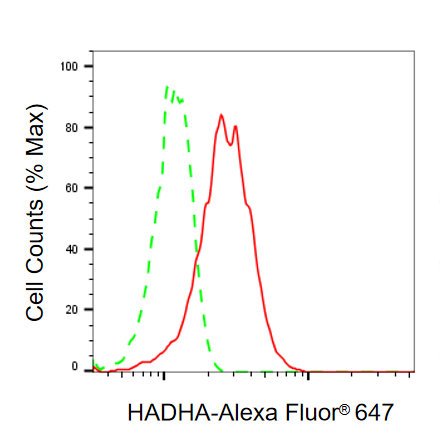
ApplicationsELISA, WB, FC
BufferPBS, 50% glycerol, 0.05% Proclin 300, 0.05%BSA
StorageUpon receipt, store at -20°C or -80°C. Avoid repeated freeze.

Function

Mitochondrial trifunctional enzyme catalyzes the last three of the four reactions of the mitochondrial beta-oxidation pathway. The mitochondrial beta-oxidation pathway is the major energy-producing process in tissues and is performed through cycles of four consecutive reactions. Each beta-oxidation cycle shortens the fatty acyl-CoA by two carbons, yielding one acetyl-CoA (for the citric acid cycle), one FADH(2), and one NADH (which donate electrons to the respiratory chain for ATP production).

Biological Context

Subcellular Location: Mitochondrion; Mitochondrion inner membrane
Disease Association: Mitochondrial trifunctional protein deficiency 1 (MTPD1) : An autosomal recessive metabolic disorder of long-chain fatty acid oxidation, biochemically characterized by loss of all enzyme activities of the mitochondrial trifunctional protein complex. The disease phenotype ranges from a fatal form characterized by early-onset cardiomyopathy, cardiac failure and early death to less severe, late-onset forms with myopathy, recurrent rhabdomyolysis, and sensorimotor axonal neuropathy as key features. [The disease is caused by variants affecting the gene represented in this entry] | Long-chain 3-hydroxyl-CoA dehydrogenase deficiency (LCHAD deficiency) : The clinical features are very similar to TFP deficiency. Biochemically, LCHAD deficiency is characterized by reduced long-chain 3-hydroxyl-CoA dehydrogenase activity, while the other enzyme activities of the TFP complex are normal or only slightly reduced. [The disease is caused by variants affecting the gene represented in this entry] | Maternal acute fatty liver of pregnancy (AFLP) : Severe maternal illness occurring during pregnancies with affected fetuses. This disease is associated with LCHAD deficiency and characterized by sudden unexplained infant death or hypoglycemia and abnormal liver enzymes (Reye-like syndrome). [The disease is caused by variants affecting the gene represented in this entry]
Pathway: Lipid metabolism; fatty acid beta-oxidation

Product Specifications

Mouse anti-Human/Mouse/Rat sapiens (Human) HADHA Monoclonal Antibody is a recombinant protein. Suitable for ELISA and Western Blot applications.

SDS-PAGE: Single band at expected molecular weight confirming purity.

ELISA: Suitable as coating antigen or detection standard.

Western Blot: Compatible with standard Western Blot protocols.

Protein Interaction: Validated for SPR (Surface Plasmon Resonance) and BLI (Bio-Layer Interferometry) studies.

Shipping: Shipped at ambient temperature. Lyophilized protein is stable during transit.

Storage: Store lyophilized protein at -20°C to -80°C. Reconstituted protein should be aliquoted and stored at -80°C. Avoid repeated freeze-thaw cycles.

Shelf Life: 12 months from date of receipt when stored as recommended.

Shipping Time: Orders placed before 2 PM EST ship same day. International orders typically deliver within 5-10 business days.

Protein Biology

Function

Mitochondrial trifunctional enzyme catalyzes the last three of the four reactions of the mitochondrial beta-oxidation pathway (PubMed:1550553, PubMed:29915090, PubMed:30850536, PubMed:8135828, PubMed:31604922). The mitochondrial beta-oxidation pathway is the major energy-producing process in tissues and is performed through cycles of four consecutive reactions (PubMed:29915090). Each beta-oxidation cycle shortens the fatty acyl-CoA by two carbons, yielding one acetyl-CoA (for the citric acid cycle), one FADH(2), and one NADH (which donate electrons to the respiratory chain for ATP production) (PubMed:29915090). These cycles repeat until the chain is fully degraded to acetyl-CoA units (PubMed:29915090). Among the enzymes involved in this pathway, the trifunctional protein--responsible for the hydration, dehydrogenation, and thiolysis steps, shows specificity for long-chain fatty acids, such as those from dietary and stored fats (PubMed:30850536, PubMed:31604922). Mitochondrial trifunctional enzyme is a heterotetrameric complex composed of two proteins, the trifunctional enzyme subunit alpha/HADHA described here carries the 2,3-enoyl-CoA hydratase and the 3-hydroxyacyl-CoA dehydrogenase activities while the trifunctional enzyme subunit beta/HADHB bears the 3-ketoacyl-CoA thiolase activity (Probable) (PubMed:29915090, PubMed:30850536, PubMed:8135828). These activities have been experimentally confirmed on a few substrates derived from beta-oxidation of long-chain saturated fatty acids such as palmitate (hexadecanoate) and laurate (dodecanoate) (PubMed:1550553, PubMed:8135828, PubMed:8163672, PubMed:8651282). In addition, based on its established catalytic mechanism, and combined genetic interaction or mutant phenotype evidence, it is predicted to act also on other substrates, including long-chain unsaturated fatty acids such as oleate (9Z-octadecenoate), linoleate (9Z,12Z-octadecadienoate), linolenate (9Z,12Z,15Z-octadecatrienoate), and others (Probable) (PubMed:26474213). Independently of subunit beta, HADHA also exhibits a cardiolipin acyltransferase activity that participates in cardiolipin remodeling; cardiolipin is a major mitochondrial membrane phospholipid (PubMed:23152787, PubMed:31604922). HADHA may act downstream of Tafazzin/TAZ, that remodels monolysocardiolipin (MLCL) to a cardiolipin intermediate, and then HADHA may continue to remodel this species into mature tetralinoleoyl-cardiolipin (PubMed:31604922). Has also been proposed to act directly on MLCL; capable of acylating MLCL using different acyl-CoA substrates, with highest activity for oleoyl-CoA (PubMed:23152787)

Subcellular Location

Mitochondrion; Mitochondrion inner membrane

Disease Association

Mitochondrial trifunctional protein deficiency 1 (MTPD1) : An autosomal recessive metabolic disorder of long-chain fatty acid oxidation, biochemically characterized by loss of all enzyme activities of the mitochondrial trifunctional protein complex. The disease phenotype ranges from a fatal form characterized by early-onset cardiomyopathy, cardiac failure and early death to less severe, late-onset forms with myopathy, recurrent rhabdomyolysis, and sensorimotor axonal neuropathy as key features. [The disease is caused by variants affecting the gene represented in this entry] | Long-chain 3-hydroxyl-CoA dehydrogenase deficiency (LCHAD deficiency) : The clinical features are very similar to TFP deficiency. Biochemically, LCHAD deficiency is characterized by reduced long-chain 3-hydroxyl-CoA dehydrogenase activity, while the other enzyme activities of the TFP complex are normal or only slightly reduced. [The disease is caused by variants affecting the gene represented in this entry] | Maternal acute fatty liver of pregnancy (AFLP) : Severe maternal illness occurring during pregnancies with affected fetuses. This disease is associated with LCHAD deficiency and characterized by sudden unexplained infant death or hypoglycemia and abnormal liver enzymes (Reye-like syndrome). [The disease is caused by variants affecting the gene represented in this entry]

Subunit

Heterotetramer of 2 alpha/HADHA and 2 beta/HADHB subunits; forms the mitochondrial trifunctional enzyme (PubMed:29915090, PubMed:30850536). Also purified as higher order heterooligomers including a 4 alpha/HADHA and 4 beta/HADHB heterooligomer which physiological significance remains unclear (PubMed:29915090, PubMed:8163672). The mitochondrial trifunctional enzyme interacts with MTLN (By similarity)

Pathway

Lipid metabolism; fatty acid beta-oxidation

Gene: HADHA  |  Organism: Homo sapiens  |  Synonyms: 78 kDa gastrin-binding protein; Monolysocardiolipin acyltransferase; TP-alpha
Key Publications

Frequently Asked Questions

How do I order or inquire about this product?

Fill out the Online Inquiry form with your required quantity and specifications. You can also email sales@biocrestsci.com. Our team typically responds within 4 business hours with a quote and availability confirmation.

What is the shipping and delivery time?

Orders placed before 2 PM EST ship the same day. Domestic (US) delivery typically takes 2-3 business days. International orders deliver within 5-10 business days. All products are shipped at ambient temperature with appropriate packaging to ensure stability.

How should I store this recombinant protein?

Lyophilized proteins should be stored at -20°C to -80°C upon receipt. After reconstitution, aliquot and store at -80°C. Avoid repeated freeze-thaw cycles. Shelf life is 12 months from date of receipt when stored as recommended.

What quality controls are performed on your products?

Each product undergoes SDS-PAGE purity analysis (typically >85-95%), endotoxin testing, and bioactivity validation. Products are validated for ELISA, Western Blot, and SPR/BLI applications as specified on this product page. A Certificate of Analysis (CoA) is available upon request.

Shopping Cart
Scroll to Top