Mouse anti-Human/Mouse/Rat sapiens (Human) NRAS Monoclonal Antibody

Mouse anti-Human/Mouse/Rat sapiens (Human) NRAS Monoclonal Antibody — Signal transducer in the Ras-MAPK signaling pathway that regulates cell proliferation and survival.

SKU: BCREC-000334MA Category:

Product Specifications

Uniprot No.P01111
Target NamesNRAS
Species ReactivityMouse
ImmunogenRecombinant Human NRAS protein
Immunogen SpeciesHomo sapiens (Human)
ConjugateNon-conjugated
IsotypeMouse IgG1 kappa
ClonalityMonoclonal
ApplicationsELISA, WB
BufferPBS, 50% glycerol, 0.05% Proclin 300, 0.05%BSA
StorageUpon receipt, store at -20°C or -80°C. Avoid repeated freeze.

Function

Signal transducer in the Ras-MAPK signaling pathway that regulates cell proliferation and survival. Ras proteins bind GDP/GTP and possess intrinsic GTPase activity. Recognized by LZTR1 that mediates its ubiquitination by a BCR (BTB-CUL3-RBX1) E3 ubiquitin-protein ligase complex.

Biological Context

Subcellular Location: Cell membrane (Lipid-anchor); Golgi apparatus membrane (Lipid-anchor)
Disease Association: Leukemia, juvenile myelomonocytic (JMML) : An aggressive pediatric myelodysplastic syndrome/myeloproliferative disorder characterized by malignant transformation in the hematopoietic stem cell compartment with proliferation of differentiated progeny. Patients have splenomegaly, enlarged lymph nodes, rashes, and hemorrhages. [The disease is caused by variants affecting the gene represented in this entry] | Noonan syndrome 6 (NS6) : A form of Noonan syndrome, a disease characterized by short stature, facial dysmorphic features such as hypertelorism, a downward eyeslant and low-set posteriorly rotated ears, and a high incidence of congenital heart defects and hypertrophic cardiomyopathy. Other features can include a short neck with webbing or redundancy of skin, deafness, motor delay, variable intellectual deficits, multiple skeletal defects, cryptorchidism, and bleeding diathesis. Individuals with Noonan syndrome are at risk of juvenile myelomonocytic leukemia, a myeloproliferative disorder characterized by excessive production of myelomonocytic cells. [The disease is caused by variants affecting the gene represented in this entry] | RAS-associated autoimmune leukoproliferative disorder (RALD) : A disorder of apoptosis, characterized by chronic accumulation of non-malignant lymphocytes, defective lymphocyte apoptosis, and an increased risk for the development of hematologic malignancies. [The disease is caused by variants affecting the gene represented in this entry] | Melanocytic nevus syndrome, congenital (CMNS) : A syndrome characterized by congenital pigmentary skin lesions which can occur at any site and can cover most of the body surface. These lesions may or may not be hairy. Congenital melanocytic nevi are associated with neuromelanosis (the presence of melanin-producing cells within the brain parenchyma or leptomeninges). Less commonly they are associated with malignant melanoma in childhood, both in the skin and the central nervous system. CMNS patients also tend to have a characteristic facial appearance, including wide or prominent forehead, periorbital fullness, small short nose with narrow nasal bridge, round face, full cheeks, prominent premaxilla, and everted lower lip. [The disease is caused by variants affecting the gene represented in this entry] | Melanosis, neurocutaneous (NCMS) : A rare congenital disease characterized by the presence of giant or multiple melanocytic nevi on the skin, foci of melanin-producing cells within the brain parenchyma, and infiltration of leptomeninges by abnormal melanin deposits. Neurologic abnormalities include seizures, hydrocephalus, arachnoid cysts, tumors, and syringomyelia. Some patients may develop malignant melanoma. [The disease is caused by variants affecting the gene represented in this entry] | Keratinocytic non-epidermolytic nevus (KNEN) : Epidermal nevi of the common, non-organoid and non-epidermolytic type are benign skin lesions and may vary in their extent from a single (usually linear) lesion to widespread and systematized involvement. They may be present at birth or develop early during childhood. [The disease is caused by variants affecting the gene represented in this entry] | Thyroid cancer, non-medullary, 2 (NMTC2) : A form of non-medullary thyroid cancer (NMTC), a cancer characterized by tumors originating from the thyroid follicular cells. NMTCs represent approximately 95% of all cases of thyroid cancer and are classified into papillary, follicular, Hurthle cell, and anaplastic neoplasms. [Disease susceptibility is associated with variants affecting the gene represented in this entry]

Product Specifications

Mouse anti-Human/Mouse/Rat sapiens (Human) NRAS Monoclonal Antibody is a recombinant protein. Suitable for ELISA and Western Blot applications.

SDS-PAGE: Single band at expected molecular weight confirming purity.

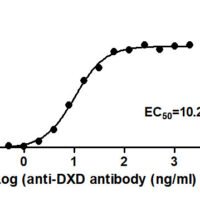
ELISA: Suitable as coating antigen or detection standard.

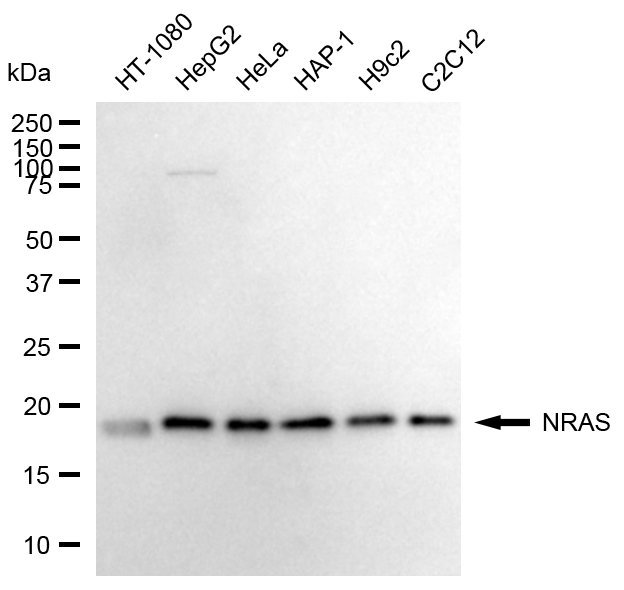
Western Blot: Compatible with standard Western Blot protocols.

Protein Interaction: Validated for SPR (Surface Plasmon Resonance) and BLI (Bio-Layer Interferometry) studies.

Shipping: Shipped at ambient temperature. Lyophilized protein is stable during transit.

Storage: Store lyophilized protein at -20°C to -80°C. Reconstituted protein should be aliquoted and stored at -80°C. Avoid repeated freeze-thaw cycles.

Shelf Life: 12 months from date of receipt when stored as recommended.

Shipping Time: Orders placed before 2 PM EST ship same day. International orders typically deliver within 5-10 business days.

Protein Biology

Function

Signal transducer in the Ras-MAPK signaling pathway that regulates cell proliferation and survival (PubMed:30712867). Ras proteins bind GDP/GTP and possess intrinsic GTPase activity (PubMed:30712867). Recognized by LZTR1 that mediates its ubiquitination by a BCR (BTB-CUL3-RBX1) E3 ubiquitin-protein ligase complex (PubMed:40934300)

Subcellular Location

Cell membrane (Lipid-anchor); Golgi apparatus membrane (Lipid-anchor)

Disease Association

Leukemia, juvenile myelomonocytic (JMML) : An aggressive pediatric myelodysplastic syndrome/myeloproliferative disorder characterized by malignant transformation in the hematopoietic stem cell compartment with proliferation of differentiated progeny. Patients have splenomegaly, enlarged lymph nodes, rashes, and hemorrhages. [The disease is caused by variants affecting the gene represented in this entry] | Noonan syndrome 6 (NS6) : A form of Noonan syndrome, a disease characterized by short stature, facial dysmorphic features such as hypertelorism, a downward eyeslant and low-set posteriorly rotated ears, and a high incidence of congenital heart defects and hypertrophic cardiomyopathy. Other features can include a short neck with webbing or redundancy of skin, deafness, motor delay, variable intellectual deficits, multiple skeletal defects, cryptorchidism, and bleeding diathesis. Individuals with Noonan syndrome are at risk of juvenile myelomonocytic leukemia, a myeloproliferative disorder characterized by excessive production of myelomonocytic cells. [The disease is caused by variants affecting the gene represented in this entry] | RAS-associated autoimmune leukoproliferative disorder (RALD) : A disorder of apoptosis, characterized by chronic accumulation of non-malignant lymphocytes, defective lymphocyte apoptosis, and an increased risk for the development of hematologic malignancies. [The disease is caused by variants affecting the gene represented in this entry] | Melanocytic nevus syndrome, congenital (CMNS) : A syndrome characterized by congenital pigmentary skin lesions which can occur at any site and can cover most of the body surface. These lesions may or may not be hairy. Congenital melanocytic nevi are associated with neuromelanosis (the presence of melanin-producing cells within the brain parenchyma or leptomeninges). Less commonly they are associated with malignant melanoma in childhood, both in the skin and the central nervous system. CMNS patients also tend to have a characteristic facial appearance, including wide or prominent forehead, periorbital fullness, small short nose with narrow nasal bridge, round face, full cheeks, prominent premaxilla, and everted lower lip. [The disease is caused by variants affecting the gene represented in this entry] | Melanosis, neurocutaneous (NCMS) : A rare congenital disease characterized by the presence of giant or multiple melanocytic nevi on the skin, foci of melanin-producing cells within the brain parenchyma, and infiltration of leptomeninges by abnormal melanin deposits. Neurologic abnormalities include seizures, hydrocephalus, arachnoid cysts, tumors, and syringomyelia. Some patients may develop malignant melanoma. [The disease is caused by variants affecting the gene represented in this entry] | Keratinocytic non-epidermolytic nevus (KNEN) : Epidermal nevi of the common, non-organoid and non-epidermolytic type are benign skin lesions and may vary in their extent from a single (usually linear) lesion to widespread and systematized involvement. They may be present at birth or develop early during childhood. [The disease is caused by variants affecting the gene represented in this entry] | Thyroid cancer, non-medullary, 2 (NMTC2) : A form of non-medullary thyroid cancer (NMTC), a cancer characterized by tumors originating from the thyroid follicular cells. NMTCs represent approximately 95% of all cases of thyroid cancer and are classified into papillary, follicular, Hurthle cell, and anaplastic neoplasms. [Disease susceptibility is associated with variants affecting the gene represented in this entry]

Subunit

Interacts (active GTP-bound form preferentially) with RGS14 (By similarity). Interacts (active GTP-bound form) with RASSF7 (PubMed:21278800). Interacts (active GTP-bound form) with both SHOC2 and PP1c (all isoforms) to form a tertiary complex; SHOC2 and PP1c preferably bind M-Ras/MRAS, but they also bind K-Ras/KRAS, N-Ras/NRAS and H-Ras/HRAS (PubMed:36175670, PubMed:35768504, PubMed:35831509, PubMed:35830882). Interacts (GDP-bound form) with LZTR1; this interaction mediates NRAS ubiquitination by BCR E3 ligase complex (PubMed:40934300)

Gene: NRAS  |  Organism: Homo sapiens  |  Synonyms: Transforming protein N-Ras
Key Publications

Frequently Asked Questions

How do I order or inquire about this product?

Fill out the Online Inquiry form with your required quantity and specifications. You can also email sales@biocrestsci.com. Our team typically responds within 4 business hours with a quote and availability confirmation.

What is the shipping and delivery time?

Orders placed before 2 PM EST ship the same day. Domestic (US) delivery typically takes 2-3 business days. International orders deliver within 5-10 business days. All products are shipped at ambient temperature with appropriate packaging to ensure stability.

How should I store this recombinant protein?

Lyophilized proteins should be stored at -20°C to -80°C upon receipt. After reconstitution, aliquot and store at -80°C. Avoid repeated freeze-thaw cycles. Shelf life is 12 months from date of receipt when stored as recommended.

What quality controls are performed on your products?

Each product undergoes SDS-PAGE purity analysis (typically >85-95%), endotoxin testing, and bioactivity validation. Products are validated for ELISA, Western Blot, and SPR/BLI applications as specified on this product page. A Certificate of Analysis (CoA) is available upon request.

Shopping Cart
Scroll to Top