Mouse anti-Human/Mouse sapiens (Human) NFE2L2 Monoclonal Antibody

Mouse anti-Human/Mouse sapiens (Human) NFE2L2 Monoclonal Antibody — Transcription factor that plays a key role in the response to oxidative stress: binds to antioxidant response (ARE) elements present in the promoter region of many cytoprotective genes, such as pha…

SKU: BCREC-000716MA Category:

Product Specifications

Uniprot No.Q16236
Target NamesNFE2L2
Species ReactivityMouse
ImmunogenRecombinant Human Nuclear factor erythroid 2-related factor 2 protein (256-605AA)
Immunogen SpeciesHomo sapiens (Human)
ConjugateNon-conjugated
IsotypeIgG2b
ClonalityMonoclonal
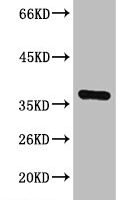
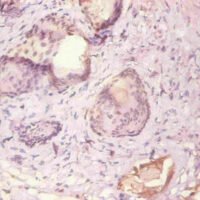
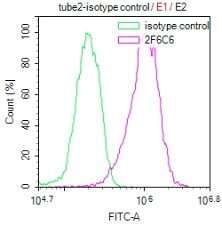
ApplicationsELISA, WB, IHC, IF, FC
BufferPBS, 50% glycerol, 0.05% Proclin 300, 0.05%BSA
StorageUpon receipt, store at -20°C or -80°C. Avoid repeated freeze.

Function

Transcription factor that plays a key role in the response to oxidative stress: binds to antioxidant response (ARE) elements present in the promoter region of many cytoprotective genes, such as phase 2 detoxifying enzymes, and promotes their expression, thereby neutralizing reactive electrophiles. In normal conditions, ubiquitinated and degraded in the cytoplasm by the BCR(KEAP1) complex. In response to oxidative stress, electrophile metabolites inhibit activity of the BCR(KEAP1) complex, promoting nuclear accumulation of NFE2L2/NRF2, heterodimerization with one of the small Maf proteins and binding to ARE elements of cytoprotective target genes.

Biological Context

Subcellular Location: Cytoplasm, cytosol; Nucleus
Tissue Specificity: Widely expressed. Highest expression in adult muscle, kidney, lung, liver and in fetal muscle
Disease Association: Immunodeficiency, developmental delay, and hypohomocysteinemia (IMDDHH) : An early onset multisystem disorder characterized by immunodeficiency, recurrent infections, developmental delay, poor growth, intellectual disability, and hypohomocysteinemia. Some patients manifest congenital cardiac defects. IMDDHH inheritance pattern is autosomal dominant. [The disease is caused by variants affecting the gene represented in this entry]

Product Specifications

Mouse anti-Human/Mouse sapiens (Human) NFE2L2 Monoclonal Antibody is a recombinant protein. Suitable for ELISA and Western Blot applications.

SDS-PAGE: Single band at expected molecular weight confirming purity.

ELISA: Suitable as coating antigen or detection standard.

Western Blot: Compatible with standard Western Blot protocols.

Protein Interaction: Validated for SPR (Surface Plasmon Resonance) and BLI (Bio-Layer Interferometry) studies.

Shipping: Shipped at ambient temperature. Lyophilized protein is stable during transit.

Storage: Store lyophilized protein at -20°C to -80°C. Reconstituted protein should be aliquoted and stored at -80°C. Avoid repeated freeze-thaw cycles.

Shelf Life: 12 months from date of receipt when stored as recommended.

Shipping Time: Orders placed before 2 PM EST ship same day. International orders typically deliver within 5-10 business days.

Protein Biology

Function

Transcription factor that plays a key role in the response to oxidative stress: binds to antioxidant response (ARE) elements present in the promoter region of many cytoprotective genes, such as phase 2 detoxifying enzymes, and promotes their expression, thereby neutralizing reactive electrophiles (PubMed:11035812, PubMed:19489739, PubMed:29018201, PubMed:31398338). In normal conditions, ubiquitinated and degraded in the cytoplasm by the BCR(KEAP1) complex (PubMed:11035812, PubMed:15601839, PubMed:29018201). In response to oxidative stress, electrophile metabolites inhibit activity of the BCR(KEAP1) complex, promoting nuclear accumulation of NFE2L2/NRF2, heterodimerization with one of the small Maf proteins and binding to ARE elements of cytoprotective target genes (PubMed:19489739, PubMed:29590092). The NFE2L2/NRF2 pathway is also activated in response to selective autophagy: autophagy promotes interaction between KEAP1 and SQSTM1/p62 and subsequent inactivation of the BCR(KEAP1) complex, leading to NFE2L2/NRF2 nuclear accumulation and expression of cytoprotective genes (PubMed:20452972). The NFE2L2/NRF2 pathway is also activated during the unfolded protein response (UPR), contributing to redox homeostasis and cell survival following endoplasmic reticulum stress (By similarity). May also be involved in the transcriptional activation of genes of the beta-globin cluster by mediating enhancer activity of hypersensitive site 2 of the beta-globin locus control region (PubMed:7937919). Also plays an important role in the regulation of the innate immune response and antiviral cytosolic DNA sensing. It is a critical regulator of the innate immune response and survival during sepsis by maintaining redox homeostasis and restraint of the dysregulation of pro-inflammatory signaling pathways like MyD88-dependent and -independent and TNF signaling (By similarity). Suppresses macrophage inflammatory response by blocking pro-inflammatory cytokine transcription and the induction of IL6 (By similarity). Binds to the proximity of pro-inflammatory genes in macrophages and inhibits RNA Pol II recruitment. The inhibition is independent of the NRF2-binding motif and reactive oxygen species level (By similarity). Represses antiviral cytosolic DNA sensing by suppressing the expression of the adapter protein STING1 and decreasing responsiveness to STING1 agonists while increasing susceptibility to infection with DNA viruses (PubMed:30158636). Once activated, limits the release of pro-inflammatory cytokines in response to human coronavirus SARS-CoV-2 infection and to virus-derived ligands through a mechanism that involves inhibition of IRF3 dimerization. Also inhibits both SARS-CoV-2 replication, as well as the replication of several other pathogenic viruses including Herpes Simplex Virus-1 and-2, Vaccinia virus, and Zika virus through a type I interferon (IFN)-independent mechanism (PubMed:33009401)

Subcellular Location

Cytoplasm, cytosol; Nucleus

Disease Association

Immunodeficiency, developmental delay, and hypohomocysteinemia (IMDDHH) : An early onset multisystem disorder characterized by immunodeficiency, recurrent infections, developmental delay, poor growth, intellectual disability, and hypohomocysteinemia. Some patients manifest congenital cardiac defects. IMDDHH inheritance pattern is autosomal dominant. [The disease is caused by variants affecting the gene represented in this entry]

Tissue Specificity

Widely expressed. Highest expression in adult muscle, kidney, lung, liver and in fetal muscle

Subunit

(Microbial infection) Interacts with herpes virus 8 protein LANA1

Gene: NFE2L2  |  Organism: Homo sapiens  |  Synonyms: Nuclear factor, erythroid derived 2, like 2
Key Publications

Frequently Asked Questions

How do I order or inquire about this product?

Fill out the Online Inquiry form with your required quantity and specifications. You can also email sales@biocrestsci.com. Our team typically responds within 4 business hours with a quote and availability confirmation.

What is the shipping and delivery time?

Orders placed before 2 PM EST ship the same day. Domestic (US) delivery typically takes 2-3 business days. International orders deliver within 5-10 business days. All products are shipped at ambient temperature with appropriate packaging to ensure stability.

How should I store this recombinant protein?

Lyophilized proteins should be stored at -20°C to -80°C upon receipt. After reconstitution, aliquot and store at -80°C. Avoid repeated freeze-thaw cycles. Shelf life is 12 months from date of receipt when stored as recommended.

What quality controls are performed on your products?

Each product undergoes SDS-PAGE purity analysis (typically >85-95%), endotoxin testing, and bioactivity validation. Products are validated for ELISA, Western Blot, and SPR/BLI applications as specified on this product page. A Certificate of Analysis (CoA) is available upon request.

Shopping Cart
Scroll to Top