
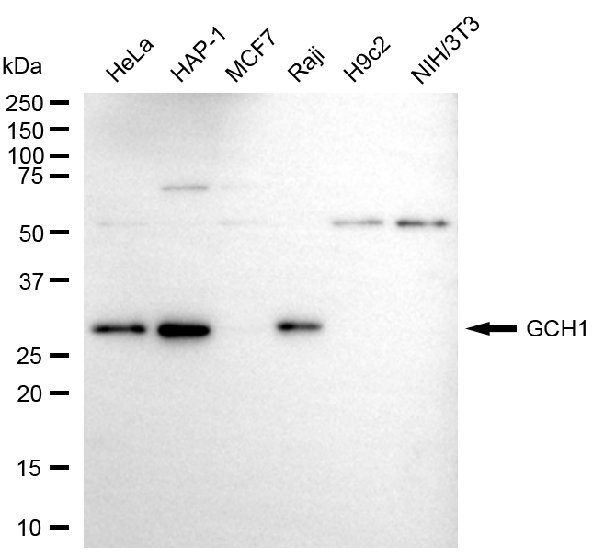
Mouse anti-Human sapiens (Human) GCH1 Monoclonal Antibody

Mouse anti-Human sapiens (Human) GCH1 Monoclonal Antibody — Positively regulates nitric oxide synthesis in umbilical vein endothelial cells (HUVECs).

SKU: BCREC-000531MA Category:

Product Specifications

Uniprot No.P30793
Target NamesGCH1
Species ReactivityMouse
ImmunogenRecombinant Human GCH1 protein
Immunogen SpeciesHomo sapiens (Human)
ConjugateNon-conjugated
IsotypeMouse IgG2a
ClonalityMonoclonal
ApplicationsELISA, WB
BufferPBS, 50% glycerol, 0.05% Proclin 300, 0.05%BSA
StorageUpon receipt, store at -20°C or -80°C. Avoid repeated freeze.

Function

Positively regulates nitric oxide synthesis in umbilical vein endothelial cells (HUVECs). May be involved in dopamine synthesis. May modify pain sensitivity and persistence.

Biological Context

Subcellular Location: Cytoplasm; Nucleus
Tissue Specificity: In epidermis, expressed predominantly in basal undifferentiated keratinocytes and in some but not all melanocytes (at protein level)
Disease Association: Hyperphenylalaninemia, BH4-deficient, B (HPABH4B) : A disease characterized by malignant hyperphenylalaninemia due to tetrahydrobiopterin deficiency, and defective neurotransmission due to depletion of the neurotransmitters dopamine and serotonin. The principal symptoms include: psychomotor retardation, tonicity disorders, convulsions, drowsiness, irritability, abnormal movements, hyperthermia, hypersalivation, and difficulty swallowing. Some patients may present a phenotype of intermediate severity between severe hyperphenylalaninemia and mild dystonia. In this intermediate phenotype, there is marked motor delay, but no intellectual disability and only minimal, if any, hyperphenylalaninemia. [The disease is caused by variants affecting the gene represented in this entry] | Dystonia, dopa-responsive (DRD) : A form of dystonia that responds to L-DOPA treatment without side effects. Dystonia is defined by the presence of sustained involuntary muscle contractions, often leading to abnormal postures. DRD typically presents in childhood with walking problems due to dystonia of the lower limbs and worsening of the dystonia towards the evening. It is characterized by postural and motor disturbances showing marked diurnal fluctuation. Torsion of the trunk is unusual. Symptoms are alleviated after sleep and aggravated by fatigue and exercise. [The disease is caused by variants affecting the gene represented in this entry]
Pathway: Cofactor biosynthesis; 7,8-dihydroneopterin triphosphate biosynthesis; 7,8-dihydroneopterin triphosphate from GTP: step 1/1

Product Specifications

Mouse anti-Human sapiens (Human) GCH1 Monoclonal Antibody is a recombinant protein. Suitable for ELISA and Western Blot applications.

SDS-PAGE: Single band at expected molecular weight confirming purity.

ELISA: Suitable as coating antigen or detection standard.

Western Blot: Compatible with standard Western Blot protocols.

Protein Interaction: Validated for SPR (Surface Plasmon Resonance) and BLI (Bio-Layer Interferometry) studies.

Shipping: Shipped at ambient temperature. Lyophilized protein is stable during transit.

Storage: Store lyophilized protein at -20°C to -80°C. Reconstituted protein should be aliquoted and stored at -80°C. Avoid repeated freeze-thaw cycles.

Shelf Life: 12 months from date of receipt when stored as recommended.

Shipping Time: Orders placed before 2 PM EST ship same day. International orders typically deliver within 5-10 business days.

Protein Biology

Function

Positively regulates nitric oxide synthesis in umbilical vein endothelial cells (HUVECs). May be involved in dopamine synthesis. May modify pain sensitivity and persistence. Isoform GCH-1 is the functional enzyme, the potential function of the enzymatically inactive isoforms remains unknown

Subcellular Location

Cytoplasm; Nucleus

Disease Association

Hyperphenylalaninemia, BH4-deficient, B (HPABH4B) : A disease characterized by malignant hyperphenylalaninemia due to tetrahydrobiopterin deficiency, and defective neurotransmission due to depletion of the neurotransmitters dopamine and serotonin. The principal symptoms include: psychomotor retardation, tonicity disorders, convulsions, drowsiness, irritability, abnormal movements, hyperthermia, hypersalivation, and difficulty swallowing. Some patients may present a phenotype of intermediate severity between severe hyperphenylalaninemia and mild dystonia. In this intermediate phenotype, there is marked motor delay, but no intellectual disability and only minimal, if any, hyperphenylalaninemia. [The disease is caused by variants affecting the gene represented in this entry] | Dystonia, dopa-responsive (DRD) : A form of dystonia that responds to L-DOPA treatment without side effects. Dystonia is defined by the presence of sustained involuntary muscle contractions, often leading to abnormal postures. DRD typically presents in childhood with walking problems due to dystonia of the lower limbs and worsening of the dystonia towards the evening. It is characterized by postural and motor disturbances showing marked diurnal fluctuation. Torsion of the trunk is unusual. Symptoms are alleviated after sleep and aggravated by fatigue and exercise. [The disease is caused by variants affecting the gene represented in this entry]

Tissue Specificity

In epidermis, expressed predominantly in basal undifferentiated keratinocytes and in some but not all melanocytes (at protein level)

Subunit

Toroid-shaped homodecamer, composed of a dimer of pentamers. The inactive isoforms also form decamers and may possibly be incorporated into GCH1 heterodecamers, decreasing enzyme stability and activity. Interacts with AHSA1 and GCHFR/GFRP

Pathway

Cofactor biosynthesis; 7,8-dihydroneopterin triphosphate biosynthesis; 7,8-dihydroneopterin triphosphate from GTP: step 1/1

Gene: GCH1  |  Organism: Homo sapiens  |  Synonyms: GTP cyclohydrolase I
Key Publications

Frequently Asked Questions

How do I order or inquire about this product?

Fill out the Online Inquiry form with your required quantity and specifications. You can also email sales@biocrestsci.com. Our team typically responds within 4 business hours with a quote and availability confirmation.

What is the shipping and delivery time?

Orders placed before 2 PM EST ship the same day. Domestic (US) delivery typically takes 2-3 business days. International orders deliver within 5-10 business days. All products are shipped at ambient temperature with appropriate packaging to ensure stability.

How should I store this recombinant protein?

Lyophilized proteins should be stored at -20°C to -80°C upon receipt. After reconstitution, aliquot and store at -80°C. Avoid repeated freeze-thaw cycles. Shelf life is 12 months from date of receipt when stored as recommended.

What quality controls are performed on your products?

Each product undergoes SDS-PAGE purity analysis (typically >85-95%), endotoxin testing, and bioactivity validation. Products are validated for ELISA, Western Blot, and SPR/BLI applications as specified on this product page. A Certificate of Analysis (CoA) is available upon request.

Shopping Cart
Scroll to Top