
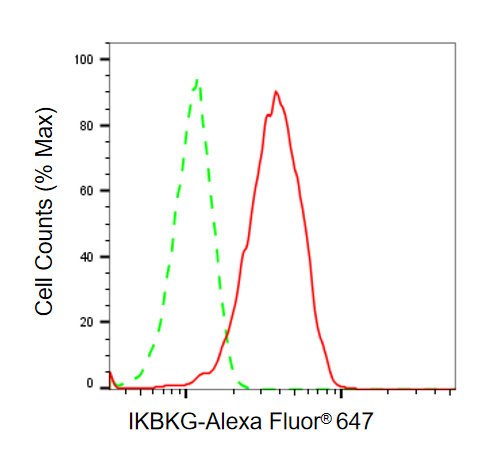

Function
(Microbial infection) Also considered to be a mediator for HTLV-1 Tax oncoprotein activation of NF-kappa-B.
Biological Context
Subcellular Location: Cytoplasm; Nucleus
Tissue Specificity: Heart, brain, placenta, lung, liver, skeletal muscle, kidney and pancreas
Disease Association: Ectodermal dysplasia and immunodeficiency 1 (EDAID1) : A form of ectoderma dysplasia, a heterogeneous group of disorders due to abnormal development of two or more ectodermal structures. EDAID1 is an X-linked recessive disorder characterized by absence of sweat glands, sparse scalp hair, rare conical teeth and immunological abnormalities resulting in severe infectious diseases. Severely affected individuals may also show lymphedema, osteopetrosis, and, rarely, hematologic abnormalities. The phenotype is highly variable, and may be fatal in childhood. [The disease is caused by variants affecting the gene represented in this entry] | Immunodeficiency 33 (IMD33) : An X-linked recessive disorder characterized by variably impaired immunologic function and early-onset recurrent infections, usually due to pneumococcus, H.influenzae, and atypical mycobacteria. Features of hypohidrotic ectodermal dysplasia are generally not present, although some patients may have conical teeth or hypodontia. [Disease susceptibility is associated with variants affecting the gene represented in this entry] | Incontinentia pigmenti (IP) : A genodermatosis usually prenatally lethal in males. In affected females, it causes abnormalities of the skin, hair, eyes, nails, teeth, skeleton, heart, and central nervous system. The prominent skin signs occur in four classic cutaneous stages: perinatal inflammatory vesicles, verrucous patches, a distinctive pattern of hyperpigmentation and dermal scarring. [The disease is caused by variants affecting the gene represented in this entry] | Autoinflammatory disease, systemic, X-linked (SAIDX) : An X-linked disorder characterized by systemic autoinflammation appearing in the first months of life. Clinical manifestations are variable, including lymphadenopathy, hepatosplenomegaly, fever, panniculitis, and nodular skin rash. Additional features may include inflammation of the optic nerve, intracranial hemorrhage, and lipodystrophy. [The disease is caused by variants affecting the gene represented in this entry]
Product Specifications
Mouse anti-Human sapiens (Human) IKBKG Monoclonal Antibody is a recombinant protein. Suitable for ELISA and Western Blot applications. Explore more Antibody products →
