
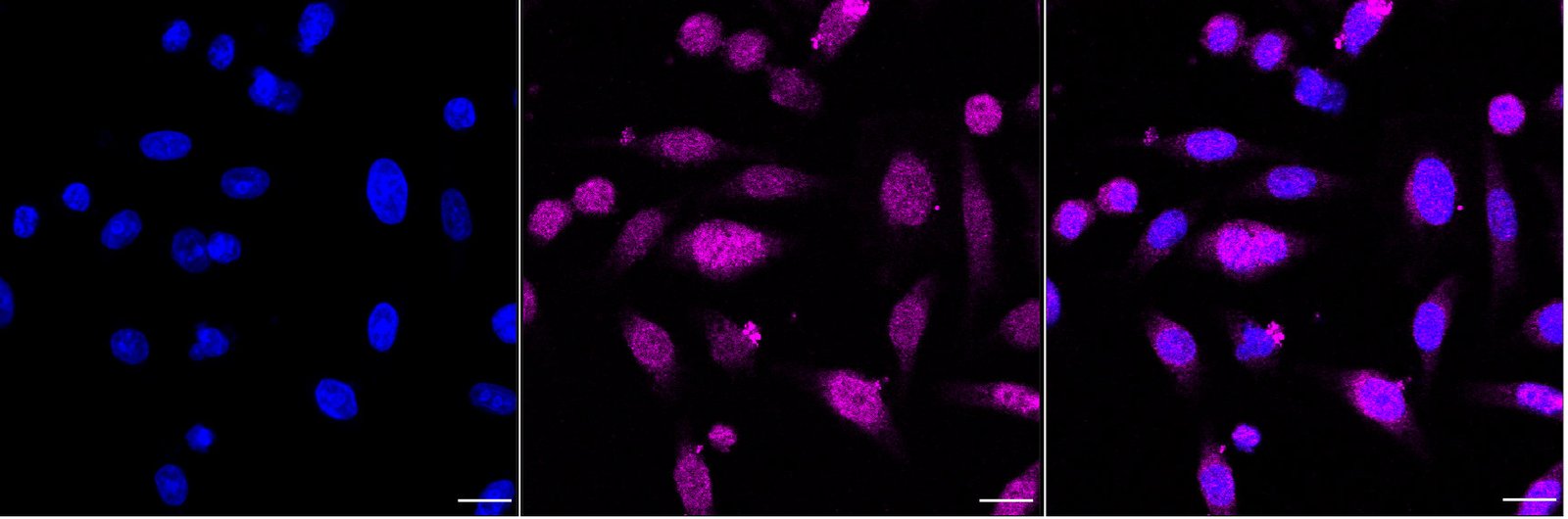

Function
Transcription factor that acts as a master regulator of melanocyte survival and differentiation as well as melanosome biogenesis. Binds to M-boxes (5'-TCATGTG-3') and symmetrical DNA sequences (E-boxes) (5'-CACGTG-3') found in the promoter of pigmentation genes, such as tyrosinase (TYR). Involved in the cellular response to amino acid availability by acting downstream of MTOR: in the presence of nutrients, MITF phosphorylation by MTOR promotes its inactivation.
Biological Context
Subcellular Location: Nucleus; Cytoplasm; Lysosome membrane
Tissue Specificity: Expressed in melanocytes
Disease Association: Waardenburg syndrome 2A (WS2A) : WS2 is a genetically heterogeneous, autosomal dominant disorder characterized by sensorineural deafness, pigmentary disturbances, and absence of dystopia canthorum. The frequency of deafness is higher in WS2 than in WS1. [The disease is caused by variants affecting the gene represented in this entry] | Tietz albinism-deafness syndrome (TADS) : An autosomal dominant disorder characterized by generalized hypopigmentation and congenital, bilateral, profound sensorineural deafness. [The disease is caused by variants affecting the gene represented in this entry] | Melanoma, cutaneous malignant 8 (CMM8) : A malignant neoplasm of melanocytes, arising de novo or from a pre-existing benign nevus, which occurs most often in the skin but may also involve other sites. [Disease susceptibility is associated with variants affecting the gene represented in this entry] | Coloboma, osteopetrosis, microphthalmia, macrocephaly, albinism, and deafness (COMMAD) : An autosomal recessive syndrome characterized by severe microphthalmia, profound congenital sensorineural hearing loss, lack of pigment in the hair, skin, and eyes, macrocephaly, facial dysmorphism, and osteopetrosis. [The disease is caused by variants affecting the gene represented in this entry. An allelic combination involving at least one dominant-negative mutation, inherited in a recessive manner, represents the underlying molecular mechanism leading to COMMAD syndrome] | [Variations affecting this gene are associated with susceptibility to pheochromocytomas and paragangliomas, rare neural crest-derived tumors with an approximate incidence of 1:300,000/year]
Product Specifications
Mouse anti-Human sapiens (Human) MITF Monoclonal Antibody is a recombinant protein. Suitable for ELISA and Western Blot applications. Explore more Antibody products →
