Function
Acts as a ligand for integrins, specifically ITGA5:ITGB1 and ITGAV:ITGB3; both integrins and the CD40 receptor are required for activation of CD40-CD40LG signaling, which have cell-type dependent effects, such as B-cell activation, NF-kappa-B signaling and anti-apoptotic signaling.
Biological Context
Subcellular Location: Secreted
Tissue Specificity: Specifically expressed on activated CD4+ T-lymphocytes
Disease Association: Immunodeficiency with hyper-IgM, type 1 (HIGM1) : Immunoglobulin isotype switch defect characterized by elevated concentrations of serum IgM and decreased amounts of all other isotypes. Affected males present at an early age (usually within the first year of life) recurrent bacterial and opportunistic infections, including Pneumocystis carinii pneumonia and intractable diarrhea due to cryptosporidium infection. Despite substitution treatment with intravenous immunoglobulin, the overall prognosis is rather poor, with a death rate of about 10% before adolescence. [The disease is caused by variants affecting the gene represented in this entry]
Product Specifications
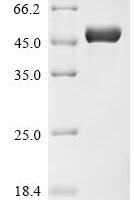
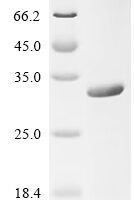
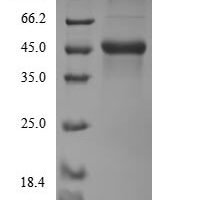
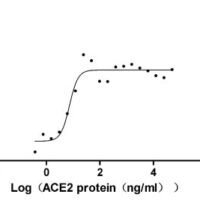
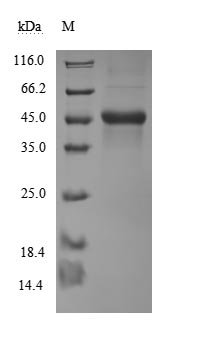
Recombinant Human CD40 ligand (CD40LG), partial (Active) is a recombinant protein from Homo sapiens (Human), expressed in Mammalian cell, covering amino acids 113-261aa, with N-terminal hFc-Flag-tagged tag, molecular weight 44.5kDa, purity Greater than 90% as determined by SDS-PAGE.. Suitable for ELISA and Western Blot applications. Explore more CD proteins →