Recombinant Human Contactin-associated protein 1 (CNTNAP1), partial

Recombinant Human Contactin-associated protein 1 (CNTNAP1), partial — Required, with CNTNAP2, for radial and longitudinal organization of myelinated axons. Purity >90%.

SKU: BCRECP-000399 Category:

Product Specifications

Product SkuBCRECP-000399
Product DescriptionRecombinant Human Contactin-associated protein 1 (CNTNAP1) Protein is expressed from E.coli with N-terminal 6xHis-SUMO-tagged. It contains 26-356aa. [Accession | P78357].
Uniprot No.P78357
Gene NamesCNTNAP1
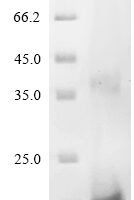
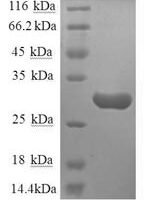
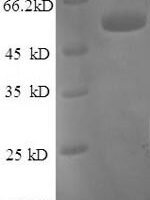
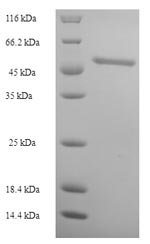
PurityGreater than 90% as determined by SDS-PAGE.
Expression SystemE.coli
Expression Region26-356aa
SpeciesHomo sapiens (Human)
Tag InfoN-terminal 6xHis-SUMO-tagged
Molecular weight53.8kDa
ActivityPlease contact us to obtain bioactivity data.
BufferIf the delivery form is liquid, the default storage buffer is Tris/PBS-based buffer, 5%-50% glycerol. If the delivery form is lyophilized powder, the buffer before lyophilization is Tris/PBS-based buffer, 6% Trehalose.
StorageStore at -20°C/-80°C upon receipt, aliquoting is necessary for mutiple use. Avoid repeated freeze-thaw cycles.
Research AreasNeuroscience

Function

Required, with CNTNAP2, for radial and longitudinal organization of myelinated axons. Plays a role in the formation of functional distinct domains critical for saltatory conduction of nerve impulses in myelinated nerve fibers. Demarcates the paranodal region of the axo-glial junction.

Biological Context

Subcellular Location: Membrane (Single-pass type I membrane protein); Cell junction, paranodal septate junction
Tissue Specificity: Predominantly expressed in brain. Weak expression detected in ovary, pancreas, colon, lung, heart, intestine and testis
Disease Association: Lethal congenital contracture syndrome 7 (LCCS7) : A form of lethal congenital contracture syndrome, an autosomal recessive disorder characterized by degeneration of anterior horn neurons, extreme skeletal muscle atrophy and congenital non-progressive joint contractures. The contractures can involve the upper or lower limbs and/or the vertebral column, leading to various degrees of flexion or extension limitations evident at birth. LCCS7 is a severe axoglial disease characterized by congenital distal joint contractures, polyhydramnios, reduced fetal movements, and motor paralysis leading to death early in the neonatal period. [The disease is caused by variants affecting the gene represented in this entry] | Neuropathy, congenital hypomyelinating, 3 (CHN3) : A form of congenital hypomyelinating neuropathy, a neurologic disorder characterized by early-onset hypotonia, areflexia, distal muscle weakness, and very slow nerve conduction velocities (NCV) resulting from improper myelination of axons. In its extreme form, it may present with severe joint contractures or arthrogryposis multiplex congenita and respiratory insufficiency. In less severe cases patients may achieve walking. Patients lack both active myelin breakdown and well-organized onion bulbs on sural nerve biopsies, have absence of inflammation, and show hypomyelination of most or all fibers. CHN3 is a severe autosomal recessive form characterized by onset of neurogenic muscle impairment in utero. Affected individuals have profoundly impaired psychomotor development and may die in infancy or early childhood. [The disease is caused by variants affecting the gene represented in this entry]

Product Specifications

Recombinant Human Contactin-associated protein 1 (CNTNAP1), partial is a recombinant protein from Homo sapiens (Human), expressed in E.coli, covering amino acids 26-356aa, with N-terminal 6xHis-SUMO-tagged tag, molecular weight 53.8kDa, purity Greater than 90% as determined by SDS-PAGE.. Suitable for ELISA and Western Blot applications.

SDS-PAGE: Single band at expected molecular weight confirming purity.

ELISA: Suitable as coating antigen or detection standard.

Western Blot: Compatible with standard Western Blot protocols.

Protein Interaction: Validated for SPR (Surface Plasmon Resonance) and BLI (Bio-Layer Interferometry) studies.

Shipping: Shipped at ambient temperature. Lyophilized protein is stable during transit.

Storage: Store lyophilized protein at -20°C to -80°C. Reconstituted protein should be aliquoted and stored at -80°C. Avoid repeated freeze-thaw cycles.

Shelf Life: 12 months from date of receipt when stored as recommended.

Shipping Time: Orders placed before 2 PM EST ship same day. International orders typically deliver within 5-10 business days.

Protein Biology

Function

Required, with CNTNAP2, for radial and longitudinal organization of myelinated axons. Plays a role in the formation of functional distinct domains critical for saltatory conduction of nerve impulses in myelinated nerve fibers. Demarcates the paranodal region of the axo-glial junction. In association with contactin involved in the signaling between axons and myelinating glial cells

Subcellular Location

Membrane (Single-pass type I membrane protein); Cell junction, paranodal septate junction

Disease Association

Lethal congenital contracture syndrome 7 (LCCS7) : A form of lethal congenital contracture syndrome, an autosomal recessive disorder characterized by degeneration of anterior horn neurons, extreme skeletal muscle atrophy and congenital non-progressive joint contractures. The contractures can involve the upper or lower limbs and/or the vertebral column, leading to various degrees of flexion or extension limitations evident at birth. LCCS7 is a severe axoglial disease characterized by congenital distal joint contractures, polyhydramnios, reduced fetal movements, and motor paralysis leading to death early in the neonatal period. [The disease is caused by variants affecting the gene represented in this entry] | Neuropathy, congenital hypomyelinating, 3 (CHN3) : A form of congenital hypomyelinating neuropathy, a neurologic disorder characterized by early-onset hypotonia, areflexia, distal muscle weakness, and very slow nerve conduction velocities (NCV) resulting from improper myelination of axons. In its extreme form, it may present with severe joint contractures or arthrogryposis multiplex congenita and respiratory insufficiency. In less severe cases patients may achieve walking. Patients lack both active myelin breakdown and well-organized onion bulbs on sural nerve biopsies, have absence of inflammation, and show hypomyelination of most or all fibers. CHN3 is a severe autosomal recessive form characterized by onset of neurogenic muscle impairment in utero. Affected individuals have profoundly impaired psychomotor development and may die in infancy or early childhood. [The disease is caused by variants affecting the gene represented in this entry]

Tissue Specificity

Predominantly expressed in brain. Weak expression detected in ovary, pancreas, colon, lung, heart, intestine and testis

Subunit

Interacts with CNTN1/contactin in cis form

Gene: CNTNAP1  |  Organism: Homo sapiens  |  Synonyms: Neurexin IV; Neurexin-4; p190
Key Publications

Frequently Asked Questions

How do I order or inquire about this product?

Fill out the Online Inquiry form with your required quantity and specifications. You can also email sales@biocrestsci.com. Our team typically responds within 4 business hours with a quote and availability confirmation.

What is the shipping and delivery time?

Orders placed before 2 PM EST ship the same day. Domestic (US) delivery typically takes 2-3 business days. International orders deliver within 5-10 business days. All products are shipped at ambient temperature with appropriate packaging to ensure stability.

How should I store this recombinant protein?

Lyophilized proteins should be stored at -20°C to -80°C upon receipt. After reconstitution, aliquot and store at -80°C. Avoid repeated freeze-thaw cycles. Shelf life is 12 months from date of receipt when stored as recommended.

What quality controls are performed on your products?

Each product undergoes SDS-PAGE purity analysis (typically >85-95%), endotoxin testing, and bioactivity validation. Products are validated for ELISA, Western Blot, and SPR/BLI applications as specified on this product page. A Certificate of Analysis (CoA) is available upon request.

Shopping Cart
Scroll to Top