,

Recombinant Human Cytotoxic T-lymphocyte protein 4 (CTLA4), partial

Recombinant Human Cytotoxic T-lymphocyte protein 4 (CTLA4), partial — Inhibitory receptor acting as a major negative regulator of T-cell responses. Purity >90%.

SKU: BCRECP-000450 Categories: ,

Product Specifications

Product SkuBCRECP-000450
Product DescriptionRecombinant Human Cytotoxic T-lymphocyte protein 4 (CTLA4) Protein is expressed from Yeast with N-terminal Twin-Strep-tagged. It contains 36-161aa. [Accession | P16410].
Uniprot No.P16410
Gene NamesCTLA4
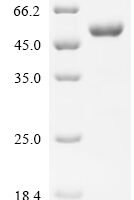
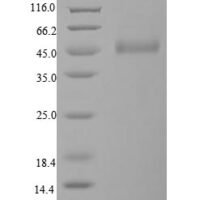
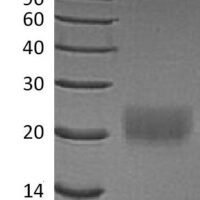
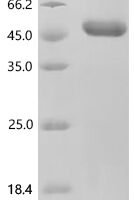
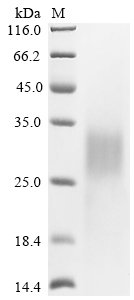
PurityGreater than 90% as determined by SDS-PAGE.
Expression SystemYeast
Expression Region36-161aa
SpeciesHomo sapiens (Human)
Tag InfoN-terminal Twin-Strep-tagged
Molecular weight17.2kDa
ActivityPlease contact us to obtain bioactivity data.
BufferIf the delivery form is liquid, the default storage buffer is Tris/PBS-based buffer, 5%-50% glycerol. If the delivery form is lyophilized powder, the buffer before lyophilization is Tris/PBS-based buffer, 6% Trehalose.
StorageStore at -20°C/-80°C upon receipt, aliquoting is necessary for mutiple use. Avoid repeated freeze-thaw cycles.
Research AreasCancer

Function

Inhibitory receptor acting as a major negative regulator of T-cell responses. Acts as a decoy receptor: the affinity of CTLA4 for its natural B7 family ligands, CD80 and CD86, is considerably stronger than the affinity of their cognate stimulatory coreceptor CD28.

Biological Context

Subcellular Location: Cell membrane (Single-pass type I membrane protein)
Tissue Specificity: Widely expressed with highest levels in lymphoid tissues. Detected in activated T-cells where expression levels are 30- to 50-fold less than CD28, the stimulatory coreceptor, on the cell surface following activation
Disease Association: Immune dysregulation with autoimmunity, immunodeficiency, and lymphoproliferation (IDAIL) : An autosomal dominant primary immunodeficiency characterized by severe autoimmunity, infiltration of non-lymphoid organs, such as the intestine, lungs and brain, by hyperactive T cells and B cells, autoimmune cytopenias, and hypogammaglobulinemia in early childhood. [The disease is caused by variants affecting the gene represented in this entry]

Product Specifications

Recombinant Human Cytotoxic T-lymphocyte protein 4 (CTLA4), partial is a recombinant protein from Homo sapiens (Human), expressed in Yeast, covering amino acids 36-161aa, with N-terminal Twin-Strep-tagged tag, molecular weight 17.2kDa, purity Greater than 90% as determined by SDS-PAGE.. Suitable for ELISA and Western Blot applications.

SDS-PAGE: Single band at expected molecular weight confirming purity.

ELISA: Suitable as coating antigen or detection standard.

Western Blot: Compatible with standard Western Blot protocols.

Protein Interaction: Validated for SPR (Surface Plasmon Resonance) and BLI (Bio-Layer Interferometry) studies.

Shipping: Shipped at ambient temperature. Lyophilized protein is stable during transit.

Storage: Store lyophilized protein at -20°C to -80°C. Reconstituted protein should be aliquoted and stored at -80°C. Avoid repeated freeze-thaw cycles.

Shelf Life: 12 months from date of receipt when stored as recommended.

Shipping Time: Orders placed before 2 PM EST ship same day. International orders typically deliver within 5-10 business days.

Protein Biology

Function

Inhibitory receptor acting as a major negative regulator of T-cell responses (PubMed:11279501, PubMed:11279502, PubMed:16551244, PubMed:1714933, PubMed:18641304, PubMed:28484017). Acts as a decoy receptor: the affinity of CTLA4 for its natural B7 family ligands, CD80 and CD86, is considerably stronger than the affinity of their cognate stimulatory coreceptor CD28 (PubMed:11279501, PubMed:11279502, PubMed:16551244, PubMed:1714933, PubMed:28484017)

Subcellular Location

Cell membrane (Single-pass type I membrane protein)

Disease Association

Immune dysregulation with autoimmunity, immunodeficiency, and lymphoproliferation (IDAIL) : An autosomal dominant primary immunodeficiency characterized by severe autoimmunity, infiltration of non-lymphoid organs, such as the intestine, lungs and brain, by hyperactive T cells and B cells, autoimmune cytopenias, and hypogammaglobulinemia in early childhood. [The disease is caused by variants affecting the gene represented in this entry]

Tissue Specificity

Widely expressed with highest levels in lymphoid tissues. Detected in activated T-cells where expression levels are 30- to 50-fold less than CD28, the stimulatory coreceptor, on the cell surface following activation

Subunit

Homodimer; disulfide-linked (PubMed:11279501, PubMed:11279502, PubMed:21156796, PubMed:28484017, Ref.24). Interacts with ICOSLG (PubMed:28484017)

Gene: CTLA4  |  Organism: Homo sapiens  |  Synonyms: Cytotoxic T-lymphocyte-associated antigen 4
Key Publications

Frequently Asked Questions

How do I order or inquire about this product?

Fill out the Online Inquiry form with your required quantity and specifications. You can also email sales@biocrestsci.com. Our team typically responds within 4 business hours with a quote and availability confirmation.

What is the shipping and delivery time?

Orders placed before 2 PM EST ship the same day. Domestic (US) delivery typically takes 2-3 business days. International orders deliver within 5-10 business days. All products are shipped at ambient temperature with appropriate packaging to ensure stability.

How should I store this recombinant protein?

Lyophilized proteins should be stored at -20°C to -80°C upon receipt. After reconstitution, aliquot and store at -80°C. Avoid repeated freeze-thaw cycles. Shelf life is 12 months from date of receipt when stored as recommended.

What quality controls are performed on your products?

Each product undergoes SDS-PAGE purity analysis (typically >85-95%), endotoxin testing, and bioactivity validation. Products are validated for ELISA, Western Blot, and SPR/BLI applications as specified on this product page. A Certificate of Analysis (CoA) is available upon request.

Shopping Cart
Scroll to Top