Recombinant Human DNA polymerase subunit gamma-2, mitochondrial (POLG2)

Recombinant Human DNA polymerase subunit gamma-2, mitochondrial (POLG2) — Accessory subunit of DNA polymerase gamma solely responsible for replication of mitochondrial DNA (mtDNA). Purity >90%.

SKU: BCRECP-001414 Category:

Product Specifications

Product SkuBCRECP-001414
Product DescriptionRecombinant Human DNA polymerase subunit gamma-2, mitochondrial (POLG2) Protein is expressed from E.coli with N-terminal 6xHis-SUMO-tagged. It contains 1-485aa. [Accession | Q9UHN1].
Uniprot No.Q9UHN1
Gene NamesPOLG2
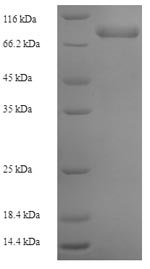
PurityGreater than 90% as determined by SDS-PAGE.
Expression SystemE.coli
Expression Region1-485aa
SpeciesHomo sapiens (Human)
Tag InfoN-terminal 6xHis-SUMO-tagged
Molecular weight70.9kDa
ActivityPlease contact us to obtain bioactivity data.
BufferIf the delivery form is liquid, the default storage buffer is Tris/PBS-based buffer, 5%-50% glycerol. If the delivery form is lyophilized powder, the buffer before lyophilization is Tris/PBS-based buffer, 6% Trehalose.
StorageStore at -20°C/-80°C upon receipt, aliquoting is necessary for mutiple use. Avoid repeated freeze-thaw cycles.
Research AreasTranscription

Function

Accessory subunit of DNA polymerase gamma solely responsible for replication of mitochondrial DNA (mtDNA). Acts as an allosteric regulator of the holoenzyme activities. Enhances the polymerase activity and the processivity of POLG by increasing its interactions with the DNA template.

Biological Context

Subcellular Location: Mitochondrion; Mitochondrion matrix, mitochondrion nucleoid
Disease Association: Progressive external ophthalmoplegia with mitochondrial DNA deletions, autosomal dominant, 4 (PEOA4) : A disorder characterized by progressive weakness of ocular muscles and levator muscle of the upper eyelid. In a minority of cases, it is associated with skeletal myopathy, which predominantly involves axial or proximal muscles and which causes abnormal fatigability and even permanent muscle weakness. Ragged-red fibers and atrophy are found on muscle biopsy. A large proportion of chronic ophthalmoplegias are associated with other symptoms, leading to a multisystemic pattern of this disease. Additional symptoms are variable, and may include cataracts, hearing loss, sensory axonal neuropathy, ataxia, depression, hypogonadism, and parkinsonism. [The disease is caused by variants affecting the gene represented in this entry] | Mitochondrial DNA depletion syndrome 16, hepatic type (MTDPS16) : An autosomal recessive disorder characterized by poor feeding, difficulty breathing, abdominal distention, an abnormal carnitine profile, metabolic acidosis and hepatic failure in the neonatal period. Severe mtDNA depletion is observed in liver and muscle biopsies. [The disease may be caused by variants affecting the gene represented in this entry] | Mitochondrial DNA depletion syndrome 16B, neuroophthalmic type (MTDPS16B) : An autosomal recessive disorder characterized by childhood onset of progressive neuroophthalmic manifestations with optic atrophy, mixed polyneuropathy, spinal and cerebellar ataxia, and generalized chorea associated with mtDNA depletion. [The disease is caused by variants affecting the gene represented in this entry]

Product Specifications

Recombinant Human DNA polymerase subunit gamma-2, mitochondrial (POLG2) is a recombinant protein from Homo sapiens (Human), expressed in E.coli, covering amino acids 1-485aa, with N-terminal 6xHis-SUMO-tagged tag, molecular weight 70.9kDa, purity Greater than 90% as determined by SDS-PAGE.. Suitable for ELISA and Western Blot applications.
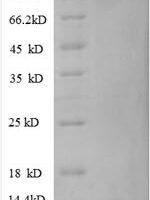
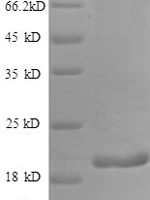
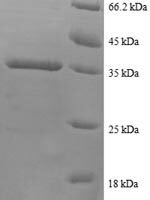
SDS-PAGE: Single band at expected molecular weight confirming purity.

ELISA: Suitable as coating antigen or detection standard.

Western Blot: Compatible with standard Western Blot protocols.

Protein Interaction: Validated for SPR (Surface Plasmon Resonance) and BLI (Bio-Layer Interferometry) studies.

Shipping: Shipped at ambient temperature. Lyophilized protein is stable during transit.

Storage: Store lyophilized protein at -20°C to -80°C. Reconstituted protein should be aliquoted and stored at -80°C. Avoid repeated freeze-thaw cycles.

Shelf Life: 12 months from date of receipt when stored as recommended.

Shipping Time: Orders placed before 2 PM EST ship same day. International orders typically deliver within 5-10 business days.

Protein Biology

Function

Accessory subunit of DNA polymerase gamma solely responsible for replication of mitochondrial DNA (mtDNA). Acts as an allosteric regulator of the holoenzyme activities. Enhances the polymerase activity and the processivity of POLG by increasing its interactions with the DNA template. Suppresses POLG exonucleolytic proofreading especially toward homopolymeric templates bearing mismatched termini. Binds to single-stranded DNA

Subcellular Location

Mitochondrion; Mitochondrion matrix, mitochondrion nucleoid

Disease Association

Progressive external ophthalmoplegia with mitochondrial DNA deletions, autosomal dominant, 4 (PEOA4) : A disorder characterized by progressive weakness of ocular muscles and levator muscle of the upper eyelid. In a minority of cases, it is associated with skeletal myopathy, which predominantly involves axial or proximal muscles and which causes abnormal fatigability and even permanent muscle weakness. Ragged-red fibers and atrophy are found on muscle biopsy. A large proportion of chronic ophthalmoplegias are associated with other symptoms, leading to a multisystemic pattern of this disease. Additional symptoms are variable, and may include cataracts, hearing loss, sensory axonal neuropathy, ataxia, depression, hypogonadism, and parkinsonism. [The disease is caused by variants affecting the gene represented in this entry] | Mitochondrial DNA depletion syndrome 16, hepatic type (MTDPS16) : An autosomal recessive disorder characterized by poor feeding, difficulty breathing, abdominal distention, an abnormal carnitine profile, metabolic acidosis and hepatic failure in the neonatal period. Severe mtDNA depletion is observed in liver and muscle biopsies. [The disease may be caused by variants affecting the gene represented in this entry] | Mitochondrial DNA depletion syndrome 16B, neuroophthalmic type (MTDPS16B) : An autosomal recessive disorder characterized by childhood onset of progressive neuroophthalmic manifestations with optic atrophy, mixed polyneuropathy, spinal and cerebellar ataxia, and generalized chorea associated with mtDNA depletion. [The disease is caused by variants affecting the gene represented in this entry]

Subunit

Heterotrimer composed of a catalytic subunit and a homodimer of accessory subunits (POLG:POLG2)

Gene: POLG2  |  Organism: Homo sapiens  |  Synonyms: DNA polymerase gamma accessory 55 kDa subunit; Mitochondrial DNA polymerase accessory subunit; MtPolB; PolG-beta
Key Publications

Frequently Asked Questions

How do I order or inquire about this product?

Fill out the Online Inquiry form with your required quantity and specifications. You can also email sales@biocrestsci.com. Our team typically responds within 4 business hours with a quote and availability confirmation.

What is the shipping and delivery time?

Orders placed before 2 PM EST ship the same day. Domestic (US) delivery typically takes 2-3 business days. International orders deliver within 5-10 business days. All products are shipped at ambient temperature with appropriate packaging to ensure stability.

How should I store this recombinant protein?

Lyophilized proteins should be stored at -20°C to -80°C upon receipt. After reconstitution, aliquot and store at -80°C. Avoid repeated freeze-thaw cycles. Shelf life is 12 months from date of receipt when stored as recommended.

What quality controls are performed on your products?

Each product undergoes SDS-PAGE purity analysis (typically >85-95%), endotoxin testing, and bioactivity validation. Products are validated for ELISA, Western Blot, and SPR/BLI applications as specified on this product page. A Certificate of Analysis (CoA) is available upon request.

Shopping Cart
Scroll to Top