Function
Innate immune receptor which acts as a cytoplasmic sensor of viral nucleic acids and plays a major role in sensing viral infection and in the activation of a cascade of antiviral responses including the induction of type I interferons and pro-inflammatory cytokines. Its ligands include mRNA lacking 2'-O-methylation at their 5' cap and long-dsRNA (>1 kb in length). Upon ligand binding it associates with mitochondria antiviral signaling protein (MAVS/IPS1) which activates the IKK-related kinases: TBK1 and IKBKE which phosphorylate interferon regulatory factors: IRF3 and IRF7 which in turn activate transcription of antiviral immunological genes, including interferons (IFNs); IFN-alpha and IFN-beta.
Biological Context
Subcellular Location: Cytoplasm; Nucleus; Mitochondrion
Tissue Specificity: Widely expressed, at a low level. Expression is detected at slightly highest levels in placenta, pancreas and spleen and at barely levels in detectable brain, testis and lung
Disease Association: Type 1 diabetes mellitus 19 (T1D19) : A multifactorial disorder of glucose homeostasis that is characterized by susceptibility to ketoacidosis in the absence of insulin therapy. Clinical features are polydipsia, polyphagia and polyuria which result from hyperglycemia-induced osmotic diuresis and secondary thirst. These derangements result in long-term complications that affect the eyes, kidneys, nerves, and blood vessels. [Disease susceptibility may be associated with variants affecting the gene represented in this entry] | [IFIH1 is the CADM-140 autoantigen, involved in clinically amyopathic dermatomyositis (CADM). This is a chronic inflammatory disorder that shows typical skin manifestations of dermatomyositis but has no or little evidence of clinical myositis. Anti-CADM-140 antibodies appear to be specific to dermatomyositis, especially CADM. Patients with anti-CADM-140 antibodies frequently develop life-threatening acute progressive interstitial lung disease (ILD)] | Aicardi-Goutieres syndrome 7 (AGS7) : A form of Aicardi-Goutieres syndrome, a genetically heterogeneous disease characterized by cerebral atrophy, leukoencephalopathy, intracranial calcifications, chronic cerebrospinal fluid (CSF) lymphocytosis, increased CSF alpha-interferon, and negative serologic investigations for common prenatal infection. Clinical features as thrombocytopenia, hepatosplenomegaly and elevated hepatic transaminases along with intermittent fever may erroneously suggest an infective process. Severe neurological dysfunctions manifest in infancy as progressive microcephaly, spasticity, dystonic posturing and profound psychomotor retardation. Death often occurs in early childhood. [The disease is caused by variants affecting the gene represented in this entry] | Singleton-Merten syndrome 1 (SGMRT1) : An autosomal dominant disorder with variable expression. Core features are marked aortic calcification, dental anomalies, osteopenia, acro-osteolysis, and to a lesser extent glaucoma, psoriasis, muscle weakness, and joint laxity. Dental anomalies include delayed eruption and immature root formation of anterior permanent teeth, early loss of permanent teeth due to short roots, acute root resorption, high caries, and aggressive alveolar bone loss. Additional clinical manifestations include particular facial characteristics and abnormal joint and muscle ligaments. [The disease is caused by variants affecting the gene represented in this entry] | Immunodeficiency 95 (IMD95) : An autosomal recessive disorder characterized by the onset of recurrent and severe viral respiratory infections in infancy or early childhood, and impaired interferon production during viral infection. [The disease is caused by variants affecting the gene represented in this entry]
Product Specifications
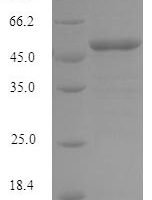
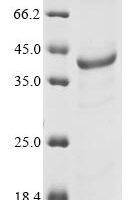
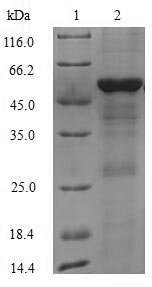
Recombinant Human Interferon-induced helicase C domain-containing protein 1 (IFIH1), partial is a recombinant protein from Homo sapiens (Human), expressed in E.coli, covering amino acids 700-1025aa, with N-terminal 6xHis-SUMO-tagged tag, molecular weight 53.5kDa, purity Greater than 90% as determined by SDS-PAGE.. Suitable for ELISA and Western Blot applications. Explore more Interferon proteins →