Function
Serine protease inhibitor that inhibits plasminogen activators and plasmin but not thrombin. May be involved in the formation or reorganization of synaptic connections as well as for synaptic plasticity in the adult nervous system. May protect neurons from cell damage by tissue-type plasminogen activator (Probable).
Biological Context
Subcellular Location: Secreted; Cytoplasmic vesicle, secretory vesicle lumen; Perikaryon
Tissue Specificity: Detected in brain cortex and hippocampus pyramidal neurons (at protein level). Detected in cerebrospinal fluid (at protein level). Predominantly expressed in the brain
Disease Association: Encephalopathy, familial, with neuroserpin inclusion bodies (FENIB) : A neurodegenerative disease clinically characterized by dementia. Additional features include intellectual decline, psychic seizures, progressive myoclonic epilepsy, and cerebral atrophy. Histologically, it is characterized by the presence of eosinophilic inclusion bodies (called Collins bodies) throughout the deeper layers of the cerebral cortex, leading to neuronal death. [The disease is caused by variants affecting the gene represented in this entry]
Product Specifications
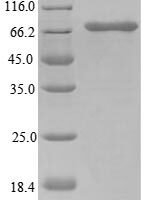
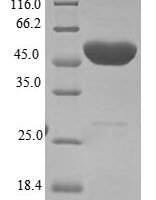
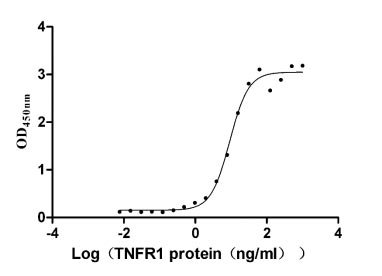
Recombinant Human Neuroserpin protein (SERPINI1) is a recombinant protein from Homo sapiens (Human), expressed in E.Coli, covering amino acids 17-410aa, with Tag-Free tag, molecular weight 44.7 kDa, purity >95% as determined by SDS-PAGE.. Suitable for ELISA and Western Blot applications.