Recombinant Human Optineurin (OPTN)

Recombinant Human Optineurin (OPTN) — (Microbial infection) May constitute a cellular target for various viruses, such as adenovirus E3 14. Purity >85%.

SKU: BCRECP-001302 Category:

Product Specifications

Product SkuBCRECP-001302
Product DescriptionRecombinant Human Optineurin (OPTN) Protein is expressed from E.coli with N-terminal 6xHis-tagged. It contains 1-577aa. [Accession | Q96CV9].
Uniprot No.Q96CV9
Gene NamesOPTN
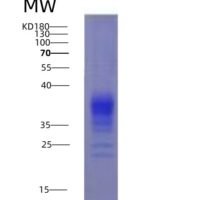
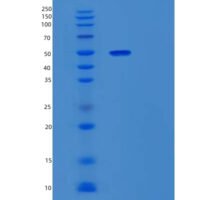
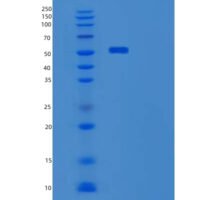
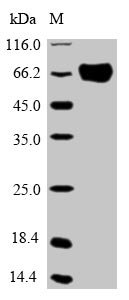
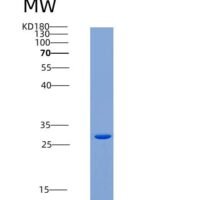
PurityGreater than 85% as determined by SDS-PAGE.
Expression SystemE.coli
Expression Region1-577aa
SpeciesHomo sapiens (Human)
Tag InfoN-terminal 6xHis-tagged
Molecular weight69.9kDa
ActivityPlease contact us to obtain bioactivity data.
BufferIf the delivery form is liquid, the default storage buffer is Tris/PBS-based buffer, 5%-50% glycerol. If the delivery form is lyophilized powder, the buffer before lyophilization is Tris/PBS-based buffer, 6% Trehalose.
StorageStore at -20°C/-80°C upon receipt, aliquoting is necessary for mutiple use. Avoid repeated freeze-thaw cycles.
Research AreasImmunology

Function

(Microbial infection) May constitute a cellular target for various viruses, such as adenovirus E3 14.7 or Bluetongue virus, to inhibit innate immune response. During RNA virus infection, such as that of Sendai virus, negatively regulates the induction of IFNB1.

Product Specifications

Recombinant Human Optineurin (OPTN) — (Microbial infection) May constitute a cellular target for various viruses, such as adenovirus E3 14. Purity >85%. Suitable for ELISA and Western Blot applications.

SDS-PAGE: Single band at expected molecular weight confirming purity.

ELISA: Suitable as coating antigen or detection standard.

Western Blot: Compatible with standard Western Blot protocols.

Protein Interaction: Validated for SPR (Surface Plasmon Resonance) and BLI (Bio-Layer Interferometry) studies.

Shipping: Shipped at ambient temperature. Lyophilized protein is stable during transit.

Storage: Store lyophilized protein at -20°C to -80°C. Reconstituted protein should be aliquoted and stored at -80°C. Avoid repeated freeze-thaw cycles.

Shelf Life: 12 months from date of receipt when stored as recommended.

Shipping Time: Orders placed before 2 PM EST ship same day. International orders typically deliver within 5-10 business days.

Protein Biology

Function

(Microbial infection) May constitute a cellular target for various viruses, such as adenovirus E3 14.7 or Bluetongue virus, to inhibit innate immune response (PubMed:27538435, PubMed:9488477). During RNA virus infection, such as that of Sendai virus, negatively regulates the induction of IFNB1 (PubMed:20174559)

Subcellular Location

Cytoplasm, perinuclear region; Golgi apparatus; Golgi apparatus, trans-Golgi network; Cytoplasmic vesicle, autophagosome; Cytoplasmic vesicle; Recycling endosome

Disease Association

Glaucoma 1, open angle, E (GLC1E) : A form of primary open angle glaucoma (POAG). POAG is characterized by a specific pattern of optic nerve and visual field defects. The angle of the anterior chamber of the eye is open, and usually the intraocular pressure is increased. However, glaucoma can occur at any intraocular pressure. The disease is generally asymptomatic until the late stages, by which time significant and irreversible optic nerve damage has already taken place. [The disease is caused by variants affecting the gene represented in this entry] | Glaucoma, normal pressure (NPG) : A primary glaucoma characterized by intraocular pression consistently within the statistically normal population range. [Disease susceptibility is associated with variants affecting the gene represented in this entry] | Amyotrophic lateral sclerosis 12 with or without frontotemporal dementia (ALS12) : A form of amyotrophic lateral sclerosis, a neurodegenerative disorder affecting upper motor neurons in the brain and lower motor neurons in the brain stem and spinal cord, resulting in fatal paralysis. Sensory abnormalities are absent. The pathologic hallmarks of the disease include pallor of the corticospinal tract due to loss of motor neurons, presence of ubiquitin-positive inclusions within surviving motor neurons, and deposition of pathologic aggregates. The etiology of amyotrophic lateral sclerosis is likely to be multifactorial, involving both genetic and environmental factors. The disease is inherited in 5-10% of the cases. ALS12 inheritance can be autosomal dominant or autosomal recessive. There is also sporadic occurrence. ALS12 patients may develop frontotemporal dementia. [The disease is caused by variants affecting the gene represented in this entry]

Tissue Specificity

Present in aqueous humor of the eye (at protein level). Expressed in the trabecular meshwork (at protein level) (PubMed:11834836, PubMed:12379221, PubMed:12646749). Expressed in nonpigmented ciliary epithelium (at protein level) (PubMed:11834836). Expressed at high levels in skeletal muscle, also detected in heart, brain, pancreas, kidney, placenta and liver (PubMed:9488477). Expressed in dermal fibroblasts (at protein level) (PubMed:11834836)

Subunit

(Microbial infection) Interacts with E3 14.7 kDa protein of group C human adenovirus (PubMed:9488477). Interacts with Bluetongue virus protein NS3 (PubMed:27538435)

Gene: OPTN  |  Organism: Homo sapiens  |  Synonyms: E3-14.7K-interacting protein; Huntingtin yeast partner L; Huntingtin-interacting protein 7; Huntingtin-interacting protein L; NEMO-related protein; Optic neuropathy-inducing protein; Transcription factor IIIA-interacting protein
Key Publications

Frequently Asked Questions

How do I order or inquire about this product?

Fill out the Online Inquiry form with your required quantity and specifications. You can also email sales@biocrestsci.com. Our team typically responds within 4 business hours with a quote and availability confirmation.

What is the shipping and delivery time?

Orders placed before 2 PM EST ship the same day. Domestic (US) delivery typically takes 2-3 business days. International orders deliver within 5-10 business days. All products are shipped at ambient temperature with appropriate packaging to ensure stability.
How should I store this recombinant protein?

Lyophilized proteins should be stored at -20°C to -80°C upon receipt. After reconstitution, aliquot and store at -80°C. Avoid repeated freeze-thaw cycles. Shelf life is 12 months from date of receipt when stored as recommended.

What quality controls are performed on your products?

Each product undergoes SDS-PAGE purity analysis (typically >85-95%), endotoxin testing, and bioactivity validation. Products are validated for ELISA, Western Blot, and SPR/BLI applications as specified on this product page. A Certificate of Analysis (CoA) is available upon request.

Shopping Cart
Scroll to Top