Function
Binds to actin and affects the structure of the cytoskeleton. At high concentrations, profilin prevents the polymerization of actin, whereas it enhances it at low concentrations. By binding to PIP2, it inhibits the formation of IP3 and DG.
Biological Context
Subcellular Location: Cytoplasm, cytoskeleton
Tissue Specificity: Expressed in epididymis (at protein level)
Disease Association: Amyotrophic lateral sclerosis 18 (ALS18) : A neurodegenerative disorder affecting upper motor neurons in the brain and lower motor neurons in the brain stem and spinal cord, resulting in fatal paralysis. Sensory abnormalities are absent. The pathologic hallmarks of the disease include pallor of the corticospinal tract due to loss of motor neurons, presence of ubiquitin-positive inclusions within surviving motor neurons, and deposition of pathologic aggregates. The etiology of amyotrophic lateral sclerosis is likely to be multifactorial, involving both genetic and environmental factors. The disease is inherited in 5-10% of the cases. [The disease is caused by variants affecting the gene represented in this entry]
Product Specifications
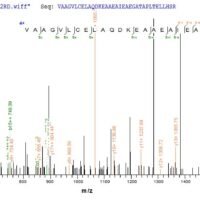
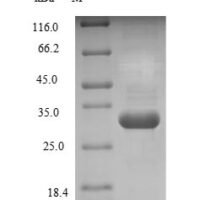
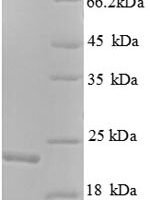
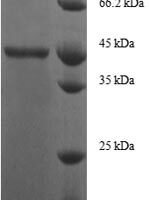
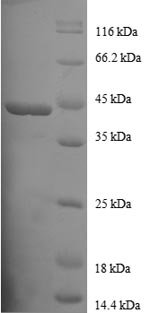
Recombinant Human Profilin-1 (PFN1) is a recombinant protein from Homo sapiens (Human), expressed in E.coli, covering amino acids 2-140aa, with N-terminal GST-tagged tag, molecular weight 41.9kDa, purity Greater than 90% as determined by SDS-PAGE.. Suitable for ELISA and Western Blot applications.