Function
Signal transducer in the Ras-MAPK signaling pathway that regulates cell proliferation and survival. Core component of the SHOC2-MRAS-PP1c (SMP) holophosphatase complex that regulates the MAPK pathway activation. The formation of the SMP complex only occurs when MRAS is GTP-bound.
Biological Context
Subcellular Location: Cell membrane (Lipid-anchor)
Tissue Specificity: Expression highly restricted to the brain and heart
Disease Association: Noonan syndrome 11 (NS11) : A form of Noonan syndrome, a disease characterized by short stature, facial dysmorphic features such as hypertelorism, a downward eyeslant and low-set posteriorly rotated ears, and a high incidence of congenital heart defects and hypertrophic cardiomyopathy. Other features can include a short neck with webbing or redundancy of skin, deafness, motor delay, variable intellectual deficits, multiple skeletal defects, cryptorchidism, and bleeding diathesis. Individuals with Noonan syndrome are at risk of juvenile myelomonocytic leukemia, a myeloproliferative disorder characterized by excessive production of myelomonocytic cells. NS11 inheritance is autosomal dominant. [The disease is caused by variants affecting the gene represented in this entry]
Product Specifications
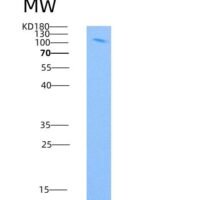
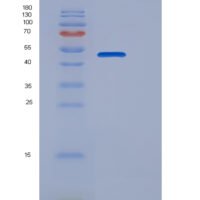
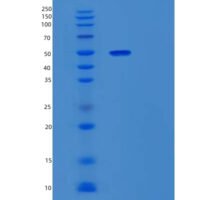
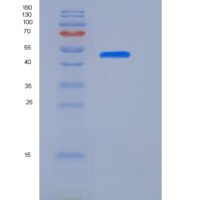
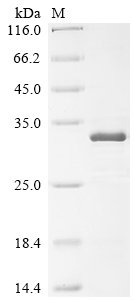
Recombinant Human Ras-related protein M-Ras (MRAS) is a recombinant protein from Homo sapiens (Human), expressed in E.coli, covering amino acids 1-205aa, with N-terminal 10xHis-tagged and C-terminal Myc-tagged tag, molecular weight 28.5kDa, purity Greater than 85% as determined by SDS-PAGE.. Suitable for ELISA and Western Blot applications.