, ,

Recombinant Human Serine/threonine-protein kinase PLK2 (PLK2)

Recombinant Human Serine/threonine-protein kinase PLK2 (PLK2) — Tumor suppressor serine/threonine-protein kinase involved in synaptic plasticity, centriole duplication and G1/S phase transition. Purity >90%.

SKU: BCRECP-001401 Categories: , ,

Product Specifications

Product SkuBCRECP-001401
Product DescriptionRecombinant Human Serine/threonine-protein kinase PLK2 (PLK2) Protein is expressed from E.coli with N-terminal 10xHis-tagged and C-terminal Myc-tagged. It contains 1-685aa. [Accession | Q9NYY3].
Uniprot No.Q9NYY3
Gene NamesPLK2
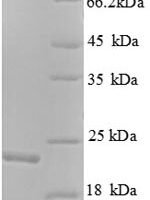
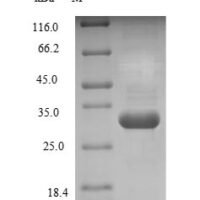
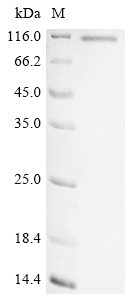
PurityGreater than 90% as determined by SDS-PAGE.
Expression SystemE.coli
Expression Region1-685aa
SpeciesHomo sapiens (Human)
Tag InfoN-terminal 10xHis-tagged and C-terminal Myc-tagged
Molecular weight85.8kDa
ActivityPlease contact us to obtain bioactivity data.
BufferIf the delivery form is liquid, the default storage buffer is Tris/PBS-based buffer, 5%-50% glycerol. If the delivery form is lyophilized powder, the buffer before lyophilization is Tris/PBS-based buffer, 6% Trehalose.
StorageStore at -20°C/-80°C upon receipt, aliquoting is necessary for mutiple use. Avoid repeated freeze-thaw cycles.
Research AreasSignal Transduction

Function

Tumor suppressor serine/threonine-protein kinase involved in synaptic plasticity, centriole duplication and G1/S phase transition. Polo-like kinases act by binding and phosphorylating proteins that are already phosphorylated on a specific motif recognized by the POLO box domains. Phosphorylates CPAP, NPM1, RAPGEF2, RASGRF1, SNCA, SIPA1L1 and SYNGAP1.

Biological Context

Subcellular Location: Cytoplasm, cytoskeleton, microtubule organizing center, centrosome, centriole; Cell projection, dendrite
Tissue Specificity: Expressed at higher level in the fetal lung, kidney, spleen and heart

Product Specifications

Recombinant Human Serine/threonine-protein kinase PLK2 (PLK2) is a recombinant protein from Homo sapiens (Human), expressed in E.coli, covering amino acids 1-685aa, with N-terminal 10xHis-tagged and C-terminal Myc-tagged tag, molecular weight 85.8kDa, purity Greater than 90% as determined by SDS-PAGE.. Suitable for ELISA and Western Blot applications.

Recommended applications depend on the target, product format, and product-specific validation data. Refer to the product datasheet or Certificate of Analysis (CoA), or contact BioCrest Sci for application guidance.

Biological Activity: Please contact us to obtain bioactivity data.

Storage: Store at -20°C/-80°C upon receipt, aliquoting is necessary for mutiple use. Avoid repeated freeze-thaw cycles.

Shipping & Lead Time: Availability, shipping conditions, and estimated lead time are confirmed in the formal quotation or order confirmation based on the product format, destination, and order requirements.

Protein Biology

Function

Tumor suppressor serine/threonine-protein kinase involved in synaptic plasticity, centriole duplication and G1/S phase transition. Polo-like kinases act by binding and phosphorylating proteins that are already phosphorylated on a specific motif recognized by the POLO box domains. Phosphorylates CPAP, NPM1, RAPGEF2, RASGRF1, SNCA, SIPA1L1 and SYNGAP1. Plays a key role in synaptic plasticity and memory by regulating the Ras and Rap protein signaling: required for overactivity-dependent spine remodeling by phosphorylating the Ras activator RASGRF1 and the Rap inhibitor SIPA1L1 leading to their degradation by the proteasome. Conversely, phosphorylates the Rap activator RAPGEF2 and the Ras inhibitor SYNGAP1, promoting their activity. Also regulates synaptic plasticity independently of kinase activity, via its interaction with NSF that disrupts the interaction between NSF and the GRIA2 subunit of AMPARs, leading to a rapid rundown of AMPAR-mediated current that occludes long term depression. Required for procentriole formation and centriole duplication by phosphorylating CPAP and NPM1, respectively. Its induction by p53/TP53 suggests that it may participate in the mitotic checkpoint following stress

Subcellular Location

Cytoplasm, cytoskeleton, microtubule organizing center, centrosome, centriole; Cell projection, dendrite

Tissue Specificity

Expressed at higher level in the fetal lung, kidney, spleen and heart

Subunit

Interacts with NSF; causing NSF dissociation from GRIA2. Interacts with CIB1 (By similarity)

Gene: PLK2  |  Organism: Homo sapiens  |  Synonyms: Polo-like kinase 2; Serine/threonine-protein kinase SNK; Serum-inducible kinase
Key Publications

Frequently Asked Questions

How do I order or inquire about this product?

Submit the Online Inquiry form with your required quantity and specifications, or email sales@biocrestsci.com. Available sizes, pricing, stock status, documentation, and estimated lead time are confirmed in the formal quotation.

What is the shipping and delivery time?

Availability, dispatch timing, shipping conditions, and delivery estimates depend on the product format, destination, and order requirements. These details are confirmed in the formal quotation or order confirmation.

How should this product be stored?

Follow the storage and handling instructions in the product-specific datasheet and Certificate of Analysis (CoA). Requirements may vary by product form and formulation; contact BioCrest Sci if product-specific guidance is needed.

What quality controls are performed on your products?

Quality-control data such as identity, purity, endotoxin level, or biological activity are provided only when specified on this product page, the datasheet, or Certificate of Analysis (CoA). Biological activity is not implied unless explicitly stated.

Shopping Cart
Scroll to Top