Recombinant Human Transthyretin (TTR) (Active)

Recombinant Human Transthyretin (TTR) (Active) — Thyroid hormone-binding protein. Purity >90%.

SKU: BCACP-000073 Category:
Product SKUBCACP-000073
Product DescriptionRecombinant Human Transthyretin (TTR) protein is expressed from Mammalian cell with C-terminal hFc1-Myc-tagged. It contains 21-147aa. [Accession | P02766].
Uniprot No.P02766
Gene NamesTTR
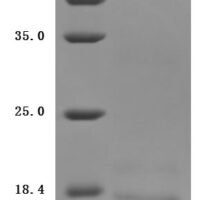
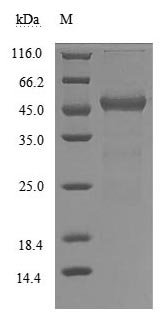
PurityGreater than 90% as determined by SDS-PAGE.
Expression SystemMammalian cell
Expression Region21-147aa
SpeciesHomo sapiens (Human)
Tag InfoC-terminal hFc1-Myc-tagged
Molecular weight43.9 kDa
ActivityMeasured by its binding ability in a functional ELISA. Immobilized SARS-CoV-2-S1 (D614G) at 2 μg/ml can bind human ACE2 , the EC50 is 8.236-11.22 ng/ml.
BufferLyophilized from a 0.2 μm filtered 20 mM Tris-HCl, 0.5 M NaCl, 6% Trehalose, pH 8.0
StorageStore at -20°C/-80°C upon receipt, aliquoting is necessary for mutiple use. Avoid repeated freeze-thaw cycles.
Alternative NamesATTR (Prealbumin) (TBPA) (PALB)

Function

Thyroid hormone-binding protein. Probably transports thyroxine from the bloodstream to the brain.

Biological Context

Subcellular Location: Secreted; Cytoplasm
Tissue Specificity: Detected in serum and cerebrospinal fluid (at protein level). Highly expressed in choroid plexus epithelial cells. Detected in retina pigment epithelium and liver
Disease Association: Amyloidosis, hereditary systemic 1 (AMYLD1) : A form of hereditary systemic amyloidosis, a disorder characterized by amyloid deposition in multiple tissues resulting in a wide clinical spectrum. AMYLD1 is an autosomal dominant form due to transthyretin amyloid deposition. Protein fibrils can form in different tissues leading to amyloid polyneuropathies, amyloidotic cardiomyopathy, carpal tunnel syndrome, systemic senile amyloidosis. The disease includes leptomeningeal amyloidosis that is characterized by primary involvement of the central nervous system. Neuropathologic examination shows amyloid in the walls of leptomeningeal vessels, in pia arachnoid, and subpial deposits. Some patients also develop vitreous amyloid deposition that leads to visual impairment (oculoleptomeningeal amyloidosis). Clinical features include seizures, stroke-like episodes, dementia, psychomotor deterioration, variable amyloid deposition in the vitreous humor. [The disease is caused by variants affecting the gene represented in this entry] | Hyperthyroxinemia, dystransthyretinemic (DTTRH) : A condition characterized by elevation of total and free thyroxine in healthy, euthyroid persons without detectable binding protein abnormalities. [The disease is caused by variants affecting the gene represented in this entry] | Carpal tunnel syndrome 1 (CTS1) : A condition characterized by entrapment of the median nerve within the carpal tunnel. Symptoms include burning pain and paresthesias involving the ventral surface of the hand and fingers which may radiate proximally. Impairment of sensation in the distribution of the median nerve and thenar muscle atrophy may occur. This condition may be associated with repetitive occupational trauma, wrist injuries, amyloid neuropathies, rheumatoid arthritis. [The disease is caused by variants affecting the gene represented in this entry]

Product Specifications

Recombinant Human Transthyretin (TTR) (Active) is a recombinant protein from Homo sapiens (Human), expressed in Mammalian cell, covering amino acids 21-147aa, with C-terminal hFc1-Myc-tagged tag, molecular weight 43.9 kDa, purity Greater than 90% as determined by SDS-PAGE.. Suitable for ELISA and Western Blot applications.
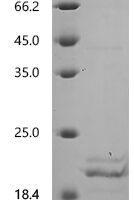
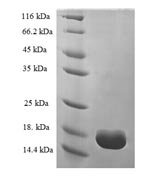
SDS-PAGE: Single band at expected molecular weight confirming purity.

ELISA: Suitable as coating antigen or detection standard.

Western Blot: Compatible with standard Western Blot protocols.

Protein Interaction: Validated for SPR (Surface Plasmon Resonance) and BLI (Bio-Layer Interferometry) studies.

Shipping: Shipped at ambient temperature. Lyophilized protein is stable during transit.

Storage: Store lyophilized protein at -20°C to -80°C. Reconstituted protein should be aliquoted and stored at -80°C. Avoid repeated freeze-thaw cycles.

Shelf Life: 12 months from date of receipt when stored as recommended.

Shipping Time: Orders placed before 2 PM EST ship same day. International orders typically deliver within 5-10 business days.

Protein Biology

Function

Thyroid hormone-binding protein. Probably transports thyroxine from the bloodstream to the brain

Subcellular Location

Secreted; Cytoplasm

Disease Association

Amyloidosis, hereditary systemic 1 (AMYLD1) : A form of hereditary systemic amyloidosis, a disorder characterized by amyloid deposition in multiple tissues resulting in a wide clinical spectrum. AMYLD1 is an autosomal dominant form due to transthyretin amyloid deposition. Protein fibrils can form in different tissues leading to amyloid polyneuropathies, amyloidotic cardiomyopathy, carpal tunnel syndrome, systemic senile amyloidosis. The disease includes leptomeningeal amyloidosis that is characterized by primary involvement of the central nervous system. Neuropathologic examination shows amyloid in the walls of leptomeningeal vessels, in pia arachnoid, and subpial deposits. Some patients also develop vitreous amyloid deposition that leads to visual impairment (oculoleptomeningeal amyloidosis). Clinical features include seizures, stroke-like episodes, dementia, psychomotor deterioration, variable amyloid deposition in the vitreous humor. [The disease is caused by variants affecting the gene represented in this entry] | Hyperthyroxinemia, dystransthyretinemic (DTTRH) : A condition characterized by elevation of total and free thyroxine in healthy, euthyroid persons without detectable binding protein abnormalities. [The disease is caused by variants affecting the gene represented in this entry] | Carpal tunnel syndrome 1 (CTS1) : A condition characterized by entrapment of the median nerve within the carpal tunnel. Symptoms include burning pain and paresthesias involving the ventral surface of the hand and fingers which may radiate proximally. Impairment of sensation in the distribution of the median nerve and thenar muscle atrophy may occur. This condition may be associated with repetitive occupational trauma, wrist injuries, amyloid neuropathies, rheumatoid arthritis. [The disease is caused by variants affecting the gene represented in this entry]

Tissue Specificity

Detected in serum and cerebrospinal fluid (at protein level). Highly expressed in choroid plexus epithelial cells. Detected in retina pigment epithelium and liver

Subunit

Homotetramer. Dimer of dimers. In the homotetramer, subunits assemble around a central channel that can accommodate two ligand molecules. Interacts with RBP4

Gene: TTR  |  Organism: Homo sapiens  |  Synonyms: ATTR; Prealbumin; TBPA
Key Publications

Frequently Asked Questions

How do I order or inquire about this product?

Fill out the Online Inquiry form with your required quantity and specifications. You can also email sales@biocrestsci.com. Our team typically responds within 4 business hours with a quote and availability confirmation.

What is the shipping and delivery time?

Orders placed before 2 PM EST ship the same day. Domestic (US) delivery typically takes 2-3 business days. International orders deliver within 5-10 business days. All products are shipped at ambient temperature with appropriate packaging to ensure stability.

How should I store this recombinant protein?

Lyophilized proteins should be stored at -20°C to -80°C upon receipt. After reconstitution, aliquot and store at -80°C. Avoid repeated freeze-thaw cycles. Shelf life is 12 months from date of receipt when stored as recommended.

What quality controls are performed on your products?

Each product undergoes SDS-PAGE purity analysis (typically >85-95%), endotoxin testing, and bioactivity validation. Products are validated for ELISA, Western Blot, and SPR/BLI applications as specified on this product page. A Certificate of Analysis (CoA) is available upon request.

Shopping Cart
Scroll to Top