, ,

Recombinant Mouse cGMP-dependent protein kinase 1 (Prkg1)

Recombinant Mouse cGMP-dependent protein kinase 1 (Prkg1) — Serine/threonine protein kinase that acts as a key mediator of the nitric oxide (NO)/cGMP signaling pathway. Purity >90%.

SKU: BCRECP-004166 Categories: , ,

Product Specifications

Product SkuBCRECP-004166
Product DescriptionRecombinant Mouse cGMP-dependent protein kinase 1 (Prkg1) Protein is expressed from E.coli with N-terminal 10xHis-tagged and C-terminal Myc-tagged. It contains 2-671aa. [Accession | P0C605].
Uniprot No.P0C605
Gene NamesPrkg1
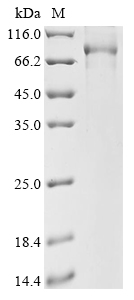
PurityGreater than 90% as determined by SDS-PAGE.
Expression SystemE.coli
Expression Region2-671aa
SpeciesMus musculus (Mouse)
Tag InfoN-terminal 10xHis-tagged and C-terminal Myc-tagged
Molecular weight83.7kDa
ActivityPlease contact us to obtain bioactivity data.
BufferIf the delivery form is liquid, the default storage buffer is Tris/PBS-based buffer, 5%-50% glycerol. If the delivery form is lyophilized powder, the buffer before lyophilization is Tris/PBS-based buffer, 6% Trehalose.
StorageStore at -20°C/-80°C upon receipt, aliquoting is necessary for mutiple use. Avoid repeated freeze-thaw cycles.
Research AreasCardiovascular

Function

Serine/threonine protein kinase that acts as a key mediator of the nitric oxide (NO)/cGMP signaling pathway. GMP binding activates PRKG1, which phosphorylates serines and threonines on many cellular proteins. Numerous protein targets for PRKG1 phosphorylation are implicated in modulating cellular calcium, but the contribution of each of these targets may vary substantially among cell types.

Biological Context

Subcellular Location: Cytoplasm
Tissue Specificity: Detected in cerebellum, hippocampus, dorsomedial hypothalamus, medulla, subcommissural organ, cerebral cortex, amygdala, habenulae, various hypothalamic regions, olfactory bulb, pituitary gland, and retina. Isoform alpha is prominent in the cerebellum and medulla, whereas isoform Beta is predominant in the cortex, hippocampus, hypothalamus, and olfactory bulb

Product Specifications

Recombinant Mouse cGMP-dependent protein kinase 1 (Prkg1) is a recombinant protein from Mus musculus (Mouse), expressed in E.coli, covering amino acids 2-671aa, with N-terminal 10xHis-tagged and C-terminal Myc-tagged tag, molecular weight 83.7kDa, purity Greater than 90% as determined by SDS-PAGE.. Suitable for ELISA and Western Blot applications.

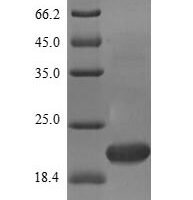
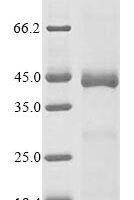
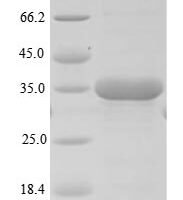
SDS-PAGE: Single band at expected molecular weight confirming purity.

ELISA: Suitable as coating antigen or detection standard.

Western Blot: Compatible with standard Western Blot protocols.

Protein Interaction: Validated for SPR (Surface Plasmon Resonance) and BLI (Bio-Layer Interferometry) studies.

Shipping: Shipped at ambient temperature. Lyophilized protein is stable during transit.

Storage: Store lyophilized protein at -20°C to -80°C. Reconstituted protein should be aliquoted and stored at -80°C. Avoid repeated freeze-thaw cycles.

Shelf Life: 12 months from date of receipt when stored as recommended.

Shipping Time: Orders placed before 2 PM EST ship same day. International orders typically deliver within 5-10 business days.

Protein Biology

Function

Serine/threonine protein kinase that acts as a key mediator of the nitric oxide (NO)/cGMP signaling pathway. GMP binding activates PRKG1, which phosphorylates serines and threonines on many cellular proteins. Numerous protein targets for PRKG1 phosphorylation are implicated in modulating cellular calcium, but the contribution of each of these targets may vary substantially among cell types. Proteins that are phosphorylated by PRKG1 regulate platelet activation and adhesion, smooth muscle contraction, cardiac function, gene expression, feedback of the NO-signaling pathway, and other processes involved in several aspects of the CNS like axon guidance, hippocampal and cerebellar learning, circadian rhythm and nociception. Smooth muscle relaxation is mediated through lowering of intracellular free calcium, by desensitization of contractile proteins to calcium, and by decrease in the contractile state of smooth muscle or in platelet activation. Regulates intracellular calcium levels via several pathways: phosphorylates IRAG1 and inhibits IP3-induced Ca(2+) release from intracellular stores, phosphorylation of KCNMA1 (BKCa) channels decreases intracellular Ca(2+) levels, which leads to increased opening of this channel. PRKG1 phosphorylates the canonical transient receptor potential channel (TRPC) family which inactivates the associated inward calcium current. Another mode of action of NO/cGMP/PKGI signaling involves PKGI-mediated inactivation of the Ras homolog gene family member A (RhoA). Phosphorylation of RHOA by PRKG1 blocks the action of this protein in myriad processes: regulation of RHOA translocation; decreasing contraction; controlling vesicle trafficking, reduction of myosin light chain phosphorylation resulting in vasorelaxation. Activation of PRKG1 by NO signaling also alters gene expression in a number of tissues. In smooth muscle cells, increased cGMP and PRKG1 activity influence expression of smooth muscle-specific contractile proteins, levels of proteins in the NO/cGMP signaling pathway, down-regulation of the matrix proteins osteopontin and thrombospondin-1 to limit smooth muscle cell migration and phenotype. Regulates vasodilator-stimulated phosphoprotein (VASP) functions in platelets and smooth muscle

Subcellular Location

Cytoplasm

Tissue Specificity

Detected in cerebellum, hippocampus, dorsomedial hypothalamus, medulla, subcommissural organ, cerebral cortex, amygdala, habenulae, various hypothalamic regions, olfactory bulb, pituitary gland, and retina. Isoform alpha is prominent in the cerebellum and medulla, whereas isoform Beta is predominant in the cortex, hippocampus, hypothalamus, and olfactory bulb

Subunit

Isoform alpha: parallel homodimer or heterodimer and also heterotetramer. Interacts directly with PPP1R12A. Non-covalent dimer of dimer of PRKG1-PRKG1 and PPP1R12A-PPP1R12A. This interaction targets PRKG1 to stress fibers to mediate smooth muscle cell relaxation and vasodilation in responses to rises in cGMP (By similarity). Isoform beta: antiparallel homodimer. Part of cGMP kinase signaling complex at least composed of ACTA2/alpha-actin, CNN1/calponin H1, PLN/phospholamban, PRKG1 and ITPR1 (By similarity). Interacts with IRAG1. Forms a stable complex with ITPR1, IRAG1, and isoform beta of PRKG1 (By similarity). Interacts with TRPC7 (via ankyrin repeat domain) (By similarity). Isoform alpha interacts with RGS2 (By similarity). Interacts with GTF2I (By similarity)

Gene: Prkg1  |  Organism: Mus musculus  |  Synonyms: cGMP-dependent protein kinase I
Key Publications

Frequently Asked Questions

How do I order or inquire about this product?

Fill out the Online Inquiry form with your required quantity and specifications. You can also email sales@biocrestsci.com. Our team typically responds within 4 business hours with a quote and availability confirmation.

What is the shipping and delivery time?

Orders placed before 2 PM EST ship the same day. Domestic (US) delivery typically takes 2-3 business days. International orders deliver within 5-10 business days. All products are shipped at ambient temperature with appropriate packaging to ensure stability.

How should I store this recombinant protein?

Lyophilized proteins should be stored at -20°C to -80°C upon receipt. After reconstitution, aliquot and store at -80°C. Avoid repeated freeze-thaw cycles. Shelf life is 12 months from date of receipt when stored as recommended.

What quality controls are performed on your products?

Each product undergoes SDS-PAGE purity analysis (typically >85-95%), endotoxin testing, and bioactivity validation. Products are validated for ELISA, Western Blot, and SPR/BLI applications as specified on this product page. A Certificate of Analysis (CoA) is available upon request.

Shopping Cart
Scroll to Top