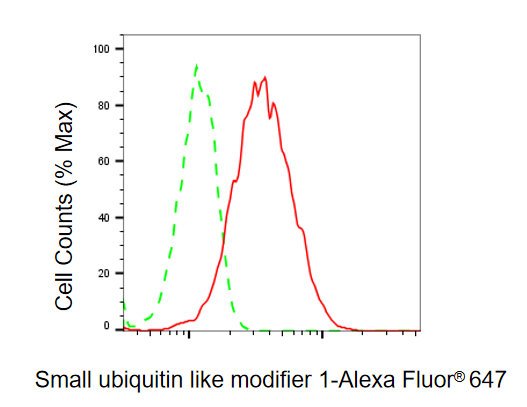

Function
Ubiquitin-like protein that can be covalently attached to proteins as a monomer or a lysine-linked polymer. Covalent attachment via an isopeptide bond to its substrates requires prior activation by the E1 complex SAE1-SAE2 and linkage to the E2 enzyme UBE2I, and can be promoted by E3 ligases such as PIAS1-4, RANBP2 or CBX4. This post-translational modification on lysine residues of proteins plays a crucial role in a number of cellular processes such as nuclear transport, DNA replication and repair, mitosis and signal transduction.
Biological Context
Subcellular Location: Nucleus membrane; Nucleus speckle; Cytoplasm; Nucleus, PML body; Cell membrane; Nucleus
Disease Association: Non-syndromic orofacial cleft 10 (OFC10) : A birth defect consisting of cleft lips with or without cleft palate. Cleft lips are associated with cleft palate in two-third of cases. A cleft lip can occur on one or both sides and range in severity from a simple notch in the upper lip to a complete opening in the lip extending into the floor of the nostril and involving the upper gum. [The disease is caused by variants affecting the gene represented in this entry. A chromosomal aberration involving SUMO1 is the cause of OFC10. Translocation t(2;8)(q33.1;q24.3). The breakpoint occurred in the SUMO1 gene and resulted in haploinsufficiency confirmed by protein assays]
Product Specifications
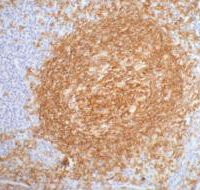
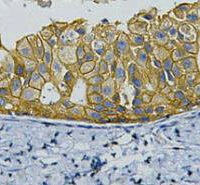
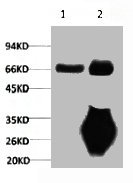
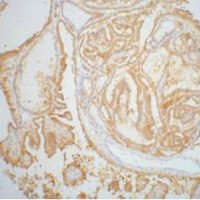
Mouse anti-Human/Mouse/Rat sapiens (Human) SUMO1 Monoclonal Antibody is a recombinant protein. Suitable for ELISA and Western Blot applications. Explore more Antibody products →