
Function
Lamins are intermediate filament proteins that assemble into a filamentous meshwork, and which constitute the major components of the nuclear lamina, a fibrous layer on the nucleoplasmic side of the inner nuclear membrane. Lamins provide a framework for the nuclear envelope, bridging the nuclear envelope and chromatin, thereby playing an important role in nuclear assembly, chromatin organization, nuclear membrane and telomere dynamics. The structural integrity of the lamina is strictly controlled by the cell cycle, as seen by the disintegration and formation of the nuclear envelope in prophase and telophase, respectively.
Biological Context
Subcellular Location: Nucleus lamina
Disease Association: Leukodystrophy, demyelinating, adult-onset, autosomal dominant, typical (ADLDTY) : A slowly progressive and fatal demyelinating leukodystrophy, presenting in the fourth or fifth decade of life. Clinically characterized by early autonomic abnormalities, pyramidal and cerebellar dysfunction, and symmetric demyelination of the CNS. It differs from multiple sclerosis and other demyelinating disorders in that neuropathology shows preservation of oligodendroglia in the presence of subtotal demyelination and lack of astrogliosis. [The disease is caused by variants affecting the gene represented in this entry. The disease is caused by heterozygous tandem genomic duplications that result in an extra copy of the LMNB1 gene and also affect regulatory elements of other genes] | Leukodystrophy, demyelinating, adult-onset, autosomal dominant, atypical (ADLDAT) : An autosomal dominant, slowly progressive disorder characterized by pyramidal signs with muscle weakness, spasticity, dysarthria, dysautonomia, and demyelinating leukodystrophy affecting the cerebrum and cortico-spinal tracts while sparing the cerebellum. Patients usually do not present with autonomic symptoms. [The disease is caused by variants affecting the gene represented in this entry. The disease is caused by abnormal LMNB1 expression due to heterozygous deletions involving regulatory elements upstream of LMNB1. It can also be caused by inverted duplications involving LMNB1, as reported in one patient] | Microcephaly 26, primary, autosomal dominant (MCPH26) : A form of microcephaly, a disease defined as a head circumference more than 3 standard deviations below the age, sex and ethnically matched mean. Brain weight is markedly reduced and the cerebral cortex is disproportionately small. MCPH26 is an autosomal dominant, progressive form apparent at birth or in early infancy. It is associated with relative short stature, variable severity of intellectual disability, and neurological features as the core symptoms. Brain imaging shows a simplified gyral pattern of the cortex and abnormal corpus callosum in some patients. [The disease is caused by variants affecting the gene represented in this entry]
Product Specifications
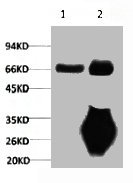
Mouse anti-Human/Mouse/Rat LMNB1 Monoclonal Antibody is a recombinant protein. Suitable for ELISA and Western Blot applications. Explore more Antibody products →