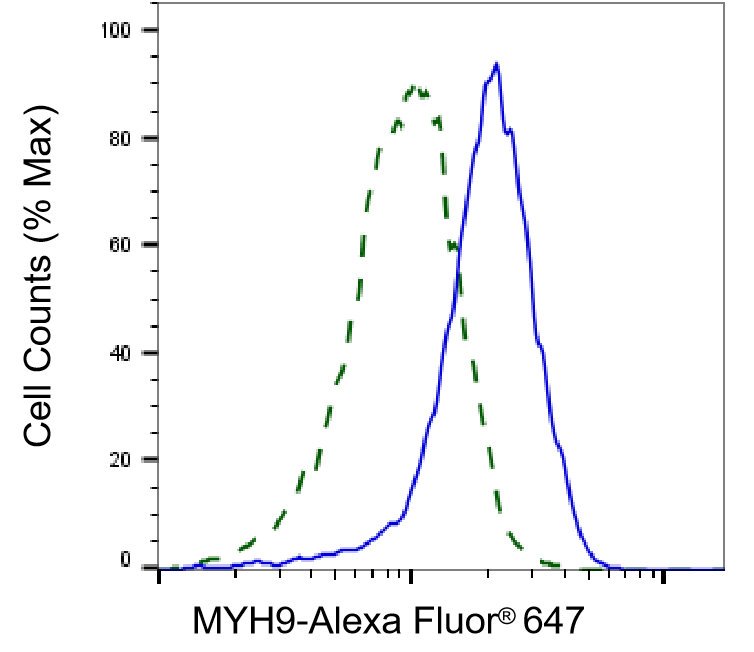
Mouse anti-Human sapiens (Human) MYH9 Monoclonal Antibody

Mouse anti-Human sapiens (Human) MYH9 Monoclonal Antibody — recombinant protein.

SKU: BCREC-000488MA Category:

Product Specifications

Uniprot No.P35579
Target NamesMYH9
Species ReactivityMouse
ImmunogenRecombinant Human MYH9 protein
Immunogen SpeciesHomo sapiens (Human)
ConjugateNon-conjugated
IsotypeMouse IgG2b
ClonalityMonoclonal
ApplicationsELISA, WB, FC
BufferPBS, 50% glycerol, 0.05% Proclin 300, 0.05%BSA
StorageUpon receipt, store at -20°C or -80°C. Avoid repeated freeze.

Function

(Microbial infection) Acts as a receptor for herpes simplex virus 1/HHV-1 envelope glycoprotein B.

Biological Context

Subcellular Location: Cell membrane
Tissue Specificity: In the kidney, expressed in the glomeruli. Also expressed in leukocytes
Disease Association: Macrothrombocytopenia and granulocyte inclusions with or without nephritis or sensorineural hearing loss (MATINS) : An autosomal dominant disorder characterized by thrombocytopenia, giant platelets and Dohle body-like inclusions in peripheral blood leukocytes with variable ultrastructural appearance. Some affected individuals lack leukocyte inclusion bodies on classic staining of peripheral blood smears. Alport syndrome-like features of nephritis, hearing loss, and eye abnormalities are present in some patients. [The disease is caused by variants affecting the gene represented in this entry] | Deafness, autosomal dominant, 17 (DFNA17) : A form of deafness characterized by progressive high frequency hearing impairment and cochleosaccular degeneration. [The disease is caused by variants affecting the gene represented in this entry] | [Subjects with mutations in the motor domain of MYH9 present with severe thrombocytopenia and develop nephritis and deafness before the age of 40 years, while those with mutations in the tail domain have a much lower risk of noncongenital complications and significantly higher platelet counts. The clinical course of patients with mutations in the four most frequently affected residues of MYH9 (responsible for 70% of MYH9-related cases) were evaluated. Mutations at residue 1933 do not induce kidney damage or cataracts and cause deafness only in the elderly, those in position 702 result in severe thrombocytopenia and produce nephritis and deafness at a juvenile age, while alterations at residue 1424 or 1841 result in intermediate clinical pictures] | [Genetic variations in MYH9 are associated with non-diabetic end stage renal disease (ESRD)]

Product Specifications

Mouse anti-Human sapiens (Human) MYH9 Monoclonal Antibody is a recombinant protein. Suitable for ELISA and Western Blot applications.

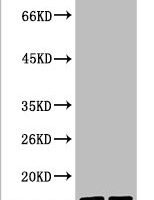
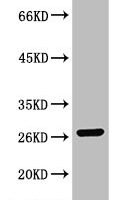
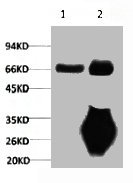
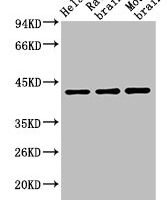
SDS-PAGE: Single band at expected molecular weight confirming purity.

ELISA: Suitable as coating antigen or detection standard.

Western Blot: Compatible with standard Western Blot protocols.

Protein Interaction: Validated for SPR (Surface Plasmon Resonance) and BLI (Bio-Layer Interferometry) studies.

Shipping: Shipped at ambient temperature. Lyophilized protein is stable during transit.

Storage: Store lyophilized protein at -20°C to -80°C. Reconstituted protein should be aliquoted and stored at -80°C. Avoid repeated freeze-thaw cycles.

Shelf Life: 12 months from date of receipt when stored as recommended.

Shipping Time: Orders placed before 2 PM EST ship same day. International orders typically deliver within 5-10 business days.

Protein Biology

Function

(Microbial infection) Acts as a receptor for herpes simplex virus 1/HHV-1 envelope glycoprotein B

Subcellular Location

Cell membrane

Disease Association

Macrothrombocytopenia and granulocyte inclusions with or without nephritis or sensorineural hearing loss (MATINS) : An autosomal dominant disorder characterized by thrombocytopenia, giant platelets and Dohle body-like inclusions in peripheral blood leukocytes with variable ultrastructural appearance. Some affected individuals lack leukocyte inclusion bodies on classic staining of peripheral blood smears. Alport syndrome-like features of nephritis, hearing loss, and eye abnormalities are present in some patients. [The disease is caused by variants affecting the gene represented in this entry] | Deafness, autosomal dominant, 17 (DFNA17) : A form of deafness characterized by progressive high frequency hearing impairment and cochleosaccular degeneration. [The disease is caused by variants affecting the gene represented in this entry] | [Subjects with mutations in the motor domain of MYH9 present with severe thrombocytopenia and develop nephritis and deafness before the age of 40 years, while those with mutations in the tail domain have a much lower risk of noncongenital complications and significantly higher platelet counts. The clinical course of patients with mutations in the four most frequently affected residues of MYH9 (responsible for 70% of MYH9-related cases) were evaluated. Mutations at residue 1933 do not induce kidney damage or cataracts and cause deafness only in the elderly, those in position 702 result in severe thrombocytopenia and produce nephritis and deafness at a juvenile age, while alterations at residue 1424 or 1841 result in intermediate clinical pictures] | [Genetic variations in MYH9 are associated with non-diabetic end stage renal disease (ESRD)]

Tissue Specificity

In the kidney, expressed in the glomeruli. Also expressed in leukocytes

Subunit

(Microbial infection) Interacts with herpes simplex virus 1/HHV-1 envelope glycoprotein B

Gene: MYH9  |  Organism: Homo sapiens  |  Synonyms: Cellular myosin heavy chain, type A; Myosin heavy chain 9; Myosin heavy chain, non-muscle IIa; Non-muscle myosin heavy chain A; Non-muscle myosin heavy chain IIa
Key Publications

Frequently Asked Questions

How do I order or inquire about this product?

Fill out the Online Inquiry form with your required quantity and specifications. You can also email sales@biocrestsci.com. Our team typically responds within 4 business hours with a quote and availability confirmation.

What is the shipping and delivery time?

Orders placed before 2 PM EST ship the same day. Domestic (US) delivery typically takes 2-3 business days. International orders deliver within 5-10 business days. All products are shipped at ambient temperature with appropriate packaging to ensure stability.

How should I store this recombinant protein?

Lyophilized proteins should be stored at -20°C to -80°C upon receipt. After reconstitution, aliquot and store at -80°C. Avoid repeated freeze-thaw cycles. Shelf life is 12 months from date of receipt when stored as recommended.

What quality controls are performed on your products?

Each product undergoes SDS-PAGE purity analysis (typically >85-95%), endotoxin testing, and bioactivity validation. Products are validated for ELISA, Western Blot, and SPR/BLI applications as specified on this product page. A Certificate of Analysis (CoA) is available upon request.

Shopping Cart
Scroll to Top