Mouse anti-Human/Rat sapiens (Human) NEK9 Monoclonal Antibody

Mouse anti-Human/Rat sapiens (Human) NEK9 Monoclonal Antibody — Pleiotropic regulator of mitotic progression, participating in the control of spindle dynamics and chromosome separation.

SKU: BCREC-000490MA Category:

Product Specifications

Uniprot No.Q8TD19
Target NamesNEK9
Species ReactivityMouse
ImmunogenRecombinant Human NEK9 protein
Immunogen SpeciesHomo sapiens (Human)
ConjugateNon-conjugated
IsotypeMouse IgG1
ClonalityMonoclonal
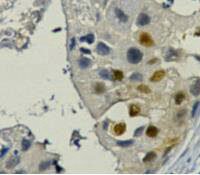
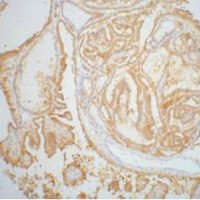
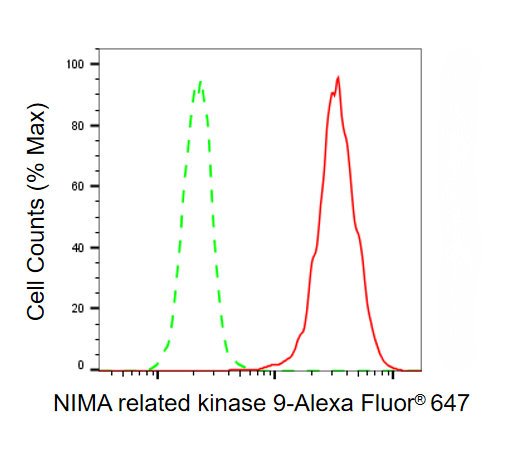
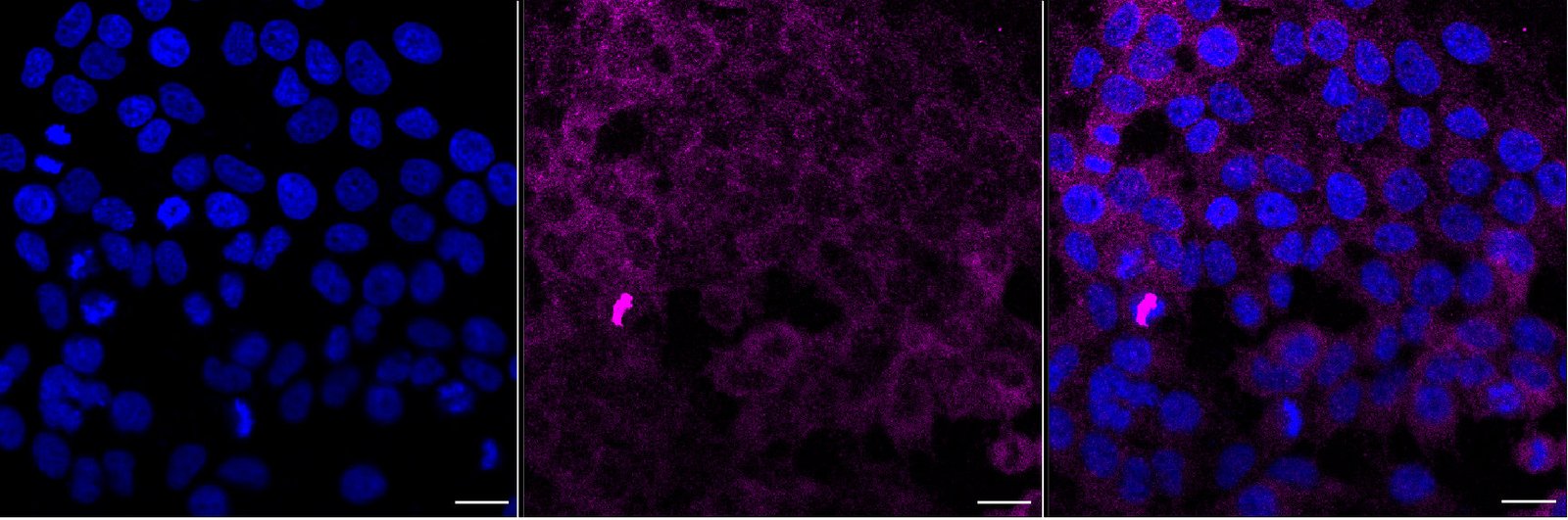
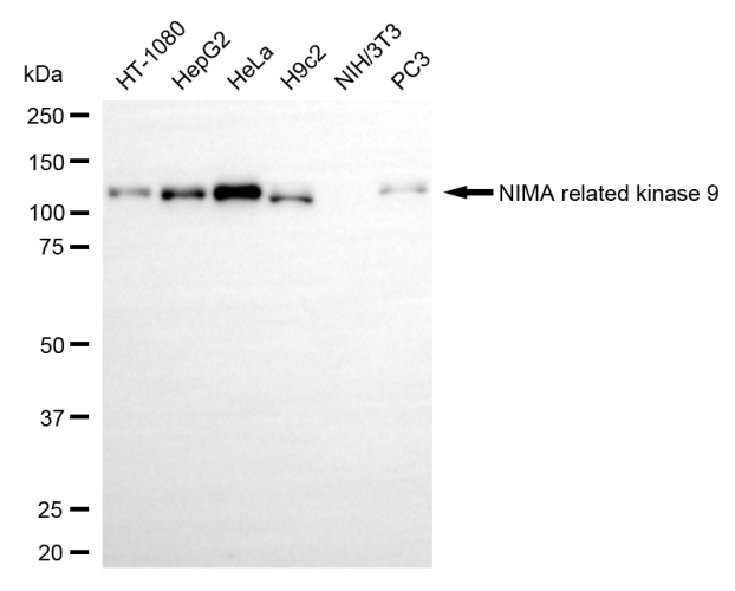
ApplicationsELISA, WB, FC, ICC
BufferPBS, 50% glycerol, 0.05% Proclin 300, 0.05%BSA
StorageUpon receipt, store at -20°C or -80°C. Avoid repeated freeze.

Function

Pleiotropic regulator of mitotic progression, participating in the control of spindle dynamics and chromosome separation. Phosphorylates different histones, myelin basic protein, beta-casein, and BICD2. Phosphorylates histone H3 on serine and threonine residues and beta-casein on serine residues.

Biological Context

Subcellular Location: Cytoplasm; Nucleus
Tissue Specificity: Most abundant in heart, liver, kidney and testis. Also expressed in smooth muscle cells and fibroblasts
Disease Association: Lethal congenital contracture syndrome 10 (LCCS10) : A form of lethal congenital contracture syndrome, an autosomal recessive disorder characterized by degeneration of anterior horn neurons, extreme skeletal muscle atrophy and congenital non-progressive joint contractures. The contractures can involve the upper or lower limbs and/or the vertebral column, leading to various degrees of flexion or extension limitations evident at birth. [The disease is caused by variants affecting the gene represented in this entry] | Nevus comedonicus (NC) : A rare type of epidermal nevus characterized by closely arranged, dilated, plugged follicular ostia in a honeycomb pattern. The plugged ostia contain lamellated keratinaceous material, and their appearance resembles black dots. NC may be non-pyogenic with an acne-like appearance or associated with the formation of cysts, papules, pustules, and abscesses. Most commonly it affects the face and neck area and, by exception, other anatomical regions, including genital area, palms, and soles. NC lesions might present with various patterns of distribution: unilateral, bilateral, linear, interrupted, segmental, or blaschkoid. [The disease is caused by variants affecting the gene represented in this entry] | Arthrogryposis, Perthes disease, and upward gaze palsy (APUG) : An autosomal recessive, syndromic form of arthrogryposis, a disease characterized by persistent joints flexure or contracture. APUG patients manifest an unusual combination of arthrogryposis, upward gaze palsy, and avascular necrosis of the hip (Perthes disease). [The disease is caused by variants affecting the gene represented in this entry]

Product Specifications

Mouse anti-Human/Rat sapiens (Human) NEK9 Monoclonal Antibody is a recombinant protein. Suitable for ELISA and Western Blot applications.

SDS-PAGE: Single band at expected molecular weight confirming purity.

ELISA: Suitable as coating antigen or detection standard.

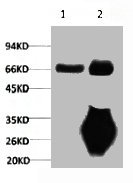
Western Blot: Compatible with standard Western Blot protocols.

Protein Interaction: Validated for SPR (Surface Plasmon Resonance) and BLI (Bio-Layer Interferometry) studies.

Shipping: Shipped at ambient temperature. Lyophilized protein is stable during transit.

Storage: Store lyophilized protein at -20°C to -80°C. Reconstituted protein should be aliquoted and stored at -80°C. Avoid repeated freeze-thaw cycles.

Shelf Life: 12 months from date of receipt when stored as recommended.

Shipping Time: Orders placed before 2 PM EST ship same day. International orders typically deliver within 5-10 business days.

Protein Biology

Function

Pleiotropic regulator of mitotic progression, participating in the control of spindle dynamics and chromosome separation (PubMed:12101123, PubMed:12840024, PubMed:14660563, PubMed:19941817). Phosphorylates different histones, myelin basic protein, beta-casein, and BICD2 (PubMed:11864968). Phosphorylates histone H3 on serine and threonine residues and beta-casein on serine residues (PubMed:11864968). Important for G1/S transition and S phase progression (PubMed:12840024, PubMed:14660563, PubMed:19941817). Phosphorylates NEK6 and NEK7 and stimulates their activity by releasing the autoinhibitory functions of Tyr-108 and Tyr-97 respectively (PubMed:12840024, PubMed:14660563, PubMed:19941817, PubMed:26522158)

Subcellular Location

Cytoplasm; Nucleus

Disease Association

Lethal congenital contracture syndrome 10 (LCCS10) : A form of lethal congenital contracture syndrome, an autosomal recessive disorder characterized by degeneration of anterior horn neurons, extreme skeletal muscle atrophy and congenital non-progressive joint contractures. The contractures can involve the upper or lower limbs and/or the vertebral column, leading to various degrees of flexion or extension limitations evident at birth. [The disease is caused by variants affecting the gene represented in this entry] | Nevus comedonicus (NC) : A rare type of epidermal nevus characterized by closely arranged, dilated, plugged follicular ostia in a honeycomb pattern. The plugged ostia contain lamellated keratinaceous material, and their appearance resembles black dots. NC may be non-pyogenic with an acne-like appearance or associated with the formation of cysts, papules, pustules, and abscesses. Most commonly it affects the face and neck area and, by exception, other anatomical regions, including genital area, palms, and soles. NC lesions might present with various patterns of distribution: unilateral, bilateral, linear, interrupted, segmental, or blaschkoid. [The disease is caused by variants affecting the gene represented in this entry] | Arthrogryposis, Perthes disease, and upward gaze palsy (APUG) : An autosomal recessive, syndromic form of arthrogryposis, a disease characterized by persistent joints flexure or contracture. APUG patients manifest an unusual combination of arthrogryposis, upward gaze palsy, and avascular necrosis of the hip (Perthes disease). [The disease is caused by variants affecting the gene represented in this entry]

Tissue Specificity

Most abundant in heart, liver, kidney and testis. Also expressed in smooth muscle cells and fibroblasts

Subunit

Homodimer; homodimerization is required to activate NEK7 (PubMed:23482567, PubMed:26522158). Binds to Ran GTPase (PubMed:12101123). Has a greater affinity for Ran-GDP over Ran-GTP (PubMed:12101123). Interacts with SSRP1 and SUPT16H, the 2 subunits of the FACT complex (PubMed:14660563). Interacts with DYNLL1; phosphorylation at Ser-944 strongly reduces DYNLL1 binding (PubMed:23482567)

Gene: NEK9  |  Organism: Homo sapiens  |  Synonyms: Nercc1 kinase; Never in mitosis A-related kinase 9; NimA-related kinase 8
Key Publications

Frequently Asked Questions

How do I order or inquire about this product?

Fill out the Online Inquiry form with your required quantity and specifications. You can also email sales@biocrestsci.com. Our team typically responds within 4 business hours with a quote and availability confirmation.

What is the shipping and delivery time?

Orders placed before 2 PM EST ship the same day. Domestic (US) delivery typically takes 2-3 business days. International orders deliver within 5-10 business days. All products are shipped at ambient temperature with appropriate packaging to ensure stability.

How should I store this recombinant protein?

Lyophilized proteins should be stored at -20°C to -80°C upon receipt. After reconstitution, aliquot and store at -80°C. Avoid repeated freeze-thaw cycles. Shelf life is 12 months from date of receipt when stored as recommended.

What quality controls are performed on your products?

Each product undergoes SDS-PAGE purity analysis (typically >85-95%), endotoxin testing, and bioactivity validation. Products are validated for ELISA, Western Blot, and SPR/BLI applications as specified on this product page. A Certificate of Analysis (CoA) is available upon request.

Shopping Cart
Scroll to Top