Mouse anti-Human/Mouse sapiens (Human) AKR1A1 Monoclonal Antibody

Mouse anti-Human/Mouse sapiens (Human) AKR1A1 Monoclonal Antibody — Catalyzes the NADPH-dependent reduction of a wide variety of carbonyl-containing compounds to their corresponding alcohols.

SKU: BCREC-000628MA Category:

Product Specifications

Uniprot No.P14550
Target NamesAKR1A1
Species ReactivityMouse
ImmunogenRecombinant Human AKR1A1 protein
Immunogen SpeciesHomo sapiens (Human)
ConjugateNon-conjugated
IsotypeMouse IgG2b
ClonalityMonoclonal
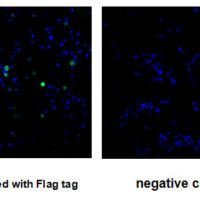
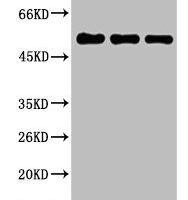
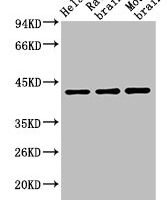
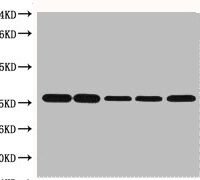
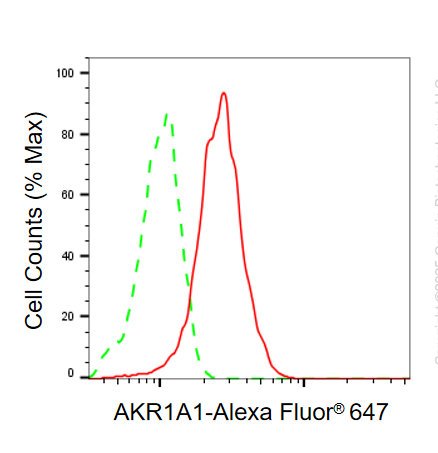
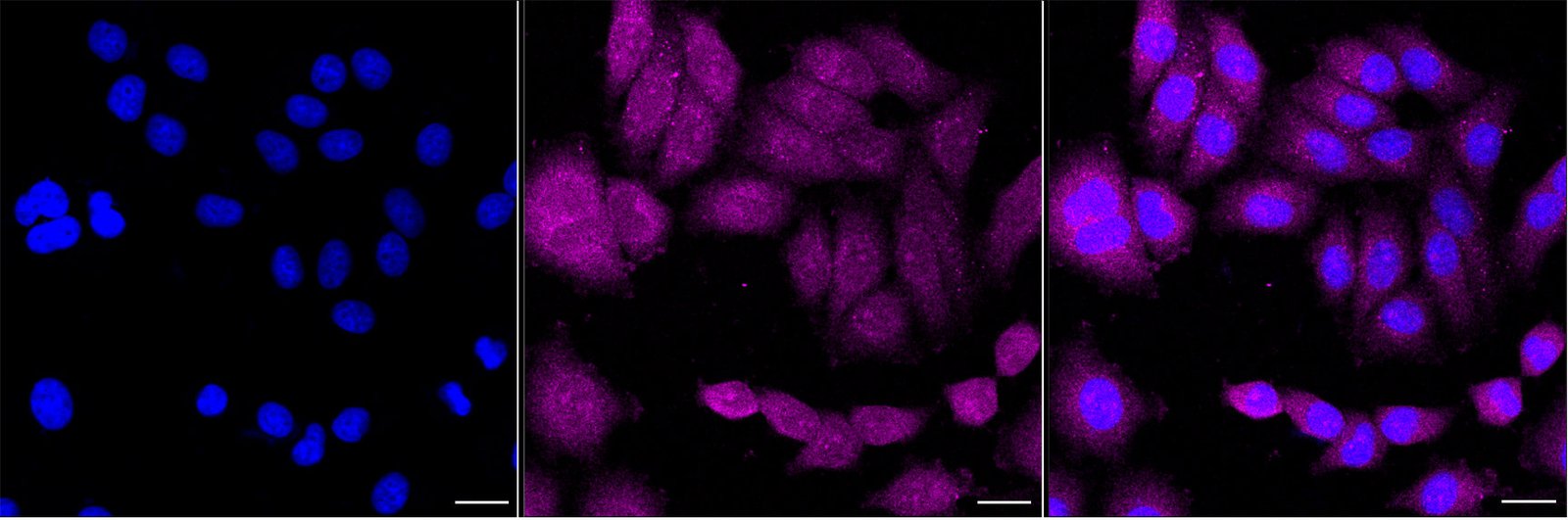
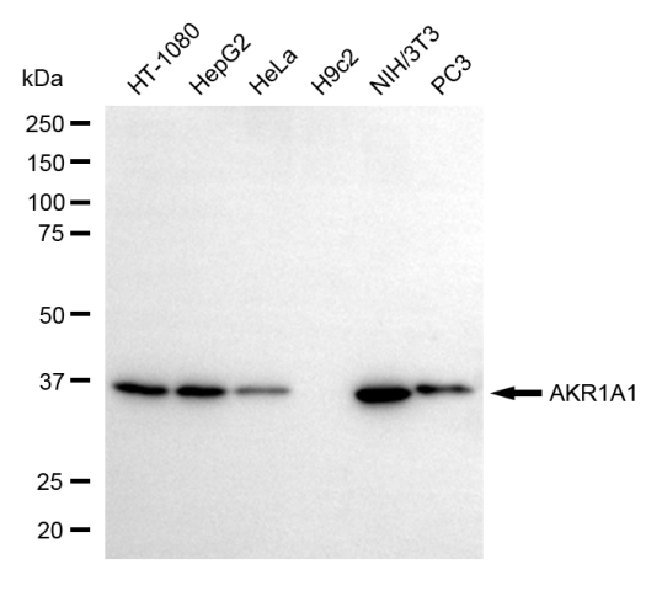
ApplicationsELISA, WB, FC, ICC
BufferPBS, 50% glycerol, 0.05% Proclin 300, 0.05%BSA
StorageUpon receipt, store at -20°C or -80°C. Avoid repeated freeze.

Function

Catalyzes the NADPH-dependent reduction of a wide variety of carbonyl-containing compounds to their corresponding alcohols. Displays enzymatic activity towards endogenous metabolites such as aromatic and aliphatic aldehydes, ketones, monosaccharides and bile acids, with a preference for negatively charged substrates, such as glucuronate and succinic semialdehyde. Functions as a detoxifiying enzyme by reducing a range of toxic aldehydes.

Biological Context

Subcellular Location: Cytoplasm, cytosol; Apical cell membrane
Tissue Specificity: Widely expressed. Highly expressed in kidney, salivary gland and liver. Detected in trachea, stomach, brain, lung, prostate, placenta, mammary gland, small intestine and lung

Product Specifications

Mouse anti-Human/Mouse sapiens (Human) AKR1A1 Monoclonal Antibody is a recombinant protein. Suitable for ELISA and Western Blot applications.

SDS-PAGE: Single band at expected molecular weight confirming purity.

ELISA: Suitable as coating antigen or detection standard.

Western Blot: Compatible with standard Western Blot protocols.

Protein Interaction: Validated for SPR (Surface Plasmon Resonance) and BLI (Bio-Layer Interferometry) studies.

Shipping: Shipped at ambient temperature. Lyophilized protein is stable during transit.

Storage: Store lyophilized protein at -20°C to -80°C. Reconstituted protein should be aliquoted and stored at -80°C. Avoid repeated freeze-thaw cycles.

Shelf Life: 12 months from date of receipt when stored as recommended.

Shipping Time: Orders placed before 2 PM EST ship same day. International orders typically deliver within 5-10 business days.

Protein Biology

Function

Catalyzes the NADPH-dependent reduction of a wide variety of carbonyl-containing compounds to their corresponding alcohols (PubMed:10510318, PubMed:30538128). Displays enzymatic activity towards endogenous metabolites such as aromatic and aliphatic aldehydes, ketones, monosaccharides and bile acids, with a preference for negatively charged substrates, such as glucuronate and succinic semialdehyde (PubMed:10510318, PubMed:30538128). Functions as a detoxifiying enzyme by reducing a range of toxic aldehydes (By similarity). Reduces methylglyoxal and 3-deoxyglucosone, which are present at elevated levels under hyperglycemic conditions and are cytotoxic (By similarity). Involved also in the detoxification of lipid-derived aldehydes like acrolein (By similarity). Plays a role in the activation of procarcinogens, such as polycyclic aromatic hydrocarbon trans-dihydrodiols, and in the metabolism of various xenobiotics and drugs, including the anthracyclines doxorubicin (DOX) and daunorubicin (DAUN) (PubMed:11306097, PubMed:18276838). Also acts as an inhibitor of protein S-nitrosylation by mediating degradation of S-nitroso-coenzyme A (S-nitroso-CoA), a cofactor required to S-nitrosylate proteins (PubMed:30538128). S-nitroso-CoA reductase activity is involved in reprogramming intermediary metabolism in renal proximal tubules, notably by inhibiting protein S-nitrosylation of isoform 2 of PKM (PKM2) (By similarity). Also acts as a S-nitroso-glutathione reductase by catalyzing the NADPH-dependent reduction of S-nitrosoglutathione (PubMed:31649033). Displays no reductase activity towards retinoids (By similarity)

Subcellular Location

Cytoplasm, cytosol; Apical cell membrane

Tissue Specificity

Widely expressed. Highly expressed in kidney, salivary gland and liver. Detected in trachea, stomach, brain, lung, prostate, placenta, mammary gland, small intestine and lung

Subunit

Monomer

Gene: AKR1A1  |  Organism: Homo sapiens  |  Synonyms: Alcohol dehydrogenase [NADP(+)]; Aldehyde reductase; Glucuronate reductase; Glucuronolactone reductase; S-nitroso-CoA reductase
Key Publications

Frequently Asked Questions

How do I order or inquire about this product?

Fill out the Online Inquiry form with your required quantity and specifications. You can also email sales@biocrestsci.com. Our team typically responds within 4 business hours with a quote and availability confirmation.

What is the shipping and delivery time?

Orders placed before 2 PM EST ship the same day. Domestic (US) delivery typically takes 2-3 business days. International orders deliver within 5-10 business days. All products are shipped at ambient temperature with appropriate packaging to ensure stability.

How should I store this recombinant protein?

Lyophilized proteins should be stored at -20°C to -80°C upon receipt. After reconstitution, aliquot and store at -80°C. Avoid repeated freeze-thaw cycles. Shelf life is 12 months from date of receipt when stored as recommended.

What quality controls are performed on your products?

Each product undergoes SDS-PAGE purity analysis (typically >85-95%), endotoxin testing, and bioactivity validation. Products are validated for ELISA, Western Blot, and SPR/BLI applications as specified on this product page. A Certificate of Analysis (CoA) is available upon request.

Shopping Cart
Scroll to Top