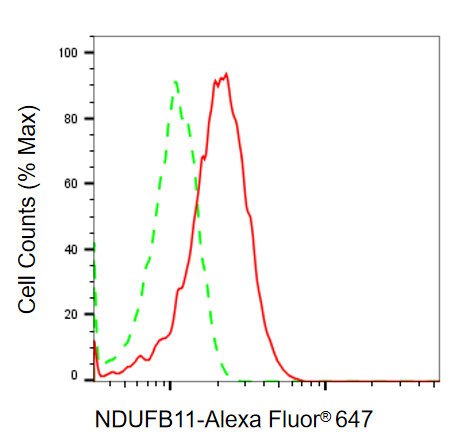
Mouse anti-Human sapiens (Human) NDUFB11 Monoclonal Antibody

Mouse anti-Human sapiens (Human) NDUFB11 Monoclonal Antibody — Accessory subunit of the mitochondrial membrane respiratory chain NADH dehydrogenase (Complex I), that is believed not to be involved in catalysis.

SKU: BCREC-000638MA Category:

Product Specifications

Uniprot No.Q9NX14
Target NamesNDUFB11
Species ReactivityMouse
ImmunogenRecombinant Human NDUFB11 protein
Immunogen SpeciesHomo sapiens (Human)
ConjugateNon-conjugated
IsotypeMouse IgG1
ClonalityMonoclonal
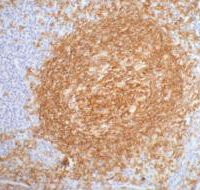
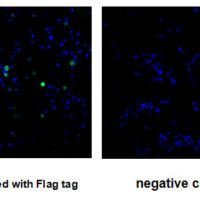
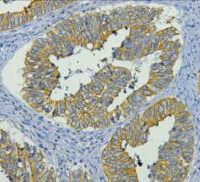
ApplicationsELISA, WB, FC, ICC
BufferPBS, 50% glycerol, 0.05% Proclin 300, 0.05%BSA
StorageUpon receipt, store at -20°C or -80°C. Avoid repeated freeze.

Function

Accessory subunit of the mitochondrial membrane respiratory chain NADH dehydrogenase (Complex I), that is believed not to be involved in catalysis. Complex I functions in the transfer of electrons from NADH to the respiratory chain. The immediate electron acceptor for the enzyme is believed to be ubiquinone.

Biological Context

Subcellular Location: Mitochondrion inner membrane (Single-pass membrane protein)
Tissue Specificity: Ubiquitous
Disease Association: Linear skin defects with multiple congenital anomalies 3 (LSDMCA3) : A disorder characterized by dermal, ocular, neurological and cardiac abnormalities. LSDMCA3 clinical features include linear skin defects on face and neck at birth, lacrimal duct atresia, myopia, nystagmus, strabismus, cardiomyopathy, axial hypotonia, seizures, corpus callosum agenesis, and dilation of lateral ventricles. [The disease is caused by variants affecting the gene represented in this entry] | Mitochondrial complex I deficiency, nuclear type 30 (MC1DN30) : A form of mitochondrial complex I deficiency, the most common biochemical signature of mitochondrial disorders, a group of highly heterogeneous conditions characterized by defective oxidative phosphorylation, which collectively affects 1 in 5-10000 live births. Clinical disorders have variable severity, ranging from lethal neonatal disease to adult-onset neurodegenerative disorders. Phenotypes include macrocephaly with progressive leukodystrophy, non-specific encephalopathy, cardiomyopathy, myopathy, liver disease, Leigh syndrome, Leber hereditary optic neuropathy, and some forms of Parkinson disease. [The disease may be caused by variants affecting the gene represented in this entry]

Product Specifications

Mouse anti-Human sapiens (Human) NDUFB11 Monoclonal Antibody is a recombinant protein. Suitable for ELISA and Western Blot applications.

SDS-PAGE: Single band at expected molecular weight confirming purity.

ELISA: Suitable as coating antigen or detection standard.

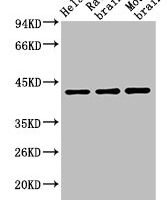
Western Blot: Compatible with standard Western Blot protocols.

Protein Interaction: Validated for SPR (Surface Plasmon Resonance) and BLI (Bio-Layer Interferometry) studies.

Shipping: Shipped at ambient temperature. Lyophilized protein is stable during transit.

Storage: Store lyophilized protein at -20°C to -80°C. Reconstituted protein should be aliquoted and stored at -80°C. Avoid repeated freeze-thaw cycles.

Shelf Life: 12 months from date of receipt when stored as recommended.

Shipping Time: Orders placed before 2 PM EST ship same day. International orders typically deliver within 5-10 business days.

Protein Biology

Function

Accessory subunit of the mitochondrial membrane respiratory chain NADH dehydrogenase (Complex I), that is believed not to be involved in catalysis. Complex I functions in the transfer of electrons from NADH to the respiratory chain. The immediate electron acceptor for the enzyme is believed to be ubiquinone

Subcellular Location

Mitochondrion inner membrane (Single-pass membrane protein)

Disease Association

Linear skin defects with multiple congenital anomalies 3 (LSDMCA3) : A disorder characterized by dermal, ocular, neurological and cardiac abnormalities. LSDMCA3 clinical features include linear skin defects on face and neck at birth, lacrimal duct atresia, myopia, nystagmus, strabismus, cardiomyopathy, axial hypotonia, seizures, corpus callosum agenesis, and dilation of lateral ventricles. [The disease is caused by variants affecting the gene represented in this entry] | Mitochondrial complex I deficiency, nuclear type 30 (MC1DN30) : A form of mitochondrial complex I deficiency, the most common biochemical signature of mitochondrial disorders, a group of highly heterogeneous conditions characterized by defective oxidative phosphorylation, which collectively affects 1 in 5-10000 live births. Clinical disorders have variable severity, ranging from lethal neonatal disease to adult-onset neurodegenerative disorders. Phenotypes include macrocephaly with progressive leukodystrophy, non-specific encephalopathy, cardiomyopathy, myopathy, liver disease, Leigh syndrome, Leber hereditary optic neuropathy, and some forms of Parkinson disease. [The disease may be caused by variants affecting the gene represented in this entry]

Tissue Specificity

Ubiquitous

Subunit

Complex I is composed of 45 different subunits (PubMed:12611891, PubMed:27626371). Interacts with BCAP31 (PubMed:31206022)

Gene: NDUFB11  |  Organism: Homo sapiens  |  Synonyms: Complex I-ESSS; NADH-ubiquinone oxidoreductase ESSS subunit; Neuronal protein 17.3
Key Publications

Frequently Asked Questions

How do I order or inquire about this product?

Fill out the Online Inquiry form with your required quantity and specifications. You can also email sales@biocrestsci.com. Our team typically responds within 4 business hours with a quote and availability confirmation.

What is the shipping and delivery time?

Orders placed before 2 PM EST ship the same day. Domestic (US) delivery typically takes 2-3 business days. International orders deliver within 5-10 business days. All products are shipped at ambient temperature with appropriate packaging to ensure stability.

How should I store this recombinant protein?

Lyophilized proteins should be stored at -20°C to -80°C upon receipt. After reconstitution, aliquot and store at -80°C. Avoid repeated freeze-thaw cycles. Shelf life is 12 months from date of receipt when stored as recommended.

What quality controls are performed on your products?

Each product undergoes SDS-PAGE purity analysis (typically >85-95%), endotoxin testing, and bioactivity validation. Products are validated for ELISA, Western Blot, and SPR/BLI applications as specified on this product page. A Certificate of Analysis (CoA) is available upon request.

Shopping Cart
Scroll to Top