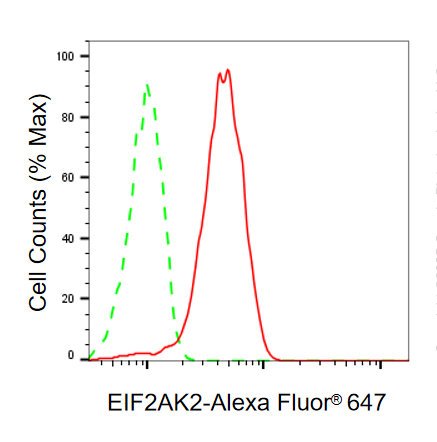
Mouse anti-Human sapiens (Human) EIF2AK2 Monoclonal Antibody

Mouse anti-Human sapiens (Human) EIF2AK2 Monoclonal Antibody — IFN-induced dsRNA-dependent serine/threonine-protein kinase that phosphorylates the alpha subunit of eukaryotic translation initiation factor 2 (EIF2S1/eIF-2-alpha) and plays a key role in the inna…

SKU: BCREC-000926MA Category:

Product Specifications

Uniprot No.P19525
Target NamesEIF2AK2
Species ReactivityMouse
ImmunogenRecombinant Human EIF2AK2 protein
Immunogen SpeciesHomo sapiens (Human)
ConjugateNon-conjugated
IsotypeMouse IgG1
ClonalityMonoclonal
ApplicationsELISA, WB, FC, ICC
BufferPBS, 50% glycerol, 0.05% Proclin 300, 0.05%BSA
StorageUpon receipt, store at -20°C or -80°C. Avoid repeated freeze.

Function

IFN-induced dsRNA-dependent serine/threonine-protein kinase that phosphorylates the alpha subunit of eukaryotic translation initiation factor 2 (EIF2S1/eIF-2-alpha) and plays a key role in the innate immune response to viral infection. Inhibits viral replication via the integrated stress response (ISR): EIF2S1/eIF-2-alpha phosphorylation in response to viral infection converts EIF2S1/eIF-2-alpha in a global protein synthesis inhibitor, resulting to a shutdown of cellular and viral protein synthesis, while concomitantly initiating the preferential translation of ISR-specific mRNAs, such as the transcriptional activator ATF4. Exerts its antiviral activity on a wide range of DNA and RNA viruses including hepatitis C virus (HCV), hepatitis B virus (HBV), measles virus (MV) and herpes simplex virus 1 (HHV-1).

Biological Context

Subcellular Location: Cytoplasm; Nucleus; Cytoplasm, perinuclear region
Tissue Specificity: Highly expressed in thymus, spleen and bone marrow compared to non-hematopoietic tissues such as small intestine, liver, or kidney tissues. Colocalizes with GSK3B and TAU in the Alzheimer disease (AD) brain. Elevated levels seen in breast and colon carcinomas, and which correlates with tumor progression and invasiveness or risk of progression
Disease Association: Leukoencephalopathy, developmental delay, and episodic neurologic regression syndrome (LEUDEN) : An autosomal dominant disorder characterized by global developmental delay apparent in early childhood, cognitive impairment, ataxia, poor or absent speech with dysarthria, hypotonia, hypertonia, extrapyramidal signs, tremor, and abnormal involuntary movements. Affected individuals also exhibit neurological regression in the setting of febrile illness or infection. Many patients have seizures. Brain imaging shows diffuse white matter abnormalities with poor myelination. [The disease may be caused by variants affecting the gene represented in this entry] | Dystonia 33 (DYT33) : A form of dystonia, a disorder defined by the presence of sustained involuntary muscle contraction, often leading to abnormal postures. DYT33 is a slowly progressive form characterized by onset of focal or generalized dystonia in the first decades of life. Disease manifestations are variable. Some patients show ambulation difficulties, dysarthria, or dysphagia. Some affected individuals may manifest motor delay, lower limb spasticity, and mild developmental delay with intellectual disability. DYT33 penetrance is incomplete. Inheritance can be autosomal dominant or recessive. [The disease is caused by variants affecting the gene represented in this entry]

Product Specifications

Mouse anti-Human sapiens (Human) EIF2AK2 Monoclonal Antibody is a recombinant protein. Suitable for ELISA and Western Blot applications.

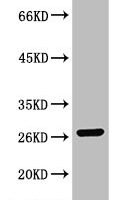
SDS-PAGE: Single band at expected molecular weight confirming purity.

ELISA: Suitable as coating antigen or detection standard.

Western Blot: Compatible with standard Western Blot protocols.

Protein Interaction: Validated for SPR (Surface Plasmon Resonance) and BLI (Bio-Layer Interferometry) studies.

Shipping: Shipped at ambient temperature. Lyophilized protein is stable during transit.

Storage: Store lyophilized protein at -20°C to -80°C. Reconstituted protein should be aliquoted and stored at -80°C. Avoid repeated freeze-thaw cycles.

Shelf Life: 12 months from date of receipt when stored as recommended.

Shipping Time: Orders placed before 2 PM EST ship same day. International orders typically deliver within 5-10 business days.

Protein Biology

Function

IFN-induced dsRNA-dependent serine/threonine-protein kinase that phosphorylates the alpha subunit of eukaryotic translation initiation factor 2 (EIF2S1/eIF-2-alpha) and plays a key role in the innate immune response to viral infection (PubMed:18835251, PubMed:19189853, PubMed:19507191, PubMed:21072047, PubMed:21123651, PubMed:22381929, PubMed:22948139, PubMed:23229543). Inhibits viral replication via the integrated stress response (ISR): EIF2S1/eIF-2-alpha phosphorylation in response to viral infection converts EIF2S1/eIF-2-alpha in a global protein synthesis inhibitor, resulting to a shutdown of cellular and viral protein synthesis, while concomitantly initiating the preferential translation of ISR-specific mRNAs, such as the transcriptional activator ATF4 (PubMed:19189853, PubMed:21123651, PubMed:22948139, PubMed:23229543). Exerts its antiviral activity on a wide range of DNA and RNA viruses including hepatitis C virus (HCV), hepatitis B virus (HBV), measles virus (MV) and herpes simplex virus 1 (HHV-1) (PubMed:11836380, PubMed:19189853, PubMed:19840259, PubMed:20171114, PubMed:21710204, PubMed:23115276, PubMed:23399035). Also involved in the regulation of signal transduction, apoptosis, cell proliferation and differentiation: phosphorylates other substrates including p53/TP53, PPP2R5A, DHX9, ILF3, IRS1 and the HHV-1 viral protein US11 (PubMed:11836380, PubMed:19229320, PubMed:22214662). In addition to serine/threonine-protein kinase activity, also has tyrosine-protein kinase activity and phosphorylates CDK1 at 'Tyr-4' upon DNA damage, facilitating its ubiquitination and proteasomal degradation (PubMed:20395957). Either as an adapter protein and/or via its kinase activity, can regulate various signaling pathways (p38 MAP kinase, NF-kappa-B and insulin signaling pathways) and transcription factors (JUN, STAT1, STAT3, IRF1, ATF3) involved in the expression of genes encoding pro-inflammatory cytokines and IFNs (PubMed:22948139, PubMed:23084476, PubMed:23372823). Activates the NF-kappa-B pathway via interaction with IKBKB and TRAF family of proteins and activates the p38 MAP kinase pathway via interaction with MAP2K6 (PubMed:10848580, PubMed:15121867, PubMed:15229216). Can act as both a positive and negative regulator of the insulin signaling pathway (ISP) (PubMed:20685959). Negatively regulates ISP by inducing the inhibitory phosphorylation of insulin receptor substrate 1 (IRS1) at 'Ser-312' and positively regulates ISP via phosphorylation of PPP2R5A which activates FOXO1, which in turn up-regulates the expression of insulin receptor substrate 2 (IRS2) (PubMed:20685959). Can regulate NLRP3 inflammasome assembly and the activation of NLRP3, NLRP1, AIM2 and NLRC4 inflammasomes (PubMed:22801494). Plays a role in the regulation of the cytoskeleton by binding to gelsolin (GSN), sequestering the protein in an inactive conformation away from actin (By similarity)

Subcellular Location

Cytoplasm; Nucleus; Cytoplasm, perinuclear region

Disease Association

Leukoencephalopathy, developmental delay, and episodic neurologic regression syndrome (LEUDEN) : An autosomal dominant disorder characterized by global developmental delay apparent in early childhood, cognitive impairment, ataxia, poor or absent speech with dysarthria, hypotonia, hypertonia, extrapyramidal signs, tremor, and abnormal involuntary movements. Affected individuals also exhibit neurological regression in the setting of febrile illness or infection. Many patients have seizures. Brain imaging shows diffuse white matter abnormalities with poor myelination. [The disease may be caused by variants affecting the gene represented in this entry] | Dystonia 33 (DYT33) : A form of dystonia, a disorder defined by the presence of sustained involuntary muscle contraction, often leading to abnormal postures. DYT33 is a slowly progressive form characterized by onset of focal or generalized dystonia in the first decades of life. Disease manifestations are variable. Some patients show ambulation difficulties, dysarthria, or dysphagia. Some affected individuals may manifest motor delay, lower limb spasticity, and mild developmental delay with intellectual disability. DYT33 penetrance is incomplete. Inheritance can be autosomal dominant or recessive. [The disease is caused by variants affecting the gene represented in this entry]

Tissue Specificity

Highly expressed in thymus, spleen and bone marrow compared to non-hematopoietic tissues such as small intestine, liver, or kidney tissues. Colocalizes with GSK3B and TAU in the Alzheimer disease (AD) brain. Elevated levels seen in breast and colon carcinomas, and which correlates with tumor progression and invasiveness or risk of progression

Subunit

(Microbial infection) Interacts with human herpesvirus 8 protein MTA/ORF57; this interaction inhibits stress granule formation

Gene: EIF2AK2  |  Organism: Homo sapiens  |  Synonyms: Eukaryotic translation initiation factor 2-alpha kinase 2; Interferon-inducible RNA-dependent protein kinase; P1/eIF-2A protein kinase; Protein kinase RNA-activated; Tyrosine-protein kinase EIF2AK2; p68 kinase
Key Publications

Frequently Asked Questions

How do I order or inquire about this product?

Fill out the Online Inquiry form with your required quantity and specifications. You can also email sales@biocrestsci.com. Our team typically responds within 4 business hours with a quote and availability confirmation.

What is the shipping and delivery time?

Orders placed before 2 PM EST ship the same day. Domestic (US) delivery typically takes 2-3 business days. International orders deliver within 5-10 business days. All products are shipped at ambient temperature with appropriate packaging to ensure stability.

How should I store this recombinant protein?

Lyophilized proteins should be stored at -20°C to -80°C upon receipt. After reconstitution, aliquot and store at -80°C. Avoid repeated freeze-thaw cycles. Shelf life is 12 months from date of receipt when stored as recommended.

What quality controls are performed on your products?

Each product undergoes SDS-PAGE purity analysis (typically >85-95%), endotoxin testing, and bioactivity validation. Products are validated for ELISA, Western Blot, and SPR/BLI applications as specified on this product page. A Certificate of Analysis (CoA) is available upon request.

Shopping Cart
Scroll to Top