,

Mouse anti-Human sapiens (Human) EGFR Monoclonal Antibody

Mouse anti-Human sapiens (Human) EGFR Monoclonal Antibody — (Microbial infection) Acts as a receptor for hepatitis C virus (HCV) in hepatocytes and facilitates its cell entry.

SKU: BCREC-000927MA Categories: ,

Product Specifications

Uniprot No.P00533
Target NamesEGFR
Species ReactivityMouse
ImmunogenRecombinant Human EGFR protein
Immunogen SpeciesHomo sapiens (Human)
ConjugateNon-conjugated
IsotypeMouse IgG1
ClonalityMonoclonal
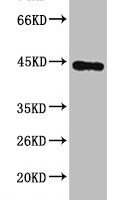
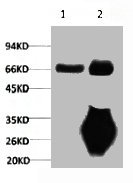
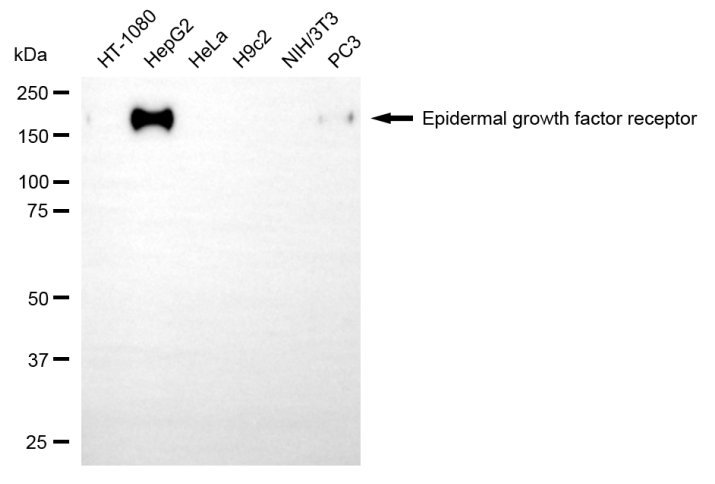
ApplicationsELISA, WB
BufferPBS, 50% glycerol, 0.05% Proclin 300, 0.05%BSA
StorageUpon receipt, store at -20°C or -80°C. Avoid repeated freeze.

Function

(Microbial infection) Acts as a receptor for hepatitis C virus (HCV) in hepatocytes and facilitates its cell entry. Mediates HCV entry by promoting the formation of the CD81-CLDN1 receptor complexes that are essential for HCV entry and by enhancing membrane fusion of cells expressing HCV envelope glycoproteins.

Biological Context

Subcellular Location: Secreted
Tissue Specificity: Ubiquitously expressed. Isoform 2 is also expressed in ovarian cancers
Disease Association: Lung cancer (LNCR) : A common malignancy affecting tissues of the lung. The most common form of lung cancer is non-small cell lung cancer (NSCLC) that can be divided into 3 major histologic subtypes: squamous cell carcinoma, adenocarcinoma, and large cell lung cancer. NSCLC is often diagnosed at an advanced stage and has a poor prognosis. [The gene represented in this entry is involved in disease pathogenesis] | Neonatal nephrocutaneous inflammatory syndrome (NNCIS) : An autosomal recessive disorder characterized by intrauterine growth retardation, premature birth, fragile skin, recurrent skin infections and sepsis, failure to thrive, nephrocalcinosis, and nephromegaly with tubular dysfunction. Some patients have chronic diarrhea, and necrotizing enterocolitis. [The disease is caused by variants affecting the gene represented in this entry]

Product Specifications

Mouse anti-Human sapiens (Human) EGFR Monoclonal Antibody is a recombinant protein. Suitable for ELISA and Western Blot applications.

Catalog number: BCREC-000927MA.

SDS-PAGE: Single band at expected molecular weight confirming purity.

ELISA: Suitable as coating antigen or detection standard.

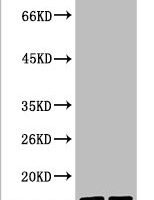
Western Blot: Compatible with standard Western Blot protocols.

Protein Interaction: Validated for SPR (Surface Plasmon Resonance) and BLI (Bio-Layer Interferometry) studies.

Shipping: Shipped at ambient temperature. Lyophilized protein is stable during transit.

Storage: Store lyophilized protein at -20°C to -80°C. Reconstituted protein should be aliquoted and stored at -80°C. Avoid repeated freeze-thaw cycles.

Shelf Life: 12 months from date of receipt when stored as recommended.

Shipping Time: Orders placed before 2 PM EST ship same day. International orders typically deliver within 5-10 business days.

Protein Biology

Function

(Microbial infection) Acts as a receptor for hepatitis C virus (HCV) in hepatocytes and facilitates its cell entry. Mediates HCV entry by promoting the formation of the CD81-CLDN1 receptor complexes that are essential for HCV entry and by enhancing membrane fusion of cells expressing HCV envelope glycoproteins

Subcellular Location

Secreted

Disease Association

Lung cancer (LNCR) : A common malignancy affecting tissues of the lung. The most common form of lung cancer is non-small cell lung cancer (NSCLC) that can be divided into 3 major histologic subtypes: squamous cell carcinoma, adenocarcinoma, and large cell lung cancer. NSCLC is often diagnosed at an advanced stage and has a poor prognosis. [The gene represented in this entry is involved in disease pathogenesis] | Neonatal nephrocutaneous inflammatory syndrome (NNCIS) : An autosomal recessive disorder characterized by intrauterine growth retardation, premature birth, fragile skin, recurrent skin infections and sepsis, failure to thrive, nephrocalcinosis, and nephromegaly with tubular dysfunction. Some patients have chronic diarrhea, and necrotizing enterocolitis. [The disease is caused by variants affecting the gene represented in this entry]

Tissue Specificity

Ubiquitously expressed. Isoform 2 is also expressed in ovarian cancers

Subunit

Binding of the ligand triggers homo- and/or heterodimerization of the receptor triggering its autophosphorylation. Heterodimer with ERBB2 (PubMed:10805725). Forms a complex with CCDC88A/GIV (via SH2-like regions) and GNAI3 which leads to enhanced EGFR signaling and triggering of cell migration; binding to CCDC88A requires autophosphorylation of the EGFR C-terminal region, and ligand stimulation is required for recruitment of GNAI3 to the complex (PubMed:20462955, PubMed:25187647). Interacts with ERRFI1; inhibits dimerization of the kinase domain and autophosphorylation (PubMed:18046415). Part of a complex with ERBB2 and either PIK3C2A or PIK3C2B (PubMed:10805725). Interacts with GRB2; an adapter protein coupling the receptor to downstream signaling pathways. Interacts with GAB2; involved in signaling downstream of EGFR. Interacts with STAT3; mediates EGFR downstream signaling in cell proliferation. Interacts with RIPK1; involved in NF-kappa-B activation. Interacts (autophosphorylated) with CBL, CBLB and CBLC; involved in EGFR ubiquitination and regulation; interaction with CBL is reduced in the presence of tensin TNS4 (PubMed:23774213). Interacts with SOCS5; regulates EGFR degradation through ELOC- and ELOB-mediated ubiquitination and proteasomal degradation. Interacts with PRMT5; methylates EGFR and enhances interaction with PTPN6. Interacts (phosphorylated) with PTPN6; inhibits EGFR-dependent activation of MAPK/ERK. Interacts with COPG1; essential for regulation of EGF-dependent nuclear transport of EGFR by retrograde trafficking from the Golgi to the ER. Interacts with TNK2; this interaction is dependent on EGF stimulation and kinase activity of EGFR. Interacts with PCNA; positively regulates PCNA (PubMed:17115032). Interacts with PELP1. Interacts with MUC1. Interacts with AP2M1. Interacts with FER. May interact with EPS8; mediates EPS8 phosphorylation. Interacts (via SH2 domains) with GRB2, NCK1 and NCK2 (PubMed:10026169). Interacts with ATXN2. Interacts with GAREM1. Interacts (ubiquitinated) with ANKRD13A/B/D; the interaction is direct and may regulate EGFR internalization after EGF stimulation. Interacts with GPER1; the interaction occurs in an estrogen-dependent manner. Interacts (via C-terminal cytoplasmic kinase domain) with ZPR1 (via zinc fingers). Interacts with RNF115 and RNF126 (PubMed:23418353). Interacts with GPRC5A (via its transmembrane domain) (PubMed:25311788). Interacts with FAM83B; positively regulates EGFR inducing its autophosphorylation in absence of stimulation by EGF (PubMed:23912460). Interacts with LAPTM4B; positively correlates with EGFR activation (PubMed:28479384). Interacts with STX19 (PubMed:16420529). Interacts with CD44 (PubMed:23589287). Interacts with PGRMC1; the interaction requires PGRMC1 homodimerization (PubMed:26988023). Interacts with PIKFYVE (PubMed:17909029). Interacts with NEU3. Interacts with TRAF4 (PubMed:30352854). Interacts with the ant venom OMEGA-myrmeciitoxin(02)-Mg1a (By similarity). Interacts with CD82; this interaction facilitates ligand-induced endocytosis of the receptor and its subsequent desensitization (PubMed:35538033). Interacts with SNX32; the interaction is required for endolysosomal EGFR trafficking (PubMed:39073202)

Gene: EGFR  |  Organism: Homo sapiens  |  Synonyms: Proto-oncogene c-ErbB-1; Receptor tyrosine-protein kinase erbB-1
Key Publications

Frequently Asked Questions

How do I order or inquire about this product?

Fill out the Online Inquiry form with your required quantity and specifications. You can also email sales@biocrestsci.com. Our team typically responds within 4 business hours with a quote and availability confirmation.

What is the shipping and delivery time?

Orders placed before 2 PM EST ship the same day. Domestic (US) delivery typically takes 2-3 business days. International orders deliver within 5-10 business days. All products are shipped at ambient temperature with appropriate packaging to ensure stability.

How should I store this recombinant protein?

Lyophilized proteins should be stored at -20°C to -80°C upon receipt. After reconstitution, aliquot and store at -80°C. Avoid repeated freeze-thaw cycles. Shelf life is 12 months from date of receipt when stored as recommended.

What quality controls are performed on your products?

Each product undergoes SDS-PAGE purity analysis (typically >85-95%), endotoxin testing, and bioactivity validation. Products are validated for ELISA, Western Blot, and SPR/BLI applications as specified on this product page. A Certificate of Analysis (CoA) is available upon request.

Shopping Cart
Scroll to Top