Recombinant Human Somatostatin receptor type 2 (SSTR2) (Active)

Recombinant Human Somatostatin receptor type 2 (SSTR2) (Active) — Receptor for somatostatin-14 and -28. Purity >85%.

SKU: BCACP-000028 Category:
Product SKUBCACP-000028
Product DescriptionRecombinant Human Somatostatin receptor type 2 (SSTR2) protein is expressed from in vitro E.coli expression system with N-terminal 10xHis-tagged. It contains 1-369aa. [Accession | P30874].
Uniprot No.P30874
Gene NamesSSTR2
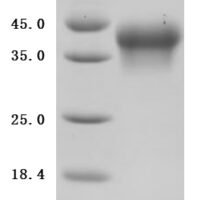
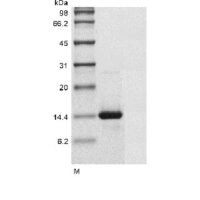
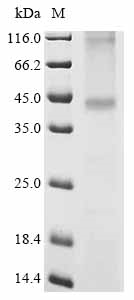
PurityGreater than 85% as determined by SDS-PAGE.
Expression Systemin vitro E.coli expression system
Expression Region1-369aa
SpeciesHomo sapiens (Human)
Tag InfoN-terminal 10xHis-tagged
Molecular weight47.4 kDa
ActivityHuman SSTR2 Full Length Protein captured on LifeDiscTM COOH chip (in presence of FOS-12) can bind [Tyr3]Octreotate with an affinity constant of 22.9 μM as detected by MetaSPR Assay (WeSPRTM One).
BufferLyophilized from a 0.2 μm filtered 20 mM Tris-HCl, 0.5 M NaCl, 6% Trehalose, pH 8.0
StorageStore at -20°C/-80°C upon receipt, aliquoting is necessary for mutiple use. Avoid repeated freeze-thaw cycles.

Function

Receptor for somatostatin-14 and -28. This receptor is coupled via pertussis toxin sensitive G proteins to inhibition of adenylyl cyclase. In addition it stimulates phosphotyrosine phosphatase and PLC via pertussis toxin insensitive as well as sensitive G proteins.

Biological Context

Subcellular Location: Cell membrane (Multi-pass membrane protein); Cytoplasm
Tissue Specificity: Expressed in both pancreatic alpha- and beta-cells (at protein level). Expressed at higher levels in the pancreas than other somatostatin receptors. Also expressed in the cerebrum and kidney and, in lesser amounts, in the jejunum, colon and liver. In the developing nervous system, expressed in the cortex where it is located in the preplate at early stages and is enriched in the outer part of the germinal zone at later stages. In the cerebellum, expressed in the deep part of the external granular layer at gestational week 19. This pattern persists until birth but disappears at adulthood

Product Specifications

Recombinant Human Somatostatin receptor type 2 (SSTR2) (Active) is a recombinant protein from Homo sapiens (Human), expressed in in vitro E.coli expression system, covering amino acids 1-369aa, with N-terminal 10xHis-tagged tag, molecular weight 47.4 kDa, purity Greater than 85% as determined by SDS-PAGE.. Suitable for ELISA and Western Blot applications.
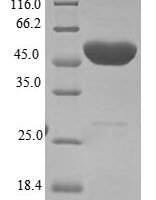
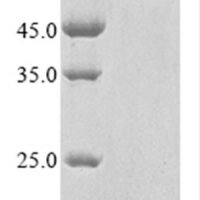
SDS-PAGE: Single band at expected molecular weight confirming purity.

ELISA: Suitable as coating antigen or detection standard.

Western Blot: Compatible with standard Western Blot protocols.

Protein Interaction: Validated for SPR (Surface Plasmon Resonance) and BLI (Bio-Layer Interferometry) studies.

Shipping: Shipped at ambient temperature. Lyophilized protein is stable during transit.

Storage: Store lyophilized protein at -20°C to -80°C. Reconstituted protein should be aliquoted and stored at -80°C. Avoid repeated freeze-thaw cycles.

Shelf Life: 12 months from date of receipt when stored as recommended.

Shipping Time: Orders placed before 2 PM EST ship same day. International orders typically deliver within 5-10 business days.

Protein Biology

Function

Receptor for somatostatin-14 and -28. This receptor is coupled via pertussis toxin sensitive G proteins to inhibition of adenylyl cyclase. In addition it stimulates phosphotyrosine phosphatase and PLC via pertussis toxin insensitive as well as sensitive G proteins. Inhibits calcium entry by suppressing voltage-dependent calcium channels. Acts as the functionally dominant somatostatin receptor in pancreatic alpha- and beta-cells where it mediates the inhibitory effect of somatostatin-14 on hormone secretion. Inhibits cell growth through enhancement of MAPK1 and MAPK2 phosphorylation and subsequent up-regulation of CDKN1B. Stimulates neuronal migration and axon outgrowth and may participate in neuron development and maturation during brain development. Mediates negative regulation of insulin receptor signaling through PTPN6. Inactivates SSTR3 receptor function following heterodimerization

Subcellular Location

Cell membrane (Multi-pass membrane protein); Cytoplasm

Tissue Specificity

Expressed in both pancreatic alpha- and beta-cells (at protein level). Expressed at higher levels in the pancreas than other somatostatin receptors. Also expressed in the cerebrum and kidney and, in lesser amounts, in the jejunum, colon and liver. In the developing nervous system, expressed in the cortex where it is located in the preplate at early stages and is enriched in the outer part of the germinal zone at later stages. In the cerebellum, expressed in the deep part of the external granular layer at gestational week 19. This pattern persists until birth but disappears at adulthood

Subunit

Homodimer and heterodimer with SSTR3 and SSTR5. Heterodimerization with SSTR3 inactivates SSTR3 receptor function. Heterodimerization with SSTR5 is enhanced by agonist stimulation of SSTR2 and increases SSTR2 cell growth inhibition activity. Following agonist stimulation, homodimers dissociate into monomers which is required for receptor internalization. Interacts with beta-arrestin; this interaction is necessary for receptor internalization and is destabilized by heterodimerization with SSTR5 which results in increased recycling of SSTR2 to the cell surface. Interacts (via C-terminus) with SHANK1 (via PDZ domain)

Gene: SSTR2  |  Organism: Homo sapiens  |  Synonyms: SRIF-1
Key Publications

Frequently Asked Questions

How do I order or inquire about this product?

Fill out the Online Inquiry form with your required quantity and specifications. You can also email sales@biocrestsci.com. Our team typically responds within 4 business hours with a quote and availability confirmation.

What is the shipping and delivery time?

Orders placed before 2 PM EST ship the same day. Domestic (US) delivery typically takes 2-3 business days. International orders deliver within 5-10 business days. All products are shipped at ambient temperature with appropriate packaging to ensure stability.

How should I store this recombinant protein?

Lyophilized proteins should be stored at -20°C to -80°C upon receipt. After reconstitution, aliquot and store at -80°C. Avoid repeated freeze-thaw cycles. Shelf life is 12 months from date of receipt when stored as recommended.

What quality controls are performed on your products?

Each product undergoes SDS-PAGE purity analysis (typically >85-95%), endotoxin testing, and bioactivity validation. Products are validated for ELISA, Western Blot, and SPR/BLI applications as specified on this product page. A Certificate of Analysis (CoA) is available upon request.

Shopping Cart
Scroll to Top