,

Recombinant Human Ectonucleotide pyrophosphatase/phosphodiesterase family member 3 (ENPP3), partial (Active)

Recombinant Human Ectonucleotide pyrophosphatase/phosphodiesterase family member 3 (ENPP3), partial (Active) — Hydrolase that metabolizes extracellular nucleotides, including ATP, GTP, UTP and CTP. Purity >95%.

SKU: BCACP-000355 Categories: ,
Product SKUBCACP-000355
Product DescriptionRecombinant Human Ectonucleotide pyrophosphatase/phosphodiesterase family member 3 (ENPP3) protein is expressed from Mammalian cell with N-terminal 10xHis-tagged. It contains 48-875aa. [Accession | O14638].
Uniprot No.O14638
Gene NamesENPP3
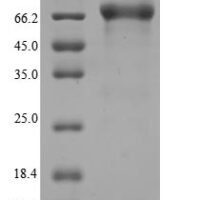
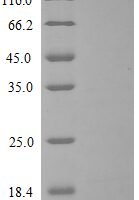
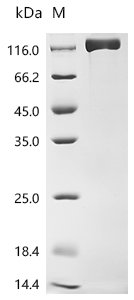
PurityGreater than 95% as determined by SDS-PAGE.
Expression SystemMammalian cell
Expression Region48-875aa
SpeciesHomo sapiens (Human)
Tag InfoN-terminal 10xHis-tagged
Molecular weight98.7 kDa
ActivityMeasured by its binding ability in a functional ELISA. Immobilized Cynomolgus CDH1 at 2 μg/mL can bind Anti-CDH1 recombinant antibody . The EC50 is 2.256-2.744 ng/mL.
BufferLyophilized from a 0.2 μm filtered 20 mM Tris-HCl, 0.5 M NaCl, 6% Trehalose, pH 8.0
StorageStore at -20°C/-80°C upon receipt, aliquoting is necessary for mutiple use. Avoid repeated freeze-thaw cycles.
Alternative NamesEctonucleotide pyrophosphatase/phosphodiesterase family member 3; E-NPP 3; NPP3; Alkaline phosphodiesterase I ; Dinucleoside polyphosphatase ; Nucleotide diphosphatase; Nucleotide pyrophosphatase ; Phosphodiesterase I beta; Phosphodiesterase I/nucleotide pyrophosphatase 3; CD203c

Function

Hydrolase that metabolizes extracellular nucleotides, including ATP, GTP, UTP and CTP. Also hydrolyzes extracellular 2',3'-cGAMP (cyclic GMP-AMP), a second messenger that activates TMEM173/STING and triggers type-I interferon production, and is therefore involved in the regulation of innate immune response. 2',3'-cGAMP appears to be further processed to GMP, AMP and inorganic phosphate.

Biological Context

Subcellular Location: Cell membrane (Single-pass type II membrane protein); Apical cell membrane (Single-pass type II membrane protein); Secreted
Tissue Specificity: Detected on bile ducts in liver, and in blood serum (at protein level). Detected in prostate and uterus. Detected on basophils, but not neutrophils

Product Specifications

Recombinant Human Ectonucleotide pyrophosphatase/phosphodiesterase family member 3 (ENPP3), partial (Active) is a recombinant protein from Homo sapiens (Human), expressed in Mammalian cell, covering amino acids 48-875aa, with N-terminal 10xHis-tagged tag, molecular weight 98.7 kDa, purity Greater than 95% as determined by SDS-PAGE.. Suitable for ELISA and Western Blot applications.

SDS-PAGE: Single band at expected molecular weight confirming purity.

ELISA: Suitable as coating antigen or detection standard.

Western Blot: Compatible with standard Western Blot protocols.

Protein Interaction: Validated for SPR (Surface Plasmon Resonance) and BLI (Bio-Layer Interferometry) studies.

Shipping: Shipped at ambient temperature. Lyophilized protein is stable during transit.

Storage: Store lyophilized protein at -20°C to -80°C. Reconstituted protein should be aliquoted and stored at -80°C. Avoid repeated freeze-thaw cycles.

Shelf Life: 12 months from date of receipt when stored as recommended.

Shipping Time: Orders placed before 2 PM EST ship same day. International orders typically deliver within 5-10 business days.

Protein Biology

Function

Hydrolase that metabolizes extracellular nucleotides, including ATP, GTP, UTP and CTP (PubMed:29717535, PubMed:9344668). Also hydrolyzes extracellular 2',3'-cGAMP (cyclic GMP-AMP), a second messenger that activates TMEM173/STING and triggers type-I interferon production, and is therefore involved in the regulation of innate immune response (PubMed:38749434). 2',3'-cGAMP appears to be further processed to GMP, AMP and inorganic phosphate (PubMed:38749434). Limits mast cells and basophils response during inflammation and during the chronic phases of allergic responses by eliminating extracellular ATP, a signaling molecule activating these cells in an autocrine manner. Metabolizes extracellular ATP in the lumen of the small intestine, and thereby prevents ATP-induced apoptosis of intestinal plasmacytoid dendritic cells (By similarity). Has a broad specificity and can also hydrolyze UDP-GlcNAc into UMP and GlcNAc-1-phosphate and potentially several other intracellular nucleotide sugars, including UDP-GalNAc, CMP-NeuAc, GDP-Fuc, and UDP-GlcA. Thereby, could modulate glycan biosynthesis and protein glycosylation (By similarity). Can hydrolyze extracellular dinucleoside polyphosphates, including the vasoactive adenosine polyphosphates as well (PubMed:12846830). In addition, displays an alkaline phosphodiesterase activity in vitro (PubMed:11342463)

Subcellular Location

Cell membrane (Single-pass type II membrane protein); Apical cell membrane (Single-pass type II membrane protein); Secreted

Tissue Specificity

Detected on bile ducts in liver, and in blood serum (at protein level) (PubMed:15072822). Detected in prostate and uterus (PubMed:9344668). Detected on basophils, but not neutrophils (PubMed:11342463)

Subunit

Monomer and homodimer

Gene: ENPP3  |  Organism: Homo sapiens  |  Synonyms: Alkaline phosphodiesterase I; Dinucleoside polyphosphatase; Nucleotide diphosphatase; Nucleotide pyrophosphatase; Phosphodiesterase I beta; Phosphodiesterase I/nucleotide pyrophosphatase 3
Key Publications

Frequently Asked Questions

How do I order or inquire about this product?

Fill out the Online Inquiry form with your required quantity and specifications. You can also email sales@biocrestsci.com. Our team typically responds within 4 business hours with a quote and availability confirmation.

What is the shipping and delivery time?

Orders placed before 2 PM EST ship the same day. Domestic (US) delivery typically takes 2-3 business days. International orders deliver within 5-10 business days. All products are shipped at ambient temperature with appropriate packaging to ensure stability.

How should I store this recombinant protein?

Lyophilized proteins should be stored at -20°C to -80°C upon receipt. After reconstitution, aliquot and store at -80°C. Avoid repeated freeze-thaw cycles. Shelf life is 12 months from date of receipt when stored as recommended.

What quality controls are performed on your products?

Each product undergoes SDS-PAGE purity analysis (typically >85-95%), endotoxin testing, and bioactivity validation. Products are validated for ELISA, Western Blot, and SPR/BLI applications as specified on this product page. A Certificate of Analysis (CoA) is available upon request.

Shopping Cart
Scroll to Top