,

Recombinant Human Interleukin-17F protein (IL17F)

Recombinant Human Interleukin-17F protein (IL17F) — Effector cytokine of innate and adaptive immune system involved in antimicrobial host defense and maintenance of tissue integrity. Purity >95%.

SKU: BCACP-000685 Categories: ,
Product SKUBCACP-000685
Product DescriptionRecombinant Human Interleukin-17F protein (IL17F) protein is expressed from E.Coli with Tag-Free. It contains 31-163aa. [Accession | Q96PD4].
Uniprot No.Q96PD4
Gene NamesIL17F
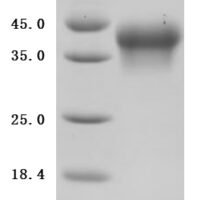
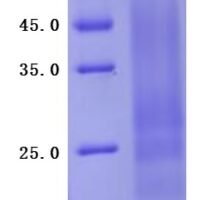
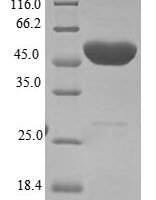
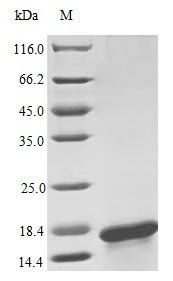
Purity>95% as determined by SDS-PAGE.
Expression SystemE.Coli
Expression Region31-163aa
SpeciesHomo sapiens (Human)
Tag InfoTag-Free
Molecular weight15 kDa
ActivityFully biologically active when compared to standard. The ED50 as determined by a cell proliferation assay using human IL-20Rα and human IL-20Rβ co-transfected murine BaF3 pro-B cells is less than 1.5 ng/ml, corresponding to a specific activity of >6.7x10⁵ IU/mg.
BufferLyophilized from a 0.2 μm filtered 20 mM Tris-HCl, 0.5 M NaCl, 6% Trehalose, pH 8.0
StorageStore at -20°C/-80°C upon receipt, aliquoting is necessary for mutiple use. Avoid repeated freeze-thaw cycles.
Alternative NamesCANDF6; Cytokine ML 1; Cytokine ML-1; IL 17F; IL 24; IL-17F; IL-24; Il17f; IL17F_HUMAN; Interleukin 17F; Interleukin 24; Interleukin-17F; Interleukin-24; ML 1; ML1; Mutant IL 17F; OTTHUMP00000016602

Function

Effector cytokine of innate and adaptive immune system involved in antimicrobial host defense and maintenance of tissue integrity. IL17A-IL17F signals via IL17RA-IL17RC heterodimeric receptor complex, triggering homotypic interaction of IL17RA and IL17RC chains with TRAF3IP2 adapter through SEFIR domains. This leads to downstream TRAF6-mediated activation of NF-kappa-B and MAPkinase pathways ultimately resulting in transcriptional activation of cytokines, chemokines, antimicrobial peptides and matrix metalloproteinases, with potential strong immune inflammation.

Biological Context

Subcellular Location: Secreted
Tissue Specificity: Expressed in T-helper 1 and T-helper 2 cells, basophils and mast cells
Disease Association: Candidiasis, familial, 6 (CANDF6) : A primary immunodeficiency disorder with altered immune responses and impaired clearance of fungal infections, selective against Candida. It is characterized by persistent and/or recurrent infections of the skin, nails and mucous membranes caused by organisms of the genus Candida, mainly Candida albicans. [The disease is caused by variants affecting the gene represented in this entry]

Product Specifications

Recombinant Human Interleukin-17F protein (IL17F) is a recombinant protein from Homo sapiens (Human), expressed in E.Coli, covering amino acids 31-163aa, with Tag-Free tag, molecular weight 15 kDa, purity >95% as determined by SDS-PAGE.. Suitable for ELISA and Western Blot applications.

SDS-PAGE: Single band at expected molecular weight confirming purity.

ELISA: Suitable as coating antigen or detection standard.

Western Blot: Compatible with standard Western Blot protocols.

Protein Interaction: Validated for SPR (Surface Plasmon Resonance) and BLI (Bio-Layer Interferometry) studies.

Shipping: Shipped at ambient temperature. Lyophilized protein is stable during transit.

Storage: Store lyophilized protein at -20°C to -80°C. Reconstituted protein should be aliquoted and stored at -80°C. Avoid repeated freeze-thaw cycles.

Shelf Life: 12 months from date of receipt when stored as recommended.

Shipping Time: Orders placed before 2 PM EST ship same day. International orders typically deliver within 5-10 business days.

Protein Biology

Function

Effector cytokine of innate and adaptive immune system involved in antimicrobial host defense and maintenance of tissue integrity (PubMed:21350122). IL17A-IL17F signals via IL17RA-IL17RC heterodimeric receptor complex, triggering homotypic interaction of IL17RA and IL17RC chains with TRAF3IP2 adapter through SEFIR domains. This leads to downstream TRAF6-mediated activation of NF-kappa-B and MAPkinase pathways ultimately resulting in transcriptional activation of cytokines, chemokines, antimicrobial peptides and matrix metalloproteinases, with potential strong immune inflammation (PubMed:11574464, PubMed:11591732, PubMed:11591768, PubMed:17911633, PubMed:18684971, PubMed:21350122, PubMed:28827714). IL17A-IL17F is primarily involved in host defense against extracellular bacteria and fungi by inducing neutrophilic inflammation (By similarity). As signature effector cytokine of T-helper 17 cells (Th17), primarily induces neutrophil activation and recruitment at infection and inflammatory sites (By similarity). Stimulates the production of antimicrobial beta-defensins DEFB1, DEFB103A, and DEFB104A by mucosal epithelial cells, limiting the entry of microbes through the epithelial barriers (By similarity). IL17F homodimer can signal via IL17RC homodimeric receptor complex, triggering downstream activation of TRAF6 and NF-kappa-B signaling pathway (PubMed:32187518). Via IL17RC induces transcriptional activation of IL33, a potent cytokine that stimulates group 2 innate lymphoid cells and adaptive T-helper 2 cells involved in pulmonary allergic response to fungi. Likely via IL17RC, promotes sympathetic innervation of peripheral organs by coordinating the communication between gamma-delta T cells and parenchymal cells. Stimulates sympathetic innervation of thermogenic adipose tissue by driving TGFB1 expression (By similarity). Regulates the composition of intestinal microbiota and immune tolerance by inducing antimicrobial proteins that specifically control the growth of commensal Firmicutes and Bacteroidetes (By similarity)

Subcellular Location

Secreted

Disease Association

Candidiasis, familial, 6 (CANDF6) : A primary immunodeficiency disorder with altered immune responses and impaired clearance of fungal infections, selective against Candida. It is characterized by persistent and/or recurrent infections of the skin, nails and mucous membranes caused by organisms of the genus Candida, mainly Candida albicans. [The disease is caused by variants affecting the gene represented in this entry]

Tissue Specificity

Expressed in T-helper 1 and T-helper 2 cells, basophils and mast cells

Subunit

Homodimer; disulfide-linked (PubMed:19838198, PubMed:32187518). Heterodimer with IL17A (IL17A-IL17F) (PubMed:17355969). Forms complexes with IL17RA and IL17RC receptors with 2:1 binding stoichiometry: two receptor chains for one interleukin molecule. IL17F homodimer forms predominantly complexes with IL17RC homodimer, whereas IL17A-IL17F favors complexes with IL17RA-IL17RC (PubMed:17911633, PubMed:18684971, PubMed:28827714, PubMed:32187518). IL17RA and IL17RC chains cannot distinguish between IL17A and IL17F molecules, potentially enabling the formation of topologically distinct complexes (PubMed:28827714)

Gene: IL17F  |  Organism: Homo sapiens  |  Synonyms: Cytokine ML-1
Key Publications

Frequently Asked Questions

How do I order or inquire about this product?

Fill out the Online Inquiry form with your required quantity and specifications. You can also email sales@biocrestsci.com. Our team typically responds within 4 business hours with a quote and availability confirmation.

What is the shipping and delivery time?

Orders placed before 2 PM EST ship the same day. Domestic (US) delivery typically takes 2-3 business days. International orders deliver within 5-10 business days. All products are shipped at ambient temperature with appropriate packaging to ensure stability.

How should I store this recombinant protein?

Lyophilized proteins should be stored at -20°C to -80°C upon receipt. After reconstitution, aliquot and store at -80°C. Avoid repeated freeze-thaw cycles. Shelf life is 12 months from date of receipt when stored as recommended.

What quality controls are performed on your products?

Each product undergoes SDS-PAGE purity analysis (typically >85-95%), endotoxin testing, and bioactivity validation. Products are validated for ELISA, Western Blot, and SPR/BLI applications as specified on this product page. A Certificate of Analysis (CoA) is available upon request.

Shopping Cart
Scroll to Top