,

Recombinant Human Interleukin-36 gamma protein (IL36G)

Recombinant Human Interleukin-36 gamma protein (IL36G) — Cytokine that binds to and signals through the IL1RL2/IL-36R receptor which in turn activates NF-kappa-B and MAPK signaling pathways in target cells. Purity >95%.

SKU: BCACP-000699 Categories: ,
Product SKUBCACP-000699
Product DescriptionRecombinant Human Interleukin-36 gamma protein (IL36G) protein is expressed from E.Coli with Tag-Free. It contains 1-169aa. [Accession | Q9NZH8].
Uniprot No.Q9NZH8
Gene NamesIL36G
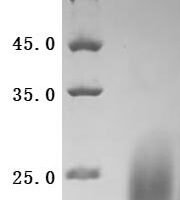
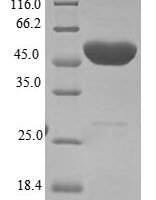
Purity>95% as determined by SDS-PAGE.
Expression SystemE.Coli
Expression Region1-169aa
SpeciesHomo sapiens (Human)
Tag InfoTag-Free
Molecular weight18.7 kDa
ActivityFully biologically active when compared to standard. The ED50 as determined by a cell proliferation assay using murine D10S cells is less than 10 pg/ml, corresponding to a specific activity of >1.0x10⁸ IU/mg.
BufferLyophilized from a 0.2 μm filtered 20 mM Tris-HCl, 0.5 M NaCl, 6% Trehalose, pH 8.0
StorageStore at -20°C/-80°C upon receipt, aliquoting is necessary for mutiple use. Avoid repeated freeze-thaw cycles.
Alternative NamesIL 1 epsilon; IL 1 related protein 2; IL 1(EPSILON); IL 1F9; IL 1H1; IL 1RP2; IL-1 epsilon; IL-1-related protein 2; IL-1F9; IL-1H1; IL-1RP2; IL1E; Il1f9; IL1F9_HUMAN; IL1H1; IL1RP2; IL36 gamma; IL36G; Interleukin 1 epsilon; Interleukin 1 family member 9; Interleukin 1 homolog 1; Interleukin 1 related protein 2; Interleukin 36 gamma; Interleukin-1 epsilon; Interleukin-1 family member 9; Interleukin-1 homolog 1

Function

Cytokine that binds to and signals through the IL1RL2/IL-36R receptor which in turn activates NF-kappa-B and MAPK signaling pathways in target cells. Part of the IL-36 signaling system that is thought to be present in epithelial barriers and to take part in local inflammatory response; similar to the IL-1 system with which it shares the coreceptor IL1RAP. Seems to be involved in skin inflammatory response by acting on keratinocytes, dendritic cells and indirectly on T-cells to drive tissue infiltration, cell maturation and cell proliferation.

Biological Context

Subcellular Location: Cytoplasm; Secreted
Tissue Specificity: Highly expressed in tissues containing epithelial cells: skin, lung, stomach and esophagus. Expressed in bronchial epithelial. In skin is expressed only in keratinocytes but not in fibroblasts, endothelial cells or melanocytes. Up-regulated in lesional psoriasis skin. Expressed in monocyte-derived dendritic cells and M1 macrophages

Product Specifications

Recombinant Human Interleukin-36 gamma protein (IL36G) is a recombinant protein from Homo sapiens (Human), expressed in E.Coli, covering amino acids 1-169aa, with Tag-Free tag, molecular weight 18.7 kDa, purity >95% as determined by SDS-PAGE.. Suitable for ELISA and Western Blot applications.

SDS-PAGE: Single band at expected molecular weight confirming purity.

ELISA: Suitable as coating antigen or detection standard.

Western Blot: Compatible with standard Western Blot protocols.

Protein Interaction: Validated for SPR (Surface Plasmon Resonance) and BLI (Bio-Layer Interferometry) studies.

Shipping: Shipped at ambient temperature. Lyophilized protein is stable during transit.

Storage: Store lyophilized protein at -20°C to -80°C. Reconstituted protein should be aliquoted and stored at -80°C. Avoid repeated freeze-thaw cycles.

Shelf Life: 12 months from date of receipt when stored as recommended.

Shipping Time: Orders placed before 2 PM EST ship same day. International orders typically deliver within 5-10 business days.

Protein Biology

Function

Cytokine that binds to and signals through the IL1RL2/IL-36R receptor which in turn activates NF-kappa-B and MAPK signaling pathways in target cells. Part of the IL-36 signaling system that is thought to be present in epithelial barriers and to take part in local inflammatory response; similar to the IL-1 system with which it shares the coreceptor IL1RAP. Seems to be involved in skin inflammatory response by acting on keratinocytes, dendritic cells and indirectly on T-cells to drive tissue infiltration, cell maturation and cell proliferation. In cultured keratinocytes induces the expression of macrophage, T-cell, and neutrophil chemokines, such as CCL3, CCL4, CCL5, CCL2, CCL17, CCL22, CL20, CCL5, CCL2, CCL17, CCL22, CXCL8, CCL20 and CXCL1; also stimulates its own expression and that of the prototypic cutaneous pro-inflammatory parameters TNF, S100A7/psoriasin and inducible NOS. May play a role in pro-inflammatory responses during particular neutrophilic airway inflammation: activates mitogen-activated protein kinases and NF-kappa B in primary lung fibroblasts, and stimulates the expression of IL-8 and CXCL3 and Th17 chemokine CCL20 in lung fibroblasts. May be involved in the innate immune response to fungal pathogens, such as Aspergillus fumigatus

Subcellular Location

Cytoplasm; Secreted

Tissue Specificity

Highly expressed in tissues containing epithelial cells: skin, lung, stomach and esophagus. Expressed in bronchial epithelial. In skin is expressed only in keratinocytes but not in fibroblasts, endothelial cells or melanocytes. Up-regulated in lesional psoriasis skin. Expressed in monocyte-derived dendritic cells and M1 macrophages

Subunit

Interacts with cargo receptor TMED10; the interaction mediates the translocation from the cytoplasm into the ERGIC (endoplasmic reticulum-Golgi intermediate compartment) and thereby secretion

Gene: IL36G  |  Organism: Homo sapiens  |  Synonyms: IL-1-related protein 2; Interleukin-1 epsilon; Interleukin-1 family member 9; Interleukin-1 homolog 1
Key Publications

Frequently Asked Questions

How do I order or inquire about this product?

Fill out the Online Inquiry form with your required quantity and specifications. You can also email sales@biocrestsci.com. Our team typically responds within 4 business hours with a quote and availability confirmation.

What is the shipping and delivery time?

Orders placed before 2 PM EST ship the same day. Domestic (US) delivery typically takes 2-3 business days. International orders deliver within 5-10 business days. All products are shipped at ambient temperature with appropriate packaging to ensure stability.

How should I store this recombinant protein?

Lyophilized proteins should be stored at -20°C to -80°C upon receipt. After reconstitution, aliquot and store at -80°C. Avoid repeated freeze-thaw cycles. Shelf life is 12 months from date of receipt when stored as recommended.

What quality controls are performed on your products?

Each product undergoes SDS-PAGE purity analysis (typically >85-95%), endotoxin testing, and bioactivity validation. Products are validated for ELISA, Western Blot, and SPR/BLI applications as specified on this product page. A Certificate of Analysis (CoA) is available upon request.

Shopping Cart
Scroll to Top