Function
Subunit a, of the mitochondrial membrane ATP synthase complex (F(1)F(0) ATP synthase or Complex V) that produces ATP from ADP in the presence of a proton gradient across the membrane which is generated by electron transport complexes of the respiratory chain (Probable). ATP synthase complex consist of a soluble F(1) head domain – the catalytic core – and a membrane F(1) domain – the membrane proton channel. These two domains are linked by a central stalk rotating inside the F(1) region and a stationary peripheral stalk.
Biological Context
Subcellular Location: Mitochondrion inner membrane (Multi-pass membrane protein)
Disease Association: Neuropathy, ataxia, and retinitis pigmentosa (NARP) : A syndrome characterized by variable combination of developmental delay, psychomotor retardation, hearing loss, optic atrophy and retinitis pigmentosa, dementia, seizures, ataxia, proximal neurogenic muscle weakness, and sensory neuropathy. [The disease is caused by variants affecting the gene represented in this entry] | Leber hereditary optic neuropathy (LHON) : A maternally inherited form of Leber hereditary optic neuropathy, a mitochondrial disease resulting in bilateral painless loss of central vision due to selective degeneration of the retinal ganglion cells and their axons. The disorder shows incomplete penetrance and male predominance. Cardiac conduction defects and neurological defects have also been described in some LHON patients. LHON results from primary mitochondrial DNA mutations affecting the respiratory chain complexes. [The disease is caused by variants affecting the gene represented in this entry] | Leigh syndrome (LS) : An early-onset progressive neurodegenerative disorder characterized by the presence of focal, bilateral lesions in one or more areas of the central nervous system including the brainstem, thalamus, basal ganglia, cerebellum and spinal cord. Clinical features depend on which areas of the central nervous system are involved and include subacute onset of psychomotor retardation, hypotonia, ataxia, weakness, vision loss, eye movement abnormalities, seizures, and dysphagia. [The disease is caused by variants affecting the gene represented in this entry] | Mitochondrial infantile bilateral striatal necrosis (MIBSN) : Bilateral striatal necrosis is a neurological disorder resembling Leigh syndrome. [The disease is caused by variants affecting the gene represented in this entry] | Mitochondrial complex V deficiency, mitochondrial 1 (MC5DM1) : A mitochondrial disorder with heterogeneous clinical manifestations including neuropathy, ataxia, hypertrophic cardiomyopathy. Hypertrophic cardiomyopathy can present with negligible to extreme hypertrophy, minimal to extensive fibrosis and myocyte disarray, absent to severe left ventricular outflow tract obstruction, and distinct septal contours/morphologies with extremely varying clinical course. [The disease is caused by variants affecting the gene represented in this entry] | Myopathy, lactic acidosis, and sideroblastic anemia 3 (MLASA3) : A rare mitochondrial disorder characterized by sideroblastic anemia, muscle weakness, and exercise intolerance associated with persistent lactic acidemia. Additional MLASA3 features are failure to thrive, hearing loss, epilepsy, stroke-like episodes, and severe developmental delay. [The disease is caused by variants affecting the gene represented in this entry] | Ataxia and polyneuropathy, adult-onset (APAO) : A mitochondrial disease characterized by ataxia, axonal sensorimotor polyneuropathy, abnormal eye movements, and dysarthria. [The disease is caused by variants affecting the gene represented in this entry] | Cardiomyopathy, infantile hypertrophic (CMHI) : An infantile form of hypertrophic cardiomyopathy, a heart disorder characterized by ventricular hypertrophy, which is usually asymmetric and often involves the interventricular septum. The symptoms include dyspnea, syncope, collapse, palpitations, and chest pain. They can be readily provoked by exercise. The disorder has inter- and intrafamilial variability ranging from benign to malignant forms with high risk of cardiac failure and sudden cardiac death. [The disease is caused by variants affecting the gene represented in this entry]
Product Specifications
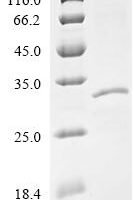
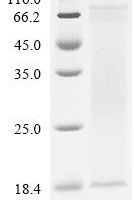
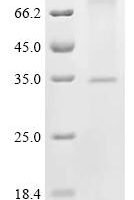
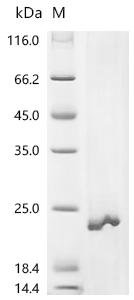
Recombinant Human ATP synthase F(0) complex subunit a (MT-ATP6) Protein is a recombinant protein from Homo sapiens (Human), expressed in in vitro E.coli expression system, covering amino acids 1-226aa, with N-terminal 10xHis-tagged tag, molecular weight 26.3kDa, purity Greater than 85% as determined by SDS-PAGE.. Suitable for ELISA and Western Blot applications. Explore more Enzyme proteins →